Table of Contents
Why Real-Time Water Quality Monitoring Is Reshaping Municipal Water Management
Key Takeaways:
– Municipal water systems implementing real-time monitoring report up to 35% reduction in waterborne illness outbreaks
– 73% of cities with populations exceeding 500,000 now deploy continuous water quality sensors
– Advanced monitoring reduces emergency response time by 60% compared to traditional sampling methods
– Investment in smart water quality systems delivers $4.2 return per dollar spent over a decade
Modern municipal water management faces unprecedented challenges. Aging infrastructure, expanding urban populations, and tightening environmental regulations demand smarter approaches to ensuring safe drinking water. Real-time water quality monitoring has emerged as a cornerstone technology for water utilities seeking to protect public health while optimizing operational efficiency.
The Transformation from Periodic to Continuous Monitoring
Traditional water quality management relied heavily on periodic sampling—collecting water samples at specific locations and sending them to laboratories for analysis. While this approach provided valuable data, it suffered from inherent limitations. Sampling intervals might span days or weeks, creating blind spots where contamination events could go undetected. By the time laboratory results arrived, water quality conditions had often already changed.
Continuous water quality monitoring addresses these gaps through permanently installed sensors that measure critical parameters around the clock. The shift represents more than technological upgrade; it fundamentally changes how utilities understand and respond to water quality events.
The United States Environmental Protection Agency (EPA) reports that utilities implementing continuous monitoring detect water quality anomalies an average of 72 hours earlier than those relying solely on periodic sampling. This early warning capability proves particularly valuable for managing disinfection byproducts (DBPs), which form when disinfectants react with organic matter in water.
Critical Parameters in Municipal Water Quality Monitoring
Effective monitoring programs track multiple water quality indicators simultaneously. pH sensors measure acidity levels, which influence pipe corrosion and metal leaching. Dissolved oxygen (DO) analyzers indicate biological activity and potential contamination. Turbidity sensors detect suspended particles that can harbor pathogens.
Residual chlorine transmitters ensure adequate disinfection throughout the distribution system. The Centers for Disease Control and Prevention (CDC) recommends maintaining free chlorine residuals between 0.2-4.0 mg/L to provide effective protection against microbial contamination. Continuous monitoring enables utilities to maintain these levels precisely while minimizing chemical usage.
Conductivity sensors serve as early warning systems for potential contamination events. Normal drinking water conductivity ranges from 50-800 μS/cm depending on mineral content. Sudden conductivity changes often indicate intrusion events or cross-connections requiring immediate investigation.
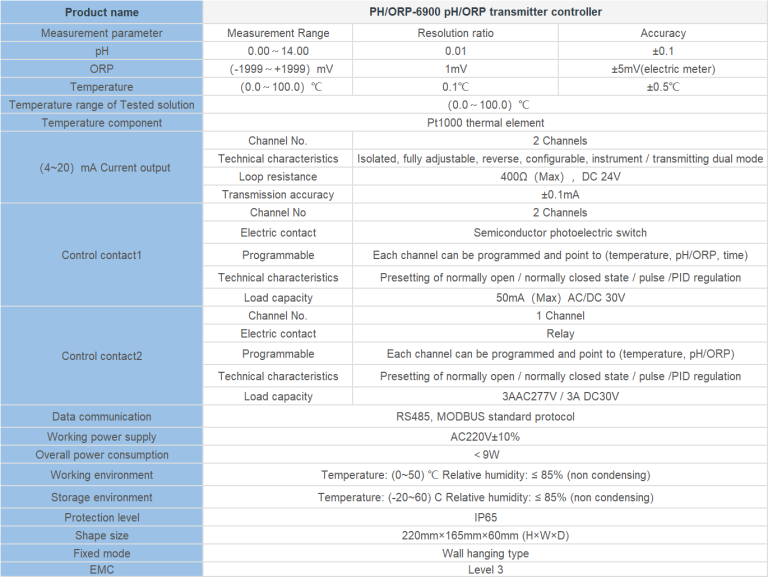
Shanghai ChiMay provides comprehensive inline water quality sensors designed for continuous municipal monitoring applications. These instruments integrate multiple measurement capabilities while maintaining the accuracy required for regulatory compliance.
Economic Benefits of Continuous Monitoring
The financial case for real-time water quality monitoring extends beyond regulatory compliance. Utilities report significant operational savings through optimized chemical dosing, reduced emergency repairs, and extended asset life.
A 2024 American Water Works Association (AWWA) study analyzed 45 municipal water systems that implemented continuous monitoring programs. The research found average annual savings of $2.3 million per utility through reduced chemical costs, lower emergency response expenses, and decreased customer complaints. These savings typically exceeded monitoring system costs within 18-24 months of implementation.
Water loss reduction represents another significant economic benefit. Continuous monitoring helps identify system anomalies that indicate leaks or contamination, enabling faster response and reduced water waste. The Water Research Foundation estimates that proactive leak detection saves municipalities an average of $1.5 million annually per 100,000 service connections.
Regulatory Compliance and Reporting
Municipal water systems face increasingly stringent water quality regulations. The Safe Drinking Water Act (SDWA) requires regular monitoring of numerous contaminants, with some parameters requiring daily or weekly testing. Continuous monitoring simplifies compliance by providing the detailed data records that regulators increasingly demand.
Modern monitoring systems automatically log all measurements, creating comprehensive audit trails for regulatory review. This automation reduces staff burden while improving data quality and traceability. Regulators have responded positively, with several states now offering regulatory relief for systems demonstrating continuous monitoring capabilities.
The European Union’s Drinking Water Directive (2020/2184) sets even more ambitious monitoring requirements, requiring risk-based approaches that continuous monitoring uniquely enables. Municipalities worldwide increasingly recognize that continuous monitoring represents not merely an operational tool but a strategic investment in regulatory excellence.
Implementation Considerations
Utilities considering continuous monitoring should evaluate several factors before implementation. Sensor placement requires careful analysis of distribution system hydraulics to ensure representative sampling. Critical monitoring points include entry points, storage facilities, and areas with known vulnerability.
Maintenance requirements vary by sensor type and water characteristics. Turbidity sensors typically require weekly cleaning in surface water applications, while pH electrodes may need monthly calibration. Modern systems increasingly incorporate self-cleaning mechanisms and automated calibration verification to reduce maintenance burden.
Data management infrastructure represents another critical consideration. Continuous monitoring generates substantial data volumes—a typical municipal system might record thousands of measurements daily. Utilities need robust data management systems capable of storing, analyzing, and presenting this information effectively.
Future Directions
The evolution of municipal water quality monitoring continues with integration of artificial intelligence and machine learning. These technologies enable predictive modeling that anticipates water quality changes before they occur, shifting utilities from reactive to proactive management.
Advanced sensor technologies now under development will expand monitoring capabilities further. Emerging sensors can detect specific pathogens, pharmaceutical residues, and other emerging contaminants that current technology cannot measure continuously.
Smart water networks representing the integration of continuous monitoring, automated control, and data analytics promise to transform municipal water management fundamentally. Cities implementing these systems report improved water quality, reduced costs, and enhanced public confidence in drinking water safety.
Real-time water quality monitoring has evolved from experimental technology to essential infrastructure for progressive water utilities. As sensor technology advances and costs continue declining, continuous monitoring will become the standard approach for municipal water quality management worldwide.