Table of Contents
Pipe Condition Assessment: Predictive Maintenance Strategies for Water Distribution Networks
Key Takeaways:
– Water pipe failures cost utilities an average of $2.8 million per 100,000 service connections annually
– Predictive maintenance reduces emergency pipe repairs by 45-60% compared to reactive approaches
– 73% of pipe failures occur without warning in utilities lacking condition assessment programs
– Investment in pipe condition assessment typically pays for itself within 2-3 years through reduced emergency repairs
Water distribution infrastructure represents one of municipal government’s largest capital assets, with replacement values often exceeding $1,500 per capita in developed nations. Yet this critical infrastructure frequently lacks systematic condition assessment, leading to unexpected failures, service disruptions, and inefficient capital planning. Predictive maintenance approaches offer water utilities powerful tools for managing infrastructure risk while optimizing limited resources.
The Challenge of Aging Water Infrastructure
Water distribution pipes installed during the post-war building boom of the 1950s-1970s now reach the end of their service lives. The American Society of Civil Engineers (ASCE) estimates that 20% of water pipes in the United States are in poor condition, with failure rates increasing exponentially as pipes age beyond 75 years.
Pipe materials vary significantly in expected service life. Cast iron pipes typically last 75-125 years, while ductile iron extends to 100-150 years. PVC pipes offer longer theoretical lifespans of 100-150 years, though long-term performance data remains limited as these materials are relatively recent in widespread use.
The Water Research Foundation documented that pipe failure rates typically increase exponentially after pipes reach 75% of their expected service life. Utilities ignoring condition assessment face accelerating failure rates as infrastructure ages beyond designed lifespans.
Condition Assessment Technologies
Multiple technologies enable systematic pipe condition assessment, each with distinct capabilities, costs, and limitations. Effective condition assessment programs typically combine several technologies to achieve comprehensive infrastructure understanding.
Acoustic leak detection identifies leaks through listening devices that detect sound generated by water escaping pressurized pipes. While primarily used for leak location, acoustic data also reveals pipe condition—degraded pipes often generate distinctive noise patterns indicating structural problems.
Electromagnetic inspection measures pipe wall thickness and detects corrosion through magnetic field analysis. This technology works on metallic pipes, identifying sections with reduced structural integrity before failures occur.
CCTV (Closed-Circuit Television) inspection provides visual assessment of pipe interiors through remotely operated cameras. Though primarily used for sewer pipes, CCTV technology increasingly applies to water mains, revealing internal corrosion, tuberculation, and structural problems.
Spectral analysis of water quality offers non-invasive condition assessment by analyzing pipe corrosion products in water samples. High iron or manganese levels often indicate accelerated pipe deterioration, enabling targeted investigation.
Smart ball technology deploys instrumented devices that travel through pipes recording acoustic and inertial data, identifying leak locations and anomaly areas. This approach enables comprehensive pipeline assessment without excavation.
Risk-Based Prioritization
Condition assessment generates data supporting risk-based asset management. Risk assessment combines pipe condition with failure consequence to prioritize interventions appropriately.
Failure probability assessment considers pipe age, material, condition assessment results, break history, and operating pressure. Pipes showing multiple risk factors warrant priority attention regardless of current condition assessment findings.
Failure consequence evaluation considers pipe location (under roads versus landscaped areas), isolation valve placement, critical customers served, and system redundancy. Pipes with high failure consequences warrant investment even when condition assessment suggests moderate deterioration.
Risk matrices visualize the combination of probability and consequence, enabling utilities to target highest-risk pipes efficiently. Resources directed to high-risk pipes deliver maximum risk reduction per dollar invested.
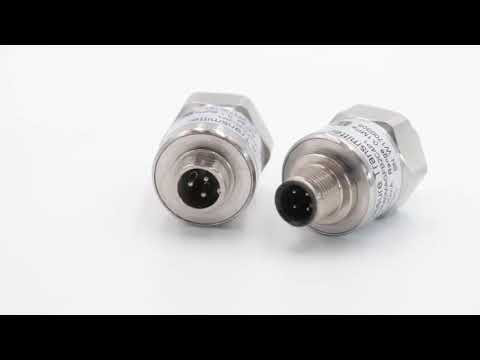
Shanghai ChiMay provides water quality sensors that support non-invasive pipe condition assessment through water quality monitoring, detecting changes indicating corrosion or deterioration.
Rehabilitation and Replacement Strategies
Condition assessment informs rehabilitation versus replacement decisions. Different intervention strategies offer distinct cost-effectiveness depending on pipe condition and remaining service life expectations.
Pipe rehabilitation methods extend pipe life without full replacement. Cured-in-place pipe (CIPP) lining installs new pipe within existing pipes, addressing leaks and structural problems while avoiding excavation. Epoxy coating provides corrosion protection for metallic pipes. These methods typically cost 30-50% of replacement while extending pipe life by 30-50 years.
Replacement becomes necessary when pipes are too deteriorated for rehabilitation or have insufficient remaining service life to justify rehabilitation costs. Modern pipe materials—ductile iron with protective coatings, PVC, and high-density polyethylene (HDPE)—offer extended service lives exceeding 100 years.
Targeted replacement programs prioritize pipe replacement based on condition assessment and risk analysis. The Environmental Protection Agency (EPA) estimates that targeted approaches typically replace 15-25% of pipe networks over 20-year periods while achieving risk reduction equivalent to complete replacement.
Data Management and Decision Support
Condition assessment generates substantial data requiring systematic management. Geographic information systems (GIS) integrate condition data with pipe location, enabling spatial analysis of infrastructure performance.
Failure prediction models combine condition data with operational and environmental factors to forecast future failures. Machine learning approaches increasingly improve prediction accuracy by identifying complex relationships traditional models miss.
Capital planning tools optimize rehabilitation and replacement scheduling across multi-year planning horizons. These tools consider budget constraints, risk targets, and resource availability while generating implementable work plans.
Performance monitoring tracks infrastructure performance following interventions, validating condition assessments and improvement predictions. Continuous learning improves future assessments and investment decisions.
Building an Assessment Program
Effective condition assessment programs build capabilities progressively over time. Utilities lacking current assessment data should begin with available information—pipe age, material, break history—while implementing systematic assessment for highest-priority pipes.
Prioritization criteria should consider pipe age relative to expected service life, break frequency, pipe material known performance characteristics, and consequence of failure. Highest-priority pipes warrant immediate assessment regardless of current condition understanding.
Technology selection depends on pipe materials, accessibility, and available budget. Initial programs might focus on acoustic monitoring and break history analysis before investing in more sophisticated inspection technologies.
Resource allocation should balance assessment activities against rehabilitation and replacement work. Comprehensive assessment generates data supporting better decisions, but only if utilities subsequently act on assessment findings.
Water utilities increasingly recognize that reactive maintenance of aging infrastructure proves neither sustainable nor economical. Predictive maintenance through systematic condition assessment enables risk-managed infrastructure investment while maintaining service reliability.