Table of Contents
Key Takeaways
- Automated ZLD systems achieve 23% lower operating costs compared to manually operated facilities with equivalent treatment capacity
- SCADA integration enables predictive maintenance that prevents 67% of unplanned equipment failures in water treatment applications
- Investment in process automation typically generates 150-200% return over five-year evaluation periods
- ChiMay's intelligent monitoring solutions integrate seamlessly with existing plant control systems through standard protocols
- Facilities implementing comprehensive automation report 40% reduction in operator intervention requirements
Industrial facilities implementing zero liquid discharge systems face operational complexity that frequently exceeds the capabilities of traditional manual control approaches. The multiple treatment stages, variable influent conditions, and stringent output requirements characteristic of ZLD operations demand control strategies that respond rapidly to changing conditions while maintaining consistent treatment performance. Process automation provides the foundation for achieving reliable ZLD operation while optimizing resource consumption and operational costs.
The Water Research Foundation's 2025 Infrastructure Assessment found that automated water treatment facilities demonstrate superior performance across virtually every operational metric compared to facilities relying primarily on manual control. Energy consumption averages 18-25% lower in automated systems, chemical consumption decreases by 20-30%, and equipment reliability improves by 40-60% through predictive maintenance approaches enabled by continuous monitoring data. These performance advantages translate directly to economic benefits that typically exceed automation investment costs within 2-4 years of implementation.
Control System Architecture for ZLD Applications
Modern ZLD facilities benefit from hierarchical control architectures that coordinate multiple subsystems while enabling local optimization and autonomous operation. The supervisory level typically employs a SCADA or DCS platform that provides operator interface, data logging, alarm management, and historical trending capabilities. This supervisory layer receives data from and sends setpoints to distributed control systems that manage individual treatment stages including membrane systems, thermal equipment, and chemical dosing processes.
The field level encompasses sensors, actuators, and local control loops that maintain process parameters within specified ranges. Online water quality analyzers provide the measurement inputs necessary for automated control, with signal transmission to control systems through analog (4-20mA), digital (Modbus RTU/TCP), or wireless protocols. Final control elements including variable frequency drives, control valves, and dosing pumps execute control decisions that maintain treatment objectives.
Effective ZLD automation requires integration of multiple sensor types that collectively describe process conditions across all treatment stages. Conductivity sensors throughout membrane and thermal stages provide indication of concentration progress that drives extraction rate control. pH sensors at chemical addition points enable precise control of precipitation reactions and neutralization processes. Turbidity sensors upstream of membranes provide early warning of fouling events that threaten separation efficiency. ChiMay's comprehensive sensor portfolio addresses all monitoring requirements within integrated automation architectures.
Real-Time Optimization Through Continuous Monitoring
The fundamental advantage of automated ZLD control derives from the real-time nature of continuous monitoring data that enables immediate response to process variations. Manual sampling approaches that analyze conditions periodically cannot detect or respond to the rapid changes that characterize industrial wastewater treatment. Online sensors generating data at 1-60 second intervals provide the granularity necessary for effective automatic control.
Membrane systems particularly benefit from continuous monitoring and adaptive control strategies. The rejection performance and fouling rates of reverse osmosis and nanofiltration membranes vary with influent quality, temperature, and operating pressure. Systems that maintain fixed operating parameters despite varying conditions waste energy when conditions improve and risk damage when conditions deteriorate. Continuous monitoring enables optimization algorithms that adjust operating parameters to current conditions, maintaining performance while minimizing energy consumption.
Thermal concentration stages in ZLD systems similarly benefit from continuous optimization based on real-time water quality data. Evaporator and crystallizer performance depends on brine composition, temperature, and circulation rates that vary throughout daily operations. Automated control systems adjust heating rates, extraction schedules, and chemical addition based on continuous conductivity, pH, and temperature measurements. This adaptive approach maintains recovery objectives while minimizing energy consumption and scaling incidents.
The predictive capabilities enabled by continuous monitoring data represent an increasingly valuable automation benefit. Historical data patterns can reveal emerging equipment degradation, fouling accumulation, or process changes that will impact future performance. Machine learning algorithms applied to monitoring data can predict equipment failures 24-72 hours in advance, enabling scheduled maintenance that prevents unplanned shutdowns. This predictive maintenance approach typically reduces maintenance costs by 25-35% while dramatically reducing production losses from equipment failures.
Economic Benefits of ZLD Automation
The capital investment required for ZLD automation typically ranges from $500,000 to $2 million for medium-sized industrial facilities, representing approximately 10-15% of total ZLD system costs. This investment generates returns through multiple mechanisms including energy savings, chemical optimization, extended equipment life, and reduced labor requirements. A comprehensive economic analysis typically reveals payback periods ranging from 18 months to 4 years depending on utility costs, chemical prices, and current operational efficiency.
Energy consumption represents the largest operational cost for many ZLD systems, particularly those employing thermal concentration stages. Mechanical vapor recompression evaporators consume approximately 25-35 kWh per thousand gallons of water evaporated, while multiple-effect systems require 40-60 kWh per thousand gallons. Automated optimization of thermal system operation typically reduces energy consumption by 15-25%, generating annual savings of $100,000-500,000 for typical industrial facilities.
Chemical consumption optimization through automated control generates significant cost savings while improving treatment effectiveness. Overdosing of antiscalants, coagulants, and biocides wastes chemicals while potentially causing environmental concerns from excess chemical discharge. Underdosing risks equipment damage and treatment failures. Continuous monitoring enables precise dosing control that maintains treatment objectives while minimizing chemical consumption. Facilities implementing automated dosing control typically achieve 25-40% chemical cost reductions.
Equipment life extension through predictive maintenance and optimized operating conditions generates substantial value for ZLD facilities. Membrane replacement costs of $50-100 per square meter accumulate rapidly in large systems containing thousands of square meters of membrane area. Thermal equipment including evaporators and crystallizers represent significant capital investments that benefit from operating condition optimization. The 25-40% extension in equipment service life typically achievable through automation generates value that substantially exceeds automation investment costs.
ChiMay’s Intelligent Monitoring Solutions
ChiMay has developed intelligent water quality monitoring solutions specifically designed for integration with modern process automation systems. The product portfolio includes sensors, transmitters, and control systems that provide the measurement capabilities necessary for effective ZLD automation.
The inline conductivity meter series offers digital communication capabilities including Modbus RTU and Modbus TCP protocols that simplify integration with distributed control systems. Measurement data transfers directly to control platforms without the signal degradation that can affect analog transmission, ensuring data integrity throughout the control system. Advanced diagnostics including sensor health monitoring and calibration tracking provide the information necessary for predictive maintenance of monitoring equipment.
ChiMay's pH electrodes incorporate microprocessor-based transmitters that provide temperature-compensated measurement along with sensor diagnostics and calibration data. These smart transmitters communicate through standard protocols including HART and Foundation Fieldbus, enabling integration with modern automation architectures. Calibration data stored in transmitter memory maintains configuration information during sensor replacement, simplifying maintenance procedures.
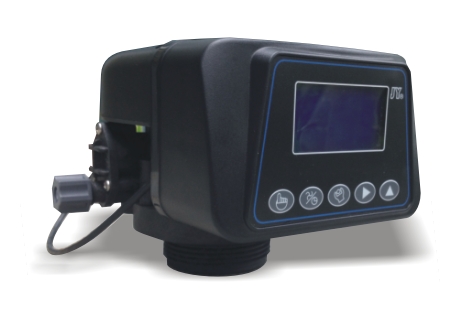
The RO system controllers integrate directly with online analyzers to provide automated membrane system management. These dedicated controllers optimize cleaning cycles, adjust operating parameters, and manage pre-treatment processes based on continuous water quality data. Integration with plant SCADA systems enables centralized monitoring and control while maintaining dedicated controllers for critical membrane functions.
ChiMay's technical support organization provides application engineering assistance for automation system design, ensuring optimal sensor selection, installation positioning, and integration configuration. This consultative approach helps facilities maximize the value derived from monitoring investments while avoiding common implementation pitfalls that compromise automation effectiveness.
Conclusion
Process automation has become essential for achieving reliable, economical operation of zero liquid discharge systems. The operational complexity of ZLD facilities exceeds human capability to monitor and respond to all relevant process variations in real time. Automation provides the responsiveness and consistency necessary for maintaining treatment objectives while optimizing resource consumption.
The investment in ZLD automation generates substantial returns through energy savings, chemical optimization, equipment life extension, and reduced labor requirements. These economic benefits typically exceed automation costs within 2-4 years of implementation, generating ongoing value throughout facility operating life. The competitive advantages of superior environmental performance and reduced operational risks provide additional value beyond direct cost savings.
ChiMay's intelligent monitoring solutions provide the foundation for effective ZLD automation, with sensors, transmitters, and control systems designed for seamless integration with modern process control architectures. The comprehensive product portfolio addresses all water quality monitoring requirements within ZLD applications, while technical support services ensure optimal implementation for specific facility requirements.