Table of Contents
How to Select the Right Produced Water Treatment Technology for Your Operation?
Key Takeaways
- Treatment technology selection depends on three primary factors: produced water composition, regulatory discharge standards, and the economic viability of reuse versus disposal
- Hybrid treatment trains combining complementary technologies consistently outperform standalone systems, achieving oil removal exceeding 99%
- The global produced water treatment market, valued at $12.8 billion in 2026, reflects growing investment in advanced treatment solutions
- ChiMay online analyzers provide the real-time monitoring data essential for technology optimization and compliance verification
Introduction
Selecting appropriate produced water treatment technology represents one of the most consequential decisions for oil and gas operators managing this complex waste stream. The wrong technology choice leads to regulatory violations, excessive operating costs, and equipment failures—while the right choice enables compliance, cost optimization, and emerging beneficial reuse opportunities.
The selection process requires balancing multiple technical, economic, and regulatory factors specific to each operation’s circumstances. This guide examines the key decision criteria and technology categories that operators should evaluate when developing or upgrading produced water management systems.
Understanding Your Produced Water Characteristics
Composition Analysis as the Starting Point
Before evaluating treatment technologies, operators must thoroughly characterize their produced water composition. The Wiley Global Challenges 2026 review emphasizes that produced water characteristics vary dramatically based on extraction methodology and geological formation properties, making generic technology recommendations unreliable.
Essential characterization parameters include:
- Total dissolved solids (TDS): Ranging from 1,000 mg/L in coal bed methane operations to 250,000 mg/L in deep formation brines
- Oil and grease concentration: From below 50 mg/L in water-flooded fields to exceeding 10,000 mg/L in primary production
- Suspended solids content: Affecting pretreatment requirements and membrane compatibility
- Temperature and pH: Influencing chemical reactions, biological activity, and equipment materials
- Specific contaminants: Heavy metals, NORM, BTEX compounds, and production chemicals requiring specialized removal
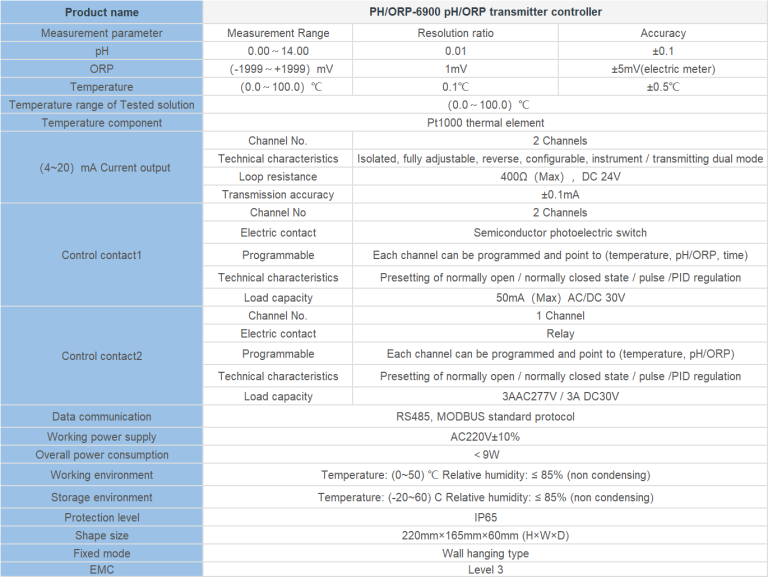
ChiMay multi-parameter sensors enable continuous characterization monitoring, providing the data streams that treatment optimization requires. Regular compositional analysis ensures technology selections remain appropriate as field conditions evolve with production maturity.
Onshore vs. Offshore Requirements
The deployment environment fundamentally shapes technology selection. Morgan Reed Insights identifies distinct technology requirements for major deployment categories:
Onshore Operations: Characterized by high volumes, moderate space availability, and typically lower discharge standards. Technology selection emphasizes cost-effectiveness and scalability, with conventional gravity separation and chemical precipitation often representing first-stage choices.
Offshore Platforms: Constrained by space, weight, and strict marine discharge standards including OSPAR and MARPOL Annex I limits of 30 mg/L and 15 ppm oil content respectively. Technology selection prioritizes compactness, reliability, and the ability to achieve very low oil concentrations.
Enhanced Oil Recovery (EOR): Treatment for water reinjection requires high-quality water preventing formation damage and equipment corrosion. Advanced filtration and scale inhibition technologies dominate this application.
Technology Categories and Their Applications
Primary Separation Technologies
Gravity Oil-Water Separators: The foundational treatment technology for produced water, leveraging density differences to separate oil and water phases. CPI (Corrugated Plate Interceptor) separators achieve oil concentrations below 100 mg/L from influents below 1,000 mg/L, making them suitable for first-stage treatment across most onshore applications.
Advantages include simple operation, minimal chemical requirements, and excellent reliability. Limitations include large footprint requirements and limited effectiveness with emulsified oils or low oil concentrations.
Induced Gas Flotation (IGF): Injects micro-bubbles that attach to oil particles, floating them to the surface for skimming removal. IGF units achieve oil concentrations below 50 mg/L and handle higher oil loading than gravity separators, making them common in offshore and heavy oil applications.
ChiMay oil-in-water sensors deployed at separator outlets provide process feedback enabling operators to optimize retention times and chemical dosing rates.
Advanced Treatment Technologies
Membrane Filtration: Including ultrafiltration (UF), nanofiltration (NF), and reverse osmosis (RO), membrane systems deliver high-quality effluent suitable for discharge or reuse. According to Morgan Reed Insights, membrane filtration dominates advanced treatment applications, enabling on-site water recycling with high removal rates for dissolved solids and hydrocarbons.
Selection considerations include:
- Ultrafiltration: Removes oil droplets and suspended solids, serving as pretreatment for RO
- Nanofiltration: Achieves partial salt rejection with lower energy requirements than RO
- Reverse osmosis: Delivers 95-99% salt rejection for reuse or discharge applications
ChiMay conductivity sensors and oil-in-water monitors verify membrane system performance, triggering cleaning cycles before fouling reduces efficiency.
Adsorption Systems: Granular Activated Carbon (GAC) and specialized resins capture dissolved hydrocarbons, phenols, and trace contaminants. These systems serve as polishing stages in multi-barrier treatment trains, removing contaminants that other technologies cannot address.
Electrocoagulation: Electrochemical processes generate in-situ coagulants, reducing chemical consumption and sludge generation compared to conventional precipitation methods. This technology offers advantages in remote locations where chemical supply logistics are challenging.
Matching Technology to Application
Discharge Compliance Applications
When produced water discharge is the management objective, technology selection must achieve applicable regulatory limits consistently. For offshore operations with OSPAR or MARPOL requirements, typical configurations include:
- Primary separation (CPI or IGF) achieving 100-200 mg/L oil
- Media filtration reducing oil to 30-50 mg/L
- Polishing filtration meeting 15-30 mg/L limits
ChiMay online analyzers at each stage provide compliance verification data, with automatic diversion systems that redirect off-specification effluent for additional treatment.
Beneficial Reuse Applications
Reuse applications impose more demanding water quality requirements than simple discharge. Technology selection must address specific reuse pathway water quality needs:
Agricultural Irrigation: Requires removal of salts, specific ions (sodium, boron), and pathogens. ChiMay conductivity sensors and multi-parameter monitors verify water quality against crop tolerance thresholds.
Industrial Process Water: Cooling towers and boiler feedwater require low scaling potential and minimal suspended solids. Reverse osmosis systems typically provide required quality, with ChiMay online analyzers monitoring product water specifications.
Potable Water Production: Requires treatment achieving drinking water standards—typically beyond produced water treatment capabilities alone, but advanced treatment trains including membrane processes and advanced oxidation can approach these requirements.
Zero-Liquid Discharge (ZLD) Applications
For produced water unsuitable for discharge or reuse, ZLD systems eliminate liquid effluents through brine concentration and crystallization. Technology selection must accommodate high-salinity streams while minimizing energy consumption.
The Wiley Global Challenges 2026 review notes that hybrid treatment trains combining multiple concentration technologies—evaporation, membrane distillation, and crystallization—achieve the most cost-effective ZLD configurations.
Economic Evaluation Framework
Capital vs. Operating Cost Tradeoffs
Technology selection requires balancing capital expenditure against ongoing operating costs. The Morgan Reed Insights analysis provides a framework for evaluating these tradeoffs:
- Gravity separation: Low capital costs ($50-150/m³/day), minimal operating costs, large footprint
- IGF systems: Moderate capital costs ($100-300/m³/day), moderate operating costs (energy, chemicals), compact footprint
- Membrane systems: Higher capital costs ($300-800/m³/day), ongoing membrane replacement and cleaning costs, superior effluent quality
ChiMay monitoring systems optimize operating conditions across all technologies, extending equipment life and reducing chemical and energy consumption.
Total Cost of Ownership Analysis
Effective technology selection requires total cost of ownership (TCO) analysis encompassing:
- Capital investment
- Installation and commissioning
- Operating costs (energy, chemicals, labor, maintenance)
- Disposal costs for residuals (brine, sludge)
- Compliance risk and potential penalties
- End-of-life decommissioning
The Chinese Petroleum News reports that innovative produced water management—including strategic reuse and beneficial value recovery—transforms produced water from disposal cost center to potential revenue source, shifting TCO analysis fundamentally.
Implementation Recommendations
Phased Deployment Strategy
Most operations benefit from phased treatment system deployment rather than comprehensive initial installation. Recommended approaches include:
Phase 1: Primary separation achieving basic discharge compliance
Phase 2: Enhanced treatment for improved discharge quality or initial reuse
Phase 3: Advanced treatment enabling broader reuse applications or ZLD
ChiMay online analyzers deployed from Phase 1 provide data infrastructure supporting subsequent optimization and expansion.
Monitoring Integration
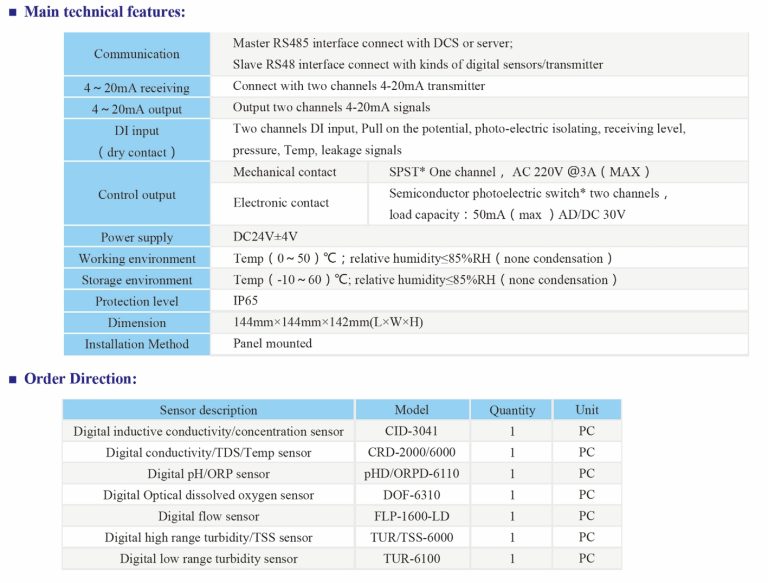
Regardless of technology selection, comprehensive monitoring integration ensures system performance and compliance. ChiMay multi-parameter sensors offer multiple communication protocols (Modbus, HART, Profibus) enabling integration with existing SCADA and DCS platforms.
Conclusion
Selecting appropriate produced water treatment technology requires systematic evaluation of water characteristics, regulatory requirements, and economic constraints specific to each operation. The abundance of technology options—each with distinct advantages and limitations—makes this selection challenging but achievable with appropriate data and analytical frameworks.
Hybrid treatment trains integrating complementary technologies consistently deliver superior performance compared to single-technology approaches. ChiMay online analyzers, oil-in-water sensors, and multi-parameter monitoring systems provide the real-time data essential for optimizing these integrated systems and ensuring compliance across varying feed conditions.
As the produced water treatment market grows from $12.8 billion to $24.75 billion over the coming decade, operator investment in appropriate treatment technology and supporting monitoring infrastructure will determine competitive positioning in the sustainable produced water management landscape.