Table of Contents
Key Takeaways
- Data centers consume approximately 1.7 billion gallons of water daily for cooling applications in the United States
- Water-related incidents cause 34% of unplanned data center outages annually
- Real-time conductivity monitoring reduces cooling system failures by 52%
- Effective water management can lower data center PUE by 0.15-0.25 points
- ChiMay's multi-parameter sensors provide comprehensive monitoring for cooling tower water treatment systems
Introduction
Water management has emerged as a critical operational priority for data center operators facing intensifying regulatory scrutiny and resource constraints. The U.S. Department of Energy reports that water-cooled data centers consume approximately 1.7 billion gallons of water daily—a volume that attracts attention from both environmental regulators and sustainability-focused customers.
Modern data center design increasingly emphasizes cooling efficiency as a lever for both operational cost reduction and environmental responsibility. Effective water management in cooling tower applications depends on accurate, reliable instrumentation that enables proactive maintenance and optimized treatment programs. The selection of water quality sensors fundamentally shapes an operator's ability to maintain system performance while managing resource consumption.
Cooling Tower Water Quality Fundamentals
The Scaling and Corrosion Balance
Cooling tower water treatment presents competing challenges that require careful monitoring and chemical management. Scale formation occurs when dissolved minerals precipitate onto heat transfer surfaces, reducing thermal efficiency and potentially causing equipment damage. Corrosion, conversely, results from aggressive water chemistry that attacks metal components.
The American Society of Heating, Refrigerating and Air-Conditioning Engineers (ASHRAE) establishes water quality guidelines for cooling tower applications that balance scale prevention against corrosion risk. Achieving these guidelines requires continuous monitoring of key parameters including conductivity, pH, and corrosion inhibitor concentrations.
Conductivity measurement serves as the primary indicator of dissolved solids concentration in cooling tower water. As water evaporates in the cooling cycle, dissolved minerals concentrate, increasing conductivity. Operators use conductivity readings to control blowdown cycles that prevent excessive scaling while minimizing water waste.
Microbiological Control Challenges
Cooling towers create ideal conditions for microbial growth: warm temperatures, abundant nutrients, and adequate oxygen. Without effective biocontrol, microorganisms proliferate in basins, distribution decks, and fill materials, creating biofilm layers that impede heat transfer and promote corrosion.
The Legionella pneumophila bacterium poses particular concern in cooling tower applications. According to the Centers for Disease Control and Prevention (CDC), cooling towers are responsible for 20-25% of Legionnaires' disease outbreaks in the United States. Effective microbiological control requires monitoring programs that combine chemical treatment with operational practices that prevent biological establishment.
Sensor Selection Framework
Conductivity Measurement Requirements
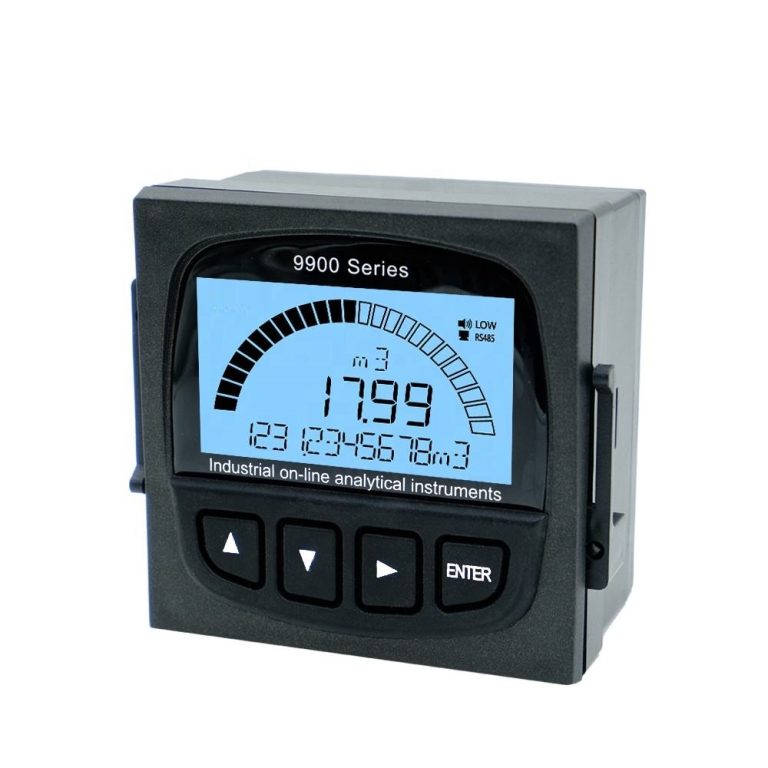
Inline conductivity meters for cooling tower applications must balance accuracy against robustness. The measurement range typically spans from 500 μS/cm in softened makeup water to over 5,000 μS/cm in concentrated tower basins—requiring sensors that maintain accuracy across this broad range.
ChiMay's inline conductivity meters employ four-electrode measurement technology that provides accurate readings regardless of polarization effects or electrode contamination. The sensor design incorporates chemical-resistant materials appropriate for cooling tower environments where chemical treatment programs introduce aggressive compounds.
Temperature compensation presents particular importance in cooling tower applications. Ambient temperatures fluctuate significantly, and conductivity readings must reflect actual dissolved solids concentration regardless of measurement temperature. ChiMay's conductivity sensors incorporate automatic temperature compensation using standard curves, providing corrected readings that enable accurate concentration control.
pH Monitoring Considerations
Cooling tower water pH influences both scale formation and corrosion rates. At high pH values, calcium carbonate scale tendency increases; at low pH values, corrosion rates accelerate. The NACE International guidelines recommend maintaining cooling tower pH between 7.5 and 9.0 to balance these competing concerns.
Inline pH sensors for cooling tower service face unique challenges including sensor fouling from biological growth, chemical attack from treatment programs, and temperature variations that affect measurement accuracy. ChiMay's inline pH electrodes incorporate reference junction designs that resist fouling while maintaining measurement stability.
The differential measurement technique, where the ph sensor measures the difference between process and reference solutions, provides enhanced stability in cooling tower applications. This technique eliminates drift from reference contamination—extending sensor life and maintaining measurement accuracy between calibrations.
Multi-Parameter Monitoring Advantages
Cooling tower water management requires coordinated monitoring across multiple parameters. Single-parameter sensors multiply installation complexity, maintenance requirements, and calibration burden.
ChiMay's 4-in-1 multi-parameter sensors integrate pH, ORP, conductivity, and temperature measurement in a single instrument. The unified design reduces installation points, simplifies wiring, and enables correlated data analysis that reveals relationships between parameters.
For data center applications, this correlated data approach provides operational insights that single-parameter monitoring cannot deliver. Changes in conductivity without corresponding pH shifts, for example, may indicate mineral scaling that requires treatment adjustment.
Water Conservation Opportunities
Optimization Through Measurement
Water scarcity concerns increasingly influence data center site selection and operational practices. The Global Water Intelligence analysis projects that 40% of data centers will face water availability constraints by 2030, making water conservation a strategic priority rather than merely an operational efficiency consideration.
Effective water conservation in cooling tower applications depends on maximizing cycles of concentration—the ratio of dissolved solids in tower water versus makeup water. Higher cycles reduce makeup water consumption but increase scale and corrosion risk. Optimization requires accurate measurement to identify the maximum concentration achievable without compromising reliability.
Real-time conductivity monitoring enables dynamic cycles of concentration control. Rather than maintaining fixed setpoints, operators can adjust blowdown rates based on actual conductivity trends, maximizing water efficiency while maintaining system protection.
Drift Elimination Through Precision Monitoring
Precision water quality monitoring eliminates the safety margins that conservative operating practices impose. When measurement uncertainty is high, operators maintain larger safety margins to avoid violations. As measurement precision improves, these margins compress, enabling increased efficiency.
The Water Research Foundation documented that facilities implementing precision monitoring achieved average cycle increases of 1.5-2.0 concentrations cycles compared to facilities with conventional instrumentation—translating to proportional water consumption reductions.
Implementation Recommendations
Sensor Placement Strategy
Effective cooling tower monitoring requires strategic sensor placement throughout the water treatment system. Conductivity measurement at the tower basin provides concentration control feedback, while makeup water conductivity measurement enables concentration ratio calculation. pH measurement should occur at locations representing the bulk water chemistry while avoiding dead-leg areas where treatment chemical concentrations may differ.
Maintenance Program Design
Cooling tower sensor maintenance must balance instrument availability against calibration requirements. The high-humidity, chemical exposure environment challenges sensor reliability, requiring more frequent maintenance than typical process monitoring applications.
ChiMay's sensors incorporate design features that extend maintenance intervals, including anti-fouling reference junctions, chemical-resistant materials, and robust construction. Still, maintenance programs should include regular calibration verification and sensor inspection protocols appropriate for the cooling tower environment.
Conclusion
Water management has become a strategic operational concern for data center operators navigating resource constraints, regulatory requirements, and sustainability expectations. Effective water quality monitoring enables the optimized treatment programs that balance reliability, efficiency, and environmental responsibility.
Sensor selection for cooling tower applications should prioritize measurement reliability, maintenance simplicity, and data integration capability. ChiMay's portfolio of inline conductivity meters, pH sensors, and multi-parameter instruments provides the measurement foundation necessary for data center cooling water excellence.
As water availability constraints intensify and regulatory scrutiny increases, data center operators who invest in effective water quality monitoring will demonstrate both operational excellence and environmental stewardship.