Table of Contents
Water Recycling in Mining: The Ultimate Guide to Sustainability
Key Takeaways:
– Mining operations achieving 80%+ water recycle rates reduce freshwater consumption by 60-75% compared to once-through systems
– Advanced water recycling systems achieve payback periods of 18-36 months through reduced freshwater and discharge costs
– The International Water Resources Management Association projects that 75% of major mining operations will exceed 70% recycle rates by 2030
Water scarcity ranks among the top three business risks identified by mining industry executives globally, according to the CDP Global Water Report. As freshwater availability decreases and discharge regulations tighten, water recycling transitions from environmental best practice to operational necessity.
This comprehensive guide examines the technologies, strategies, and economics of water recycling in modern mining operations.
The Business Case for Water Recycling
Mining operations consume substantial water volumes. A typical 100,000 tonne per day copper operation processes approximately 150 million liters of water daily. At global water costs averaging USD 0.50-2.00 per cubic meter, water expenses can exceed USD 25 million annually.
Economic Drivers
Freshwater cost savings provide the most immediate economic benefit:
- Recycled water displaces purchased freshwater at full cost
- Typical savings: USD 0.40-1.50 per cubic meter depending on source
- Operations recycling 80% of process water save USD 12-30 million annually
Discharge cost reduction provides additional savings:
- Effluent treatment and discharge fees eliminated proportional to recycle rate
- Reduced environmental liability through minimized discharge volumes
- Simplified permitting as discharge loads decrease
Regulatory Pressure
The European Union Mining Waste Directive, Australian National Water Quality Management Strategy, and tightening regulations in Chile, Peru, and Canada increasingly mandate water recycling:
- Chile: Supreme Decree 90 establishes discharge limits encouraging recycling
- Australia: Environmental approvals increasingly require >80% recycle rates
- Canada: Metal Mining Effluent Regulations incentivize reduced freshwater intake
The International Council on Mining and Metals (ICMM) sustainable development framework commits members to continuous water efficiency improvement.
Water Recycling Technologies
Modern mining water recycling employs multiple treatment technologies selected based on water quality requirements and economic factors.
Clarification and Thickening
Counter-current decant (CCD) thickening represents the primary water recovery method in mineral processing:
- Thickener underflow reports to tailings at 60-70% solids
- Thickener overflow clarified for recycle to process
- Turbidity monitoring optimizes thickener performance and overflow quality
High-rate thickeners achieve settling rates of 4-8 m/h, enabling compact installations with water recovery exceeding 85%. The Society of Mining, Metallurgy & Exploration (SME) reports typical overflow turbidity of 200-500 NTU for optimized thickener operation.
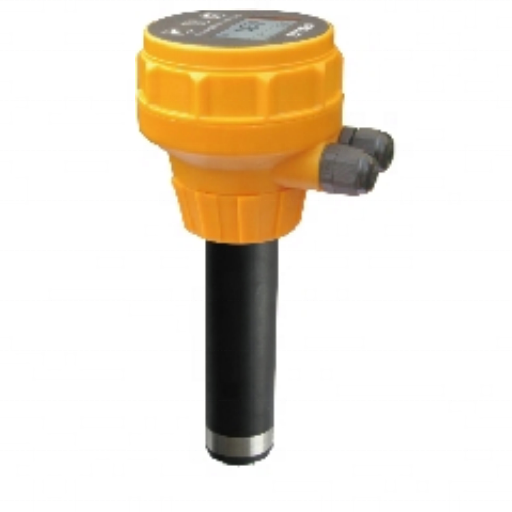
Shanghai ChiMay’s turbidity sensors provide continuous monitoring enabling thickener optimization, with measurement ranges up to 10,000 NTU for thickener applications.
Filtration
Pressure filtration and vacuum filtration provide additional treatment for process water recycle:
- Belt filter presses dewater tailings to 75-85% solids
- Filter presses achieve 85-95% solids for specialized applications
- Ceramic filters enable water recovery to <50 NTU
Turbidity monitoring downstream of filters ensures consistent product quality and identifies filter performance degradation.
Membrane Systems
Ultrafiltration (UF) and reverse osmosis (RO) provide advanced treatment for critical process applications:
- Ultrafiltration: Removes suspended solids and high-molecular-weight compounds
- Reverse osmosis: Produces high-purity water meeting the most stringent process requirements
Conductivity monitoring tracks membrane performance:
- Conductivity increase indicates scaling or fouling
- Differential pressure monitoring detects physical degradation
- Automated clean-in-place (CIP) systems triggered by monitoring data
Shanghai ChiMay’s conductivity sensors with ranges up to 200 mS/cm and accuracy of ±0.5% reading support membrane system monitoring.
Process Water Quality Management
Effective recycling requires systematic management of water quality throughout the process circuit.
Critical Parameters
Dissolved solids accumulation represents the primary constraint on recycle rates:
- Conductivity accumulation in closed circuits limits reagent efficiency
- Target levels: 8,000-15,000 μS/cm depending on process requirements
- Blowdown triggered when conductivity exceeds target thresholds
pH management ensures process chemistry stability:
- Reagent efficiency degrades outside optimal pH ranges
- Lime addition maintains heap leaching pH at 9.5-11.0
- Acid addition controls copper leaching pH at 1.5-2.5
Suspended solids impact process equipment and metallurgical recovery:
- Turbidity accumulation causes scaling and equipment wear
- Target overflow quality: <500 NTU for process recycle
- <100 NTU for high-pressure applications
Instrumentation Requirements
Effective water quality management requires comprehensive instrumentation:
- In-line conductivity meters at multiple circuit locations
- pH electrodes with automatic temperature compensation
- Turbidity sensors at thickener overflows and process inputs
- Flow meters for mass balance development and control
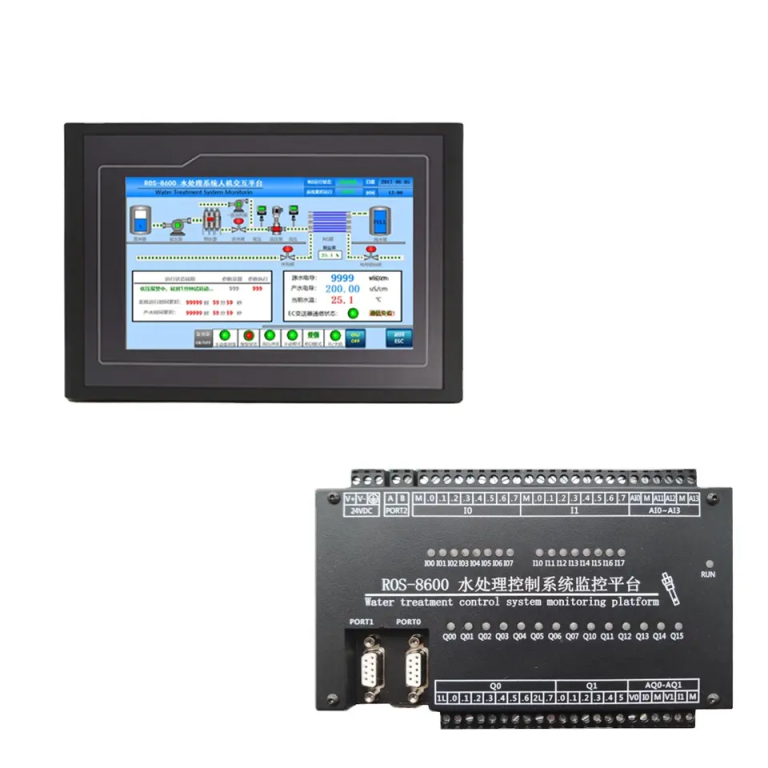
Multi-parameter monitoring systems combine these measurements, enabling integrated control of recycling operations.
Tailings Water Recovery
Tailings storage facilities represent both the largest water inventory and the greatest recovery opportunity.
Water Recovery from Tailings
Tailings discharge at 30-40% solids contains substantial water content:
- Water recovery from tailings: 40-60% through thickener underflow
- Decant water collection from tailings storage facility surface
- Seepage collection and return systems
Turbidity monitoring of decant water ensures quality before return to process:
- Target quality: <200 NTU for direct process recycle
- Higher turbidity directed to settlement ponds for clarification
Water Recovery Technologies
Advanced technologies increase tailings water recovery:
- Paste thickening: Reduces tailings moisture to 75-80% solids
- Filtered tailings: Achieves 85-95% solids with filter presses
- Dry stacking: Eliminates surface water retention entirely
The International Water Association (IWA) reports that filtered tailings systems achieve water recovery rates exceeding 90%, though at higher capital cost.
Case Studies
Chilean Copper Mine
A major 100,000 tonne per day copper operation implemented comprehensive water recycling:
Implementation:
- Installation of high-rate thickeners with turbidity monitoring
- Upgraded tailings thickener with automated control
- Seepage collection and return system
- Integrated water quality monitoring network
Results:
- Recycle rate: From 55% to 82%
- Freshwater reduction: 3.2 million cubic meters annually
- Annual savings: USD 4.8 million
- Capital investment: USD 12 million
- Payback period: 30 months
Australian Gold Operation
A 5 million tonne per year gold mining operation achieved high recycle rates:
Implementation:
- Continuous turbidity monitoring for thickener optimization
- Integrated conductivity monitoring for circuit management
- Real-time SCADA control of recycling systems
- Automated blowdown control based on water quality
Results:
- Recycle rate: From 70% to 88%
- Chemical reagent reduction: 18% through water quality optimization
- Environmental incidents: Zero in three years post-implementation
- Cost savings: USD 2.2 million annually
Economic Analysis
Capital Requirements
Water recycling infrastructure capital costs vary by system type:
| Technology | Capital Cost (USD/m³/day capacity) | Typical Size | Application |
|---|---|---|---|
| Thickener upgrade | 5,000-15,000 | 1,000-10,000 m³/day | Primary recovery |
| Seepage collection | 3,000-8,000 | 500-5,000 m³/day | TSF management |
| Filtration system | 15,000-40,000 | 500-5,000 m³/day | High-purity recycle |
| Membrane treatment | 30,000-80,000 | 200-2,000 m³/day | Critical process |
Operating Costs
Recycling system operating costs include:
- Energy: 0.5-2.0 kWh/m³ depending on technology
- Chemicals: USD 0.05-0.20/m³ for coagulants, flocculants
- Maintenance: 3-5% of capital investment annually
- Labor: 0.1-0.3 FTE per 1,000 m³/day depending on automation
Return on Investment
Typical recycling system returns:
- Internal rate of return: 25-45%
- Payback period: 18-36 months
- Net present value: 2-5x investment over 10-year horizon
These returns assume freshwater costs of USD 0.50-2.00/m³ and discharge costs of USD 0.20-0.80/m³, typical for major mining regions.
Implementation Recommendations
Strategic Planning
Effective recycling implementation requires systematic planning:
- Water balance development: Characterize all water flows and quality
- Opportunity identification: Prioritize recovery opportunities by return
- Technology selection: Match technologies to water quality requirements
- Implementation sequencing: Phase investments for optimal returns
Monitoring Infrastructure
Comprehensive monitoring enables recycling optimization:
- Conductivity monitoring at key circuit locations
- Turbidity measurement at thickener overflows and process inputs
- Flow measurement for mass balance and control
- pH monitoring for process chemistry management
Data management systems integrate monitoring data for real-time operational decision-making.
Operational Excellence
Sustained recycling performance requires:
- Operator training: Understanding of water quality impacts
- Maintenance programs: Ensuring monitoring system reliability
- Continuous improvement: Regular review and optimization
- Performance metrics: Tracking recycle rates and costs
Conclusion
Water recycling in mining has evolved from environmental compliance to strategic imperative. Operations achieving 80%+ recycle rates demonstrate that sustainable water management and economic performance are complementary rather than conflicting objectives.
Success requires integrated approaches combining treatment technology, water quality monitoring, and operational excellence. The technologies and strategies outlined in this guide provide the foundation for meaningful recycling programs.
Investment in water recycling typically achieves 25-45% returns while reducing environmental impact and building social license to operate. As water scarcity intensifies and regulations tighten, recycling capability becomes increasingly central to mining industry sustainability.
Shanghai ChiMay’s comprehensive water quality monitoring product line—including conductivity sensors, turbidity meters, and multi-parameter systems—supports every stage of water recycling optimization.