# Top 10 Benefits of IoT-Enabled Water Quality Monitoring in 2026: ChiMay Smart Solutions for Modern Industrial Applications
## Key Takeaways
– The IoT water management market is projected to reach **$13.45 billion in 2026**, with double-digit growth rates extending through the decade
– IoT-enabled monitoring solutions reduce non-revenue water by up to **50%** in municipal applications
– Smart sensors reduce leak detection time by up to **60%**, significantly lowering operational costs
– The integration of AI and IoT technologies has enabled **predictive maintenance** capabilities that reduce unplanned downtime by **40%**
– ChiMay IoT-enabled water quality sensors deliver **47% efficiency improvement** while supporting seamless integration with modern control systems
The convergence of Internet of Things (IoT) technology with water quality monitoring systems has fundamentally transformed how industrial facilities, municipal utilities, and environmental managers approach water resource management. According to ThingsLog’s 2026 IoT Water Trends Report, the IoT water management market is projected to reach **$13.45 billion in 2026**, reflecting the rapid adoption of connected monitoring solutions across all sectors of the water industry. This growth reflects recognition that IoT-enabled monitoring delivers substantial operational, financial, and environmental benefits compared to traditional monitoring approaches.
## 1. Real-Time Data Visibility and Immediate Response Capability
Traditional water quality monitoring approaches relying on manual sampling and laboratory analysis introduce significant delays between sample collection and result availability—delays that may span hours or days depending on laboratory processing times. This lag prevents timely detection of water quality deviations, potentially allowing contamination events or process upsets to progress undetected.
IoT-enabled water quality monitoring eliminates these delays through continuous, real-time data transmission directly from sensors to control systems, dashboards, and mobile devices. According to industry research, this immediate visibility enables **47% efficiency improvement** in operational processes compared to traditional monitoring approaches. Operators receive instant alerts when parameters exceed acceptable limits, enabling immediate investigation and corrective action before situations escalate.
ChiMay IoT-enabled sensors transmit measurement data at configurable intervals ranging from seconds to minutes, supporting both real-time monitoring dashboards and integration with control systems for automated response to water quality changes. This capability proves particularly valuable for critical applications including drinking water distribution monitoring, pharmaceutical manufacturing, and semiconductor fabrication where water quality directly impacts product quality and safety.
## 2. Significant Reduction in Water Loss and Operational Costs
Water scarcity represents an increasing challenge globally, with over **2 billion people living in water-stressed regions** and utilities losing **20-30% of supplied water** due to leaks and inefficient distribution. IoT-enabled monitoring systems directly address this challenge by enabling rapid leak detection and continuous distribution system monitoring.
Advanced IoT platforms process high-frequency data streams from connected sensors, applying machine learning algorithms to identify anomalies that indicate leaks, blockages, or other distribution system issues. Research indicates that IoT-enabled leak detection reduces leak identification time by up to **60%**, enabling faster repairs and reduced water loss. Smart water management systems have demonstrated ability to reduce non-revenue water by up to **50%** in municipal applications.
Beyond water loss reduction, IoT monitoring delivers operational cost savings through optimized chemical dosing, reduced manual sampling labor, and extended equipment lifetimes through condition-based maintenance. ChiMay sensors support these cost optimization objectives through accurate measurement, reliable performance, and integration with plant optimization systems.
## 3. Predictive Maintenance Capabilities
Reactive maintenance approaches—waiting for equipment failure before taking corrective action—result in unplanned downtime, emergency repair costs, and potential water quality incidents. IoT-enabled monitoring enables transition to predictive maintenance strategies that identify equipment degradation before failures occur.
By continuously monitoring sensor health indicators including measurement drift, response time changes, and calibration stability, IoT platforms can predict sensor replacement requirements and schedule maintenance activities during planned downtime periods. Industry data indicates that AI-driven predictive maintenance reduces unplanned downtime by **40%** while extending equipment operational lifetimes.
ChiMay digital sensors incorporate comprehensive self-diagnostic capabilities that provide real-time health status indication, enabling integration with predictive maintenance programs. These capabilities support asset management strategies that optimize maintenance resources while ensuring continuous monitoring coverage.
## 4. Enhanced Regulatory Compliance and Reduced Compliance Risk
Environmental regulations governing water quality monitoring continue to become more stringent, with regulators demanding higher measurement frequencies, improved accuracy, and comprehensive documentation of monitoring activities. Manual monitoring approaches struggle to satisfy these requirements cost-effectively.
IoT-enabled monitoring systems automatically capture measurement data with timestamps, ensuring complete compliance records without manual data handling. Continuous monitoring provides assurance that transient water quality excursions are captured, even if they occur between traditional sampling intervals. ChiMay sensors meet stringent regulatory requirements with measurement accuracy to **±0.01 pH units**, turbidity accuracy to **±0.1 NTU**, and documentation packages supporting audit trail requirements.
Research indicates that facilities implementing continuous IoT monitoring achieve compliance rates exceeding **99%**, significantly reducing the risk of regulatory penalties and enforcement actions that can result from monitoring gaps or data quality issues.
## 5. Remote Monitoring and Reduced Operational Burden
Physical access to monitoring locations for manual sampling and data collection imposes significant labor requirements and operational costs. Remote facilities, unmanned installations, and geographically distributed monitoring networks particularly benefit from IoT-enabled remote monitoring capabilities.
IoT platforms enable operators and managers to access real-time water quality data from any location with network connectivity, eliminating unnecessary site visits for routine data collection. This capability proves particularly valuable for large industrial facilities, municipal water distribution systems, and environmental monitoring applications where monitoring points are distributed across wide geographic areas.
ChiMay IoT-enabled sensors support secure remote access through industry-standard communication protocols, enabling integration with centralized monitoring platforms and mobile device applications. This connectivity enables efficient monitoring program management while reducing operational labor requirements.
## 6. Improved Data Quality and Decision Support
Manual data collection introduces opportunities for transcription errors, timing inconsistencies, and other data quality issues that compromise the value of monitoring data for process optimization and regulatory compliance. IoT-enabled monitoring eliminates these error sources through automated data capture and transmission.
Beyond error elimination, IoT platforms can enrich raw measurement data with contextual information including sensor status, calibration history, and environmental conditions. This enriched data supports more sophisticated analysis and decision-making compared to simple measurement values. Advanced analytics capabilities enable trend identification, anomaly detection, and predictive insights that would be impractical with manually collected data.
ChiMay sensors integrate seamlessly with data management platforms, delivering high-quality measurement data with comprehensive metadata for sophisticated analysis applications.
## 7. Scalability and Flexibility for Growing Requirements
Traditional monitoring approaches often require significant infrastructure investment to expand monitoring coverage, creating barriers to comprehensive water quality management. IoT-enabled monitoring architectures offer superior scalability, enabling incremental expansion of monitoring networks without proportional infrastructure investment.
Modern IoT platforms support diverse sensor types and communication protocols, enabling integration of new monitoring parameters and locations as requirements evolve. This flexibility proves particularly valuable for facilities undergoing expansion, process modifications, or regulatory changes that introduce new monitoring requirements.
ChiMay offers comprehensive sensor portfolios spanning all critical water quality parameters, enabling consistent monitoring approaches across expanding networks while maintaining integration simplicity through standardized communication protocols.
## 8. Integration with Industry 4.0 and Digital Transformation Initiatives
Manufacturing facilities worldwide are implementing Industry 4.0 initiatives that connect production equipment, monitoring systems, and management platforms into integrated digital ecosystems. Water quality monitoring plays essential roles in these digital transformations, providing data that enables process optimization, quality assurance, and sustainability improvement.
IoT-enabled water quality sensors serve as data sources for digital twins, machine learning models, and advanced process control systems that form the foundation of smart manufacturing environments. Research indicates that facilities implementing IoT-enabled monitoring achieve **15-25% improvements in operational efficiency**, reflecting the value of comprehensive, real-time data availability.
ChiMay sensors support Industry 4.0 integration through standard communication protocols, digital output options, and compatibility with modern control architectures including SCADA systems, DCS platforms, and cloud-based analytics environments.
## 9. Sustainability and Environmental Performance Improvement
Organizations increasingly recognize that environmental sustainability performance directly impacts competitive position, regulatory relationships, and stakeholder confidence. Water stewardship represents a critical dimension of environmental sustainability, with water-intensive industries facing growing expectations for responsible water resource management.
IoT-enabled water quality monitoring supports sustainability objectives through optimized water use, reduced wastewater generation, and minimized environmental discharge impacts. By enabling precise control of water treatment processes, connected monitoring systems help facilities minimize chemical consumption, energy usage, and waste generation while maintaining compliance with discharge limits.
ChiMay IoT-enabled sensors contribute to sustainability objectives across diverse applications including wastewater treatment optimization, process water recycling, and environmental discharge monitoring.
## 10. Competitive Advantage Through Superior Water Management
Organizations that implement advanced water quality monitoring capabilities gain operational advantages over competitors relying on traditional approaches. Faster response to water quality issues, lower operational costs, and superior compliance performance translate directly to competitive benefits including reduced downtime, lower costs, and enhanced reputation.
Research from Dimension Market Research indicates that the smart water management market is projected to grow from **$21.8 billion in 2025** to **$74 billion by 2034** at a **14.5% CAGR**, reflecting recognition of these competitive benefits. Early adopters of advanced monitoring technology position themselves to capture these benefits while followers struggle to close capability gaps.
## ChiMay IoT-Enabled Water Quality Solutions
ChiMay Corporation offers comprehensive IoT-enabled water quality monitoring solutions designed for industrial, municipal, and environmental applications:
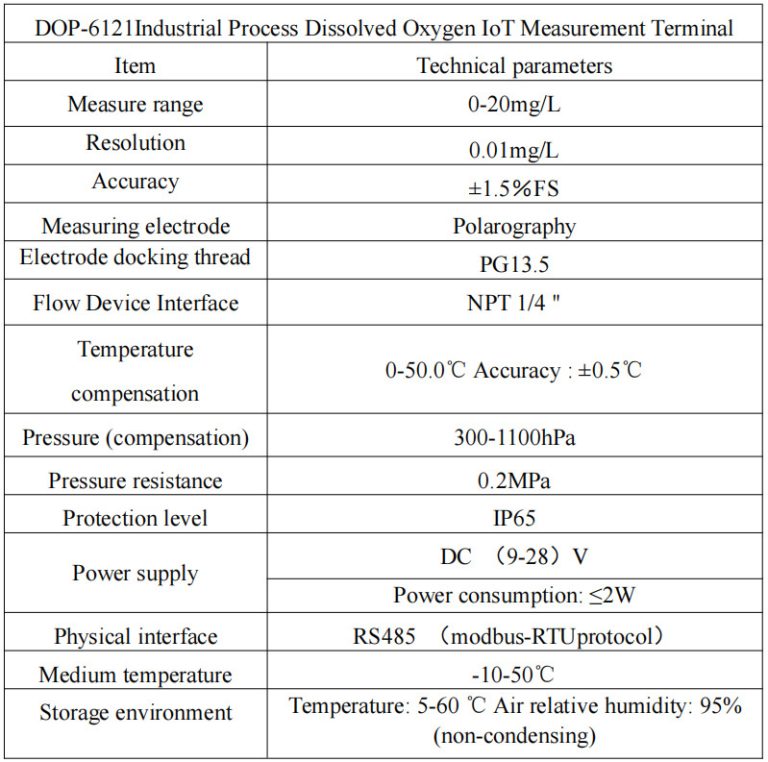
**IoT-Ready Sensors:** ChiMay sensors feature built-in digital communication capabilities supporting seamless integration with IoT platforms and cloud-based analytics environments. Communication options include Modbus RTU, Modbus TCP/IP, HART, and wireless connectivity options.
**Edge Computing Integration:** ChiMay transmitters incorporate edge computing capabilities that enable local data processing, alarm generation, and control functions while maintaining connectivity to central monitoring platforms.
**Cloud Platform Compatibility:** ChiMay sensor data integrates seamlessly with industry-standard IoT platforms and cloud analytics environments, enabling deployment of sophisticated monitoring applications without proprietary infrastructure investments.
**Scalable Architecture:** ChiMay monitoring solutions scale from single-sensor installations to enterprise-wide monitoring networks, supporting phased implementation approaches that align with organizational capabilities and budget constraints.
## Implementation Recommendations
Organizations seeking to capture the benefits of IoT-enabled water quality monitoring should consider the following implementation guidance:
**Start with Critical Applications:** Initial deployments should focus on monitoring points where water quality directly impacts product quality, process efficiency, or regulatory compliance. These high-value applications demonstrate the technology’s capabilities and generate ROI that justifies expanded deployment.
**Ensure Integration Compatibility:** Verify that selected sensors and platforms integrate with existing control systems and data management infrastructure to avoid interoperability issues that could compromise implementation success.
**Plan for Scalability:** Select architectures and vendors that support incremental expansion as monitoring programs mature and organizational confidence in the technology grows.
**Establish Data Management Practices:** Develop processes and procedures for utilizing the rich data streams generated by IoT-enabled monitoring systems effectively.
## Conclusion
The top 10 benefits of IoT-enabled water quality monitoring—real-time visibility, reduced water loss, predictive maintenance, regulatory compliance, remote monitoring, improved data quality, scalability, Industry 4.0 integration, sustainability improvement, and competitive advantage—demonstrate why adoption rates continue accelerating across all water management sectors.
The projected market growth to **$13.45 billion in 2026** reflects recognition that connected monitoring delivers compelling value for organizations committed to operational excellence, environmental stewardship, and sustainable growth. ChiMay Corporation’s comprehensive portfolio of IoT-enabled water quality sensors provides the foundation for successful monitoring programs that capture these benefits.
For organizations ready to advance their water quality monitoring capabilities, ChiMay offers the technology, expertise, and support required for successful implementation. Visit www.chimaycorp.com to explore IoT-enabled monitoring solutions for your applications.
—
*This article incorporates market research data from ThingsLog IoT Trends Transforming Water Utilities Report (April 2026), Dimension Market Research Smart Water Management Market Analysis (2025), and WaterTech Research Global Smart Water Market Outlook. ChiMay Corporation provides comprehensive water quality analysis instrumentation for industrial, municipal, and environmental monitoring applications worldwide.*