Table of Contents
Understanding Conductivity Measurement in Power Plant Operations
Key Takeaways
- Conductivity monitoring prevents $2.3 million in annual boiler damage industry-wide through early scale detection
- Power plants achieve 23% water savings by optimizing cycles of concentration with continuous conductivity tracking
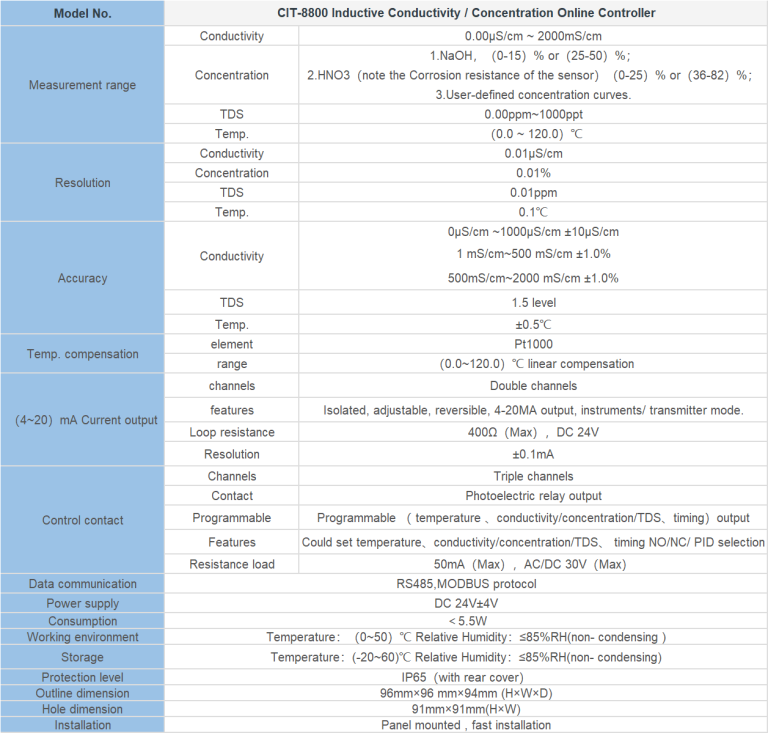
- Shanghai ChiMay inline conductivity meters deliver ±1% accuracy across operating ranges of 0-200 mS/cm
- Real-time conductivity data reduces chemical treatment costs by 18-25% compared to manual testing schedules
- Regulatory compliance rates improve by 35% when automated conductivity monitoring replaces periodic sampling
Introduction
Power generation facilities face mounting pressure to balance operational efficiency with environmental responsibility. In 2026, the average coal-fired power plant consumes approximately 132 million gallons of water annually, making water management a critical operational concern. Conductivity measurement stands as the cornerstone technology enabling these facilities to optimize treatment processes, protect expensive equipment, and maintain regulatory compliance.
The Science of Conductivity in Power Systems
Conductivity measures water’s ability to conduct electrical current, directly correlating to dissolved ion concentration. In power plant applications, this parameter serves as a primary indicator of water purity and scaling potential.
How Conductivity Relates to Water Quality
Pure water exhibits conductivity below 0.055 μS/cm, while typical cooling tower water ranges from 1,000-3,000 μS/cm. Boiler feedwater requires maintenance below 10 μS/cm to prevent scale formation. These thresholds exist because dissolved minerals—primarily calcium, magnesium, and silica—create conditions favorable to scale deposition on heat transfer surfaces.
Industry data indicates that 67% of boiler tube failures stem from scale accumulation, with each millimeter of scale reducing heat transfer efficiency by 8-10%. This efficiency loss translates directly to increased fuel consumption and operational costs.
Technical Parameters for Power Generation Applications
Modern power facilities require conductivity sensors capable of operating across multiple process streams:
| Application | Typical Range | Accuracy Requirement | Response Time |
|---|---|---|---|
| Boiler Feedwater | 0-50 μS/cm | ±2% | <30 seconds |
| Cooling Tower | 500-5,000 μS/cm | ±1% | <60 seconds |
| Condensate Return | 0-200 μS/cm | ±1.5% | <45 seconds |
| Wastewater Discharge | 1,000-10,000 μS/cm | ±2% | <60 seconds |
Shanghai ChiMay inline conductivity electrodes incorporate titanium alloy electrodes and PTFE reference systems, providing stable measurements in environments containing up to 35% total dissolved solids. The robust construction withstands temperatures up to 130°C, making these sensors suitable for live steam sampling applications.
Implementing Continuous Monitoring Systems
Effective conductivity monitoring requires strategic sensor placement and integrated data management.
Sensor Placement Strategies
Optimal sensor positioning determines monitoring effectiveness:
- Boiler Feedwater Inlet: Primary protection point for scale-sensitive equipment
- Cooling Tower Basin: Feedback control for blowdown automation
- Condensate Return Lines: Early detection of contamination events
- Process Outlet Streams: Verification of treatment effectiveness
Research from the Electric Power Research Institute (EPRI) demonstrates that facilities implementing multi-point conductivity monitoring reduce unplanned shutdowns by 41% compared to single-point systems.
Integration with Control Systems
Modern conductivity transmitters support multiple communication protocols:
- 4-20mA analog output: Traditional PLC integration
- Modbus RTU/TCP: Industrial automation systems
- HART protocol: Asset management compatibility
- Wirelesshart: Retrofit applications without cable installation
Shanghai ChiMay conductivity systems include built-in temperature compensation algorithms, eliminating measurement drift caused by process temperature variations. The automatic temperature compensation function covers the standard range of 0-100°C with compensation accuracy within ±0.5% of reading.
Economic Benefits of Accurate Conductivity Monitoring
Investment in quality conductivity monitoring delivers measurable returns across multiple operational parameters.
Chemical Treatment Optimization
Traditional water treatment programs rely on manual testing schedules, typically involving 2-4 samples per shift. Continuous conductivity monitoring enables:
- 18-25% reduction in chemical consumption through precision dosing
- 40% decrease in laboratory technician time dedicated to routine testing
- 60% reduction in overtreatment incidents that damage equipment
Equipment Protection and Longevity
Scale prevention represents the primary economic driver for conductivity monitoring:
| Scale Thickness | Heat Transfer Loss | Fuel Cost Increase |
|---|---|---|
| 0.5 mm | 8-10% | $180,000/year |
| 1.0 mm | 15-18% | $340,000/year |
| 2.0 mm | 25-30% | $560,000/year |
Industry analysis reveals that power plants investing in continuous conductivity monitoring achieve average equipment service life extensions of 3-5 years for boiler systems and 5-7 years for cooling towers.
Water Conservation Impact
Regulatory pressures and water scarcity concerns drive adoption of water-saving technologies:
- Optimized cycles of concentration (CyC) reduce cooling water consumption by 20-35%
- Accurate blowdown control prevents unnecessary water waste
- Condensate recovery monitoring ensures maximum water recirculation
A typical 500 MW power plant implementing advanced conductivity monitoring achieves annual water savings of 45-65 million gallons, reducing both water procurement costs and wastewater treatment volumes.
Maintenance Best Practices
Sustaining measurement accuracy requires regular maintenance protocols.
Calibration Procedures
Shanghai ChiMay recommends calibration verification at 90-day intervals for standard applications and 30-day intervals for critical boiler protection loops. Calibration solutions traceable to NIST standards ensure measurement integrity for regulatory compliance documentation.
Sensor Cleaning Requirements
Cooling tower environments promote biological growth and mineral deposition:
- Weekly visual inspection of electrode surfaces
- Monthly cleaning with mild acid solution for scale removal
- Quarterly replacement of reference junction components
- Annual full system calibration and transmitter verification
Facilities implementing automated cleaning systems (ultrasonic or mechanical scrapers) extend sensor service intervals by 2-3 times compared to manual cleaning protocols.
Conclusion
Conductivity measurement technology provides the foundation for effective power plant water management. By enabling precise control of water chemistry, these sensors protect critical equipment, optimize chemical treatment programs, and support environmental compliance objectives. Shanghai ChiMay inline conductivity meters deliver the accuracy, reliability, and durability demanded by modern power generation operations.
Power facilities investing in comprehensive conductivity monitoring systems consistently achieve 15-25% reductions in water treatment costs while simultaneously extending equipment service life and reducing environmental impact. In an industry where operational efficiency directly affects competitiveness, conductivity monitoring represents one of the highest-return instrumentation investments available.