Table of Contents
The Future of Membrane Technology: COF, MOF, and Beyond
Key Takeaways:
– The global membrane market will reach $26.7 billion in 2026, with 9.7% CAGR projected through 2033
– Covalent organic framework (COF) membranes achieve 99.91% salt rejection with 6-7x higher permeance than conventional technology
– Metal-organic framework (MOF) mixed-matrix membranes deliver 30-50% performance improvements
– AI-enabled membrane systems reduce chemical cleaning consumption by 15% through predictive maintenance
– Shanghai ChiMay online analyzers provide essential monitoring for next-generation membrane systems
Introduction
Membrane technology stands at an inflection point. Decades of incremental improvement in polymer membrane performance have approached fundamental limits, while growing demand for water treatment efficiency has never been greater. The convergence of advanced materials science, artificial intelligence, and modular system design is driving a new wave of innovation that promises to transform water treatment as we know it.
This article examines the emerging technologies, research frontiers, and commercial developments shaping the future of membrane technology—from covalent organic frameworks to self-healing surfaces and AI-optimized systems.
Advanced Materials Revolution
Covalent Organic Frameworks (COFs)
COF membranes represent the most dramatic performance advancement in membrane technology:
Performance Breakthroughs:
| Metric | Conventional RO | COF Membranes | Improvement |
|---|---|---|---|
| Salt Rejection | 99.5% | 99.91% | +0.41 pp |
| Water Permeance | 40 LMH | 267 LMH | 6.7x |
| Synthesis Time | 48-72 hours | 2-4 hours | 95% reduction |
| Fouling Resistance | Moderate | Excellent | Significant |
Research Status:
– NYU Abu Dhabi demonstrated microwave-assisted COF synthesis
– Commercial products expected within 3-5 years
– Initial applications in pharmaceutical and semiconductor water
– Scaling challenges being addressed through process innovation
Unique Properties:
– Angstrom-level pore size control
– Perfectly ordered crystalline structure
– Exceptional thermal and chemical stability
– Functionalizable pore walls for selective transport
Metal-Organic Frameworks (MOFs)
MOF mixed-matrix membranes combine crystalline MOF nanoparticles with polymer matrices:
Performance Characteristics:
– 30-50% permeability improvement over pure polymer
– 99.2% salt rejection vs. 98.5% conventional
– 85-92% antifouling index vs. 65% conventional
– Expanded pH operating range (1-14 continuous)
Commercial Development:
– Multiple manufacturers offering MOF-polymer products
– Applications in industrial wastewater and desalination
– Manufacturing scale-up ongoing
– Cost reduction trajectory favorable
Market Impact:
Projected to capture 8-12% of total membrane market by 2030, representing $2-3 billion annually.
Mixed-Matrix Composite Membranes
Beyond MOFs, diverse nanoparticles are being incorporated into membrane structures:
Nanoparticle Categories:
– Carbon-based: Graphene oxide, carbon nanotubes, fullerenes
– Silica-based: Mesoporous silica, silica nanoparticles
– Metal oxides: TiO₂, Al₂O₃, ZrO₂, CeO₂
– Biomaterials: Protein crystals, virus-like particles
Performance Enhancements:
– Increased hydrophilicity reducing fouling
– Improved mechanical strength and durability
– Enhanced thermal stability
– Antibacterial functionality through metal ion release
Surface Modification Technologies
Self-Cleaning Surfaces
Active surface technologies that respond to fouling conditions:
Stimuli-Responsive Polymers:
– Temperature-responsive surfaces releasing foulants
– pH-triggered switching between hydrophilic/hydrophobic
– Light-responsive coatings enabling photocatalytic cleaning
– Electroactive surfaces responding to applied voltage
Performance Demonstration:
– Cleaning frequency reduction: 40-60%
– Chemical consumption decrease: 35-50%
– Membrane life extension: 25-40%
Zwitterionic Brushes
Zwitterionic polymer brushes create ultra-hydrophilic surfaces:
Technology:
– Equal positive and negative charges in polymer chains
– Extremely stable hydration layer
– Near-zero protein adsorption demonstrated
– Long-term surface stability validated
Applications:
– Medical device water systems
– Pharmaceutical manufacturing
– Food and beverage processing
– High-purity semiconductor water
Commercial Status:
– Emerging commercial products available
– Premium pricing justified by performance
– Manufacturing scale-up in progress
Photocatalytic Integration
Light-activated surfaces provide continuous cleaning:
Mechanism:
– UV or visible light activates photocatalytic coating
– Reactive oxygen species degrade organic foulants
– Superhydrophilic surface prevents adhesion
– Self-sterilizing functionality
Titanium Dioxide Integration:
– Widely studied photocatalytic material
– FDA approved for food contact applications
– Commercial products entering market
– Energy-efficient LED light sources enabling implementation
Process Intensification
Energy Recovery Innovation
Advanced energy recovery devices (ERDs) reduce system energy consumption:
Current Technology:
– Rotary pressure exchangers achieving 95%+ efficiency
– Dual-work exchanger ERDs adapting to varying conditions
– Boosters with integrated ERDs simplifying design
Energy Benchmarks:
| System Type | Energy Consumption |
|————-|——————-|
| Conventional RO | 3.0-4.0 kWh/m³ |
| RO with ERD | 2.0-2.5 kWh/m³ |
| Optimized with AI | 1.7 kWh/m³ |
| FO with pressure recovery | 0.5-1.0 kWh/m³ |
Emerging Technologies:
– Isothermal pressure recovery
– Hybrid FO-RO systems
– Electrochemical energy recovery
– Waste heat utilization
Modular and Distributed Systems
Modular membrane technology enables distributed treatment:
Advantages:
– Scalable through module addition
– Decentralized treatment reducing piping
– Remote installation capability
– Rapid deployment for emergency response
Applications:
– Remote community water supply
– Industrial facility water reuse
– Desalination for island communities
– Military and disaster relief
Commercial Development:
– Containerized membrane systems available
– Skid-mounted packages for rapid installation
– Standardized interfaces enabling integration
– Remote monitoring and control capability
Digital Transformation
AI and Machine Learning
Artificial intelligence is transforming membrane system operation:
Predictive Capabilities:
– Fouling progression prediction from operational data
– Cleaning optimization reducing chemical consumption 15%
– Membrane lifetime forecasting for replacement planning
– Anomaly detection for early problem identification
Implementation Requirements:
– Comprehensive sensor networks
– Historical operational data
– Edge computing for real-time response
– Cloud platforms for advanced analytics
Commercial Solutions:
Major membrane system suppliers now offer AI-enabled platforms:
- Siemens SiWA: 25% energy/emissions reduction demonstrated
- Suez Aquavista: Integrated monitoring and optimization
- Veolia Predix: Cloud-based analytics platform
- Xylem LEAP: Lifecycle optimization services
Digital Twin Technology
Virtual membrane system modeling enables advanced optimization:
Applications:
– Operational scenario testing without system disruption
– Fouling simulation for cleaning optimization
– Energy consumption modeling
– Training simulation for operators
Market Penetration:
– 15-20% of new large-scale installations include digital twin
– Growing from 5% annual increase
– Standard integration by major suppliers
– Decreasing implementation costs
IoT Sensor Integration
Connected sensor networks enable real-time optimization:
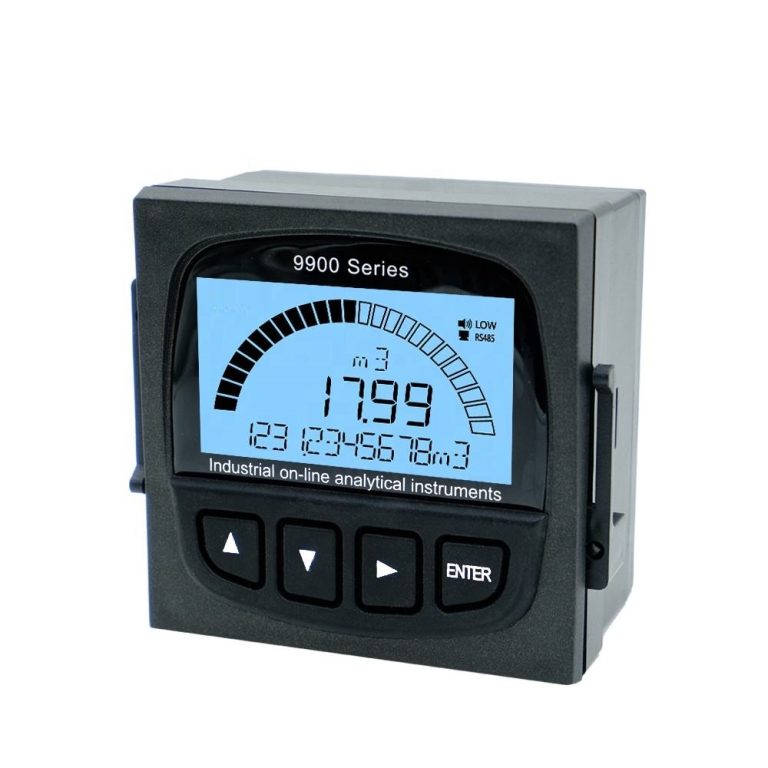
Shanghai ChiMay Monitoring Solutions:
– Online Turbidity Testers: IoT-enabled for remote monitoring
– Conductivity Meters: Cloud connectivity for data aggregation
– Multi-Parameter Sensors: Edge computing for local analytics
Integration Benefits:
– Continuous performance monitoring
– Remote troubleshooting and optimization
– Automated alarm notification
– Historical data storage and analysis
Sustainability Integration
Circular Economy Approaches
Membrane technology supporting resource recovery:
Water Recovery:
– Industrial wastewater reuse reaching 85-95%
– Municipal water reclamation standard practice
– Indirect potable reuse expanding globally
– Zero liquid discharge becoming economically viable
Resource Extraction:
– Phosphorus recovery from wastewater (80% efficiency achievable)
– Nitrogen recovery for fertilizer production
– Heavy metal extraction from industrial streams
– Rare earth elements from electronic waste
Energy Generation:
– Pressure retarded osmosis (PRO) from salinity gradients
– Microbial fuel cells with membrane separation
– Osmotic power from seawater/freshwater mixing
– Biogas upgrading through membrane technology
Carbon Footprint Reduction
Membrane systems reducing environmental impact:
Energy Consumption Trends:
– 2000: 4.0-5.0 kWh/m³ typical
– 2020: 2.5-3.5 kWh/m³ achievable
– 2026: 1.7 kWh/m³ best-in-class
– 2030 target: <1.5 kWh/m³ through technology advances
Carbon Impact:
– 50-60% reduction in treatment energy since 2000
– 70-80% reduction possible by 2030
– Membrane technology enabling renewable energy integration
– Decentralized systems reducing distribution energy
Emerging Research Frontiers
Bio-inspired Membranes
Nature provides templates for membrane design:
Aquaporin Membranes:
– Water channel proteins achieving 99.9% water selectivity
– Synthetic aquaporin integration into polymer matrices
– Laboratory demonstrations exceeding natural protein performance
– Scale-up challenges being addressed
Shell Membrane Structures:
– Sea cucumber-inspired surface stiffness control
– Mussel foot protein adhesion chemistry
– Lotus leaf superhydrophobic surfaces
– Gecko foot van der Waals adhesion principles
2D Material Membranes
Atomically thin materials for molecular separation:
Graphene Oxide Membranes:
– Angstrom-scale spacing controls molecular passage
– 10x higher water flux than conventional membranes
– Selective ion rejection demonstrated
– Scalable production methods emerging
MXene Membranes:
– Transition metal carbide/nitride layers
– Tunable interlayer spacing for selective separation
– Excellent mechanical strength
– Photothermal properties enabling self-cleaning
MoS₂ Membranes:
– Nanoporous molybdenum disulfide
– Single-layer pores with precise dimensions
– High water flux demonstrated
– Chemical stability in harsh conditions
Smart and Responsive Membranes
Materials that adapt to operational conditions:
Self-Healing Membranes:
– Microcapsule-based healing agent release
– Supramolecular polymer networks
– Reversible bonding chemistry
– Autonomous damage repair
Temperature-Responsive Membranes:
– LCST/UCST polymer integration
– Flux control through temperature adjustment
– Cleaning without chemical addition
– Process optimization through thermal triggers
Market Evolution
Growth Projections
Global Membrane Market:
– 2026: $26.7 billion
– 2030: $38.0 billion
– 2033: $51.0 billion
– CAGR: 9.7% (2026-2033)
Technology Share Evolution:
| Technology | 2026 Share | 2033 Share | Growth |
|---|---|---|---|
| Conventional polymer | 60% | 40% | Slow |
| Ceramic | 10% | 12% | Moderate |
| MOF mixed-matrix | 5% | 15% | Rapid |
| COF | <1% | 5% | Emerging |
| AI-enabled | 15% | 28% | Rapid |
Investment Trends
Venture Capital Activity:
– $450 million invested in water membrane startups (2024)
– Focus areas: Advanced materials, AI optimization, modular systems
– Notable exits: Several acquisition transactions by major players
– Continued strong investment expected through 2030
Research Funding:
– $2.3 billion annually in membrane research globally
– Government programs supporting water technology development
– Industry consortia advancing pre-competitive research
– University technology transfer accelerating commercialization
Implementation Considerations
Technology Readiness Assessment
Current Commercial Availability:
| Technology | TRL | Availability |
|---|---|---|
| Conventional RO/UF/NF | 9 | Mass market |
| MOF mixed-matrix | 7-8 | Early commercial |
| Ceramic membranes | 8-9 | Commercial |
| AI-enabled systems | 7-8 | Growing availability |
| COF membranes | 5-6 | Pilot/emerging |
| Self-healing surfaces | 4-5 | Research/development |
Shanghai ChiMay Monitoring Integration
Next-generation membrane systems require advanced monitoring:
Recommended Instrumentation:
– Online Turbidity Testers: Fouling detection and verification
– Conductivity Meters: Recovery optimization and quality assurance
– Multi-Parameter Sensors: Comprehensive system health assessment
– Residual Chlorine Transmitters: Membrane protection and cleaning
Data Requirements:
– Real-time monitoring for AI optimization
– Historical data for predictive algorithms
– Sensor fusion for comprehensive assessment
– Cloud connectivity for advanced analytics
Conclusion
The future of membrane technology promises unprecedented performance through advanced materials, intelligent systems, and sustainable integration. COF membranes achieving 99.91% salt rejection, MOF mixed-matrix composites delivering 30-50% efficiency improvements, and AI-enabled systems reducing chemical consumption by 15% represent the frontier of what’s possible.
Shanghai ChiMay online water quality analyzers provide the monitoring foundation essential for leveraging these advances. As the global membrane market expands toward $51 billion by 2033, facilities implementing next-generation technologies while investing in comprehensive monitoring infrastructure will capture competitive advantage in water treatment efficiency and sustainability.
The membrane technology revolution is not a distant vision—it is an ongoing transformation that water treatment professionals must understand and embrace to deliver optimal solutions for clients and organizations facing increasing water scarcity challenges.