Table of Contents
Key Takeaways
- Industrial water softeners handle flow rates from 10 GPM to over 500 GPM, requiring properly sized control valves
- Improper valve selection causes up to 35% of softener system failures in industrial applications
- Modern control valves with digital communication can reduce water consumption by 20-30% through optimized regeneration
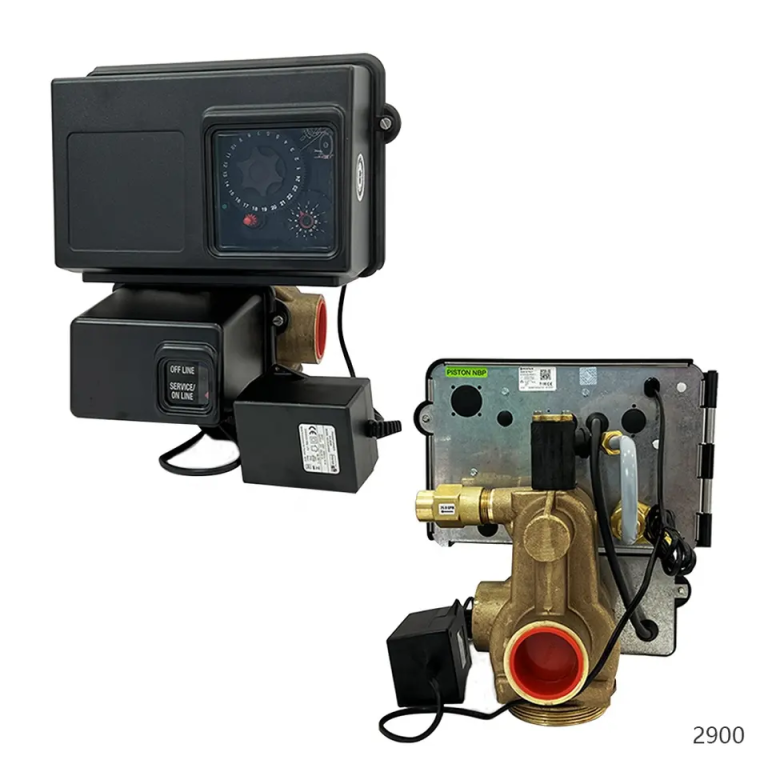
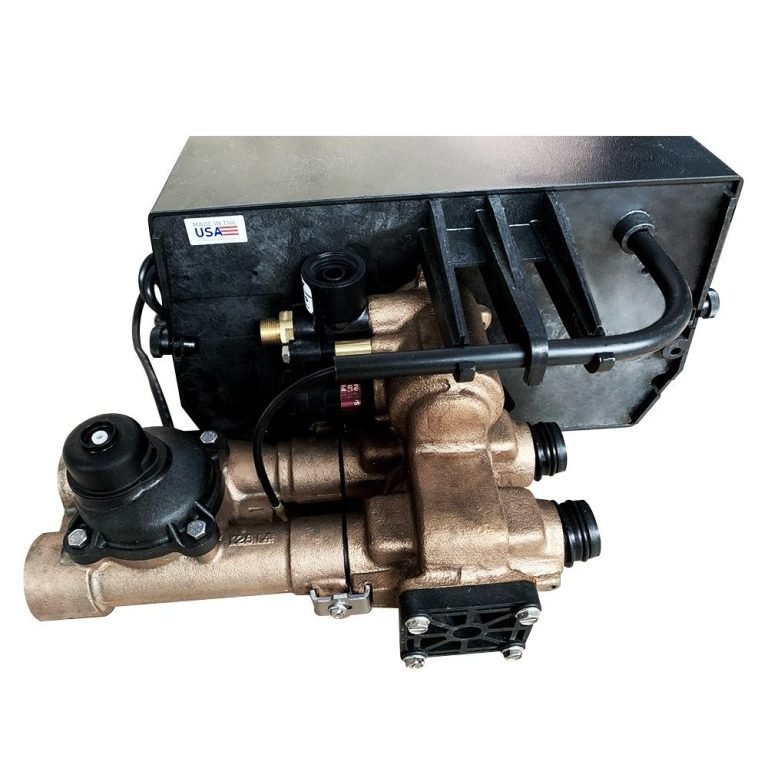
Water softener control valves govern the entire softening process, controlling flow, regeneration timing, and backwash cycles. Selecting the appropriate valve ensures reliable operation, efficient water use, and consistent water quality throughout the system lifecycle.
Understanding Water Softening Fundamentals
Water softeners remove calcium and magnesium ions—the primary components of water hardness—through an ion exchange process. Resin beads charged with sodium ions exchange these sodium ions for hardness ions in the passing water. Over time, the resin becomes exhausted and requires regeneration with salt solution.
Hardness and Its Impact
Hardness is typically expressed in:
- Grains per gallon (gpg): 1 grain = 17.1 mg/L of hardness as CaCO3
- mg/L as CaCO3: Parts per million referenced to calcium carbonate
- mmol/L: Millimoles per liter for scientific applications
| Hardness Level | Grains/Gallon | Classification |
|---|---|---|
| 0-3.5 gpg | 0-60 mg/L | Soft |
| 3.5-7.0 gpg | 60-120 mg/L | Moderately Hard |
| 7.0-10.5 gpg | 120-180 mg/L | Hard |
| >10.5 gpg | >180 mg/L | Very Hard |
Industrial Hardness Requirements
Different industries require specific water quality for their processes:
- Boilers: <0.3 gpg to prevent scale formation
- Cooling towers: <15 gpg to minimize scale and corrosion
- Food and beverage: Varies by application; often <1 gpg
- Textiles: <1 gpg to ensure dye uptake consistency
- Semiconductor UPW pretreatment: <1 gpg as critical feedwater specification
control valve Types and Configurations
Time-Initiated Valves
Time-initiated valves regenerate at preset intervals regardless of actual water usage. These valves are appropriate for:
- Predictable, consistent water demand
- Applications where regeneration timing can be scheduled
- Facilities where water quality consistency is paramount
Advantages:
- Simple operation and programming
- Predictable maintenance schedules
- Lower initial cost
Limitations:
- May regenerate unnecessarily during low-demand periods
- Cannot respond to unexpected demand changes
- Wastes water and salt when demand is lower than expected
Demand-Initiated Valves
Demand-initiated valves track water usage through integrated flow meters and regenerate only when capacity is exhausted. These valves are appropriate for:
- Variable or unpredictable water demand
- Applications where water conservation is important
- Facilities seeking optimal efficiency
Advantages:
- Efficient water and salt use based on actual demand
- Automatic adjustment to demand changes
- Reduced operating costs
Limitations:
- More complex programming and maintenance
- Higher initial cost
- Requires accurate flow measurement
Twin-Tank Configurations
Twin-tank systems provide continuous soft water by alternating between two softener vessels—one in service while the other regenerates.
Applications:
- Continuous high-flow operations
- Facilities where service interruption is unacceptable
- Systems exceeding 100 GPM capacity
Advantages:
- Continuous soft water supply
- Smaller regeneration equipment per vessel
- Extended system capacity
Limitations:
- Higher capital investment
- More complex installation
- Larger footprint requirements
Key Selection Criteria
1. Flow Rate Requirements
The control valve must accommodate peak flow rates without excessive pressure loss. Industry guidelines recommend:
| System Size | Typical Flow Rate | Valve Size |
|---|---|---|
| Small commercial | 10-30 GPM | 1-inch |
| Medium commercial | 30-75 GPM | 1.5-inch |
| Large commercial | 75-150 GPM | 2-inch |
| Industrial | 150-500 GPM | 3-inch |
2. Operating Pressure
Industrial applications typically require valves rated for:
- Standard service: 125 psi (8.6 bar)
- High-pressure service: 150-200 psi (10.3-13.8 bar)
ChiMay softening valves offer both pressure ratings to meet diverse application requirements.
3. Regeneration Control
Select regeneration control based on demand patterns:
| Demand Pattern | Recommended Control |
|---|---|
| Consistent, predictable | Time-clock initiated |
| Highly variable | Demand-initiated with flow meter |
| Critical continuous service | Demand-initiated twin tank |
4. Communication and Integration
Modern industrial facilities require valves that integrate with plant control systems:
Communication Protocols:
- 4-20 mA: Analog output for basic integration
- Modbus RTU/TCP: Digital communication for PLC integration
- Ethernet/IP: Integration with industrial Ethernet networks
- Wireless: For retrofit applications without wiring
5. Regeneration Options
Upflow vs. Downflow Regeneration:
- Downflow: Traditional approach, reliable operation
- Upflow: More efficient salt utilization, preferred for large systems
Brine System Options:
- Brine tank: Standard for most applications
- Brine meter: Measures salt use for efficiency tracking
- Manual vs. automatic brine refill: Based on operational requirements
Installation Considerations
Piping Configuration
Proper piping design ensures efficient operation and accurate flow measurement:
- Bypass piping: Allows isolation of softener for maintenance
- Sample ports: Enable water quality verification
- Flow meters: Required for demand-initiated regeneration
- Pressure gauges: Monitor system performance
- Air eliminators: Prevent air binding in resin tanks
Electrical Requirements
Control valve electronics require:
- Voltage: 120V AC or 24V DC depending on model
- Enclosure rating: Appropriate for installation environment
- Grounding: Proper grounding prevents control issues
Space Requirements
Consider:
- Access for resin replacement (typically every 10-15 years)
- Brine tank dimensions and refill requirements
- Control panel visibility and operator access
- Maintenance clearance around valve assembly
Maintenance and Troubleshooting
Routine Maintenance Schedule
| Task | Frequency |
|---|---|
| Inspect cycle operation | Monthly |
| Clean brine tank | Quarterly |
| Check salt level | Weekly |
| Clean injector assembly | Semi-annually |
| Replace seals and gaskets | Annually |
| Full system inspection | Annually |
Common Problems and Solutions
High Hardness Leakage
- Causes: Resin fouling, exhausted resin, improper regeneration
- Solutions: Backwash to remove fouling, check salt level, verify regeneration cycle
Excessive Water Usage
- Causes: Improper regeneration settings, stuck injector
- Solutions: Adjust regeneration frequency, clean injector, check for leaks
Low Water Pressure
- Causes: Fouled resin, clogged distributor, scale in valve
- Solutions: Deep regenerate, check distributor, clean valve components
Economic Analysis
Operating Costs
Salt Consumption:
- Typical dosage: 6-8 lbs per 1,000 grains of hardness removed
- Annual cost depends on water hardness and usage volume
Water Waste:
- Regeneration typically uses 50-150 gallons per cycle
- Demand-initiated systems reduce waste by 20-40%
Energy:
- Control valve power consumption: minimal (<50 watts during regeneration)
- Minimal impact on facility electrical costs
Total Cost of Ownership
| Factor | Time-Initiated | Demand-Initiated |
|---|---|---|
| Initial cost | Lower | Higher |
| Salt cost | Moderate | Lower |
| Water cost | Moderate | Lower |
| Maintenance | Similar | Similar |
| Total 10-year cost | Higher | Lower |
For facilities with variable demand, demand-initiated systems typically pay back additional investment within 2-3 years.
Selecting ChiMay Control Valves
ChiMay offers a comprehensive range of water softener control valves for industrial applications:
Commercial Valves (1" – 1.5")
- Flow rates to 75 GPM
- Demand or time-initiated control
- Standard and high-pressure ratings
Industrial Valves (2" – 3")
- Flow rates to 500+ GPM
- Advanced communication options
- Heavy-duty construction
System Controllers
- Multi-tank coordination
- Advanced communication protocols
- Remote monitoring capability
Conclusion
water softener valve selection requires careful evaluation of flow requirements, operational patterns, integration needs, and budget constraints. The correct valve choice ensures reliable operation, optimal efficiency, and consistent water quality throughout the system lifecycle.
ChiMay's industrial softening valves provide the durability, flexibility, and communication capability required for demanding commercial and industrial applications. Combined with comprehensive technical support and application engineering, ChiMay helps customers select, install, and maintain softener systems that deliver reliable performance for years of service.