Table of Contents
What Is Industrial Water Recycling and How Does It Work?
Key Takeaways
- Industrial water recycling treats wastewater for reuse, reducing freshwater demand by 30-95%
- The global Industrial Water Reuse Market will grow from USD 19.20 billion to USD 40.94 billion by 2033
- Multi-stage treatment processes ensure recycled water meets industrial quality standards
- Real-time monitoring with precision sensors is critical for safe water recycling
As global freshwater demand continues to outpace supply, industrial facilities are increasingly turning to water recycling as a sustainable solution. Water recycling, also known as water reclamation, treats industrial wastewater to remove contaminants and makes it suitable for reuse in various applications. This process not only conserves precious water resources but also reduces operational costs and regulatory burden.
Understanding the Water Recycling Process
Industrial water recycling involves several distinct treatment stages, each designed to address specific types of contaminants. The process typically begins with pre-treatment, where physical methods such as screening and sedimentation remove large particles and settleable solids. This stage prevents damage to downstream equipment and improves the efficiency of subsequent treatment steps.
Following pre-treatment, biological treatment uses microorganisms to break down organic matter. Aerobic processes, where oxygen is supplied to support microbial growth, are particularly effective for removing biodegradable compounds. For industrial wastewater containing toxic compounds, specialized厌氧消化 systems may be employed to handle more challenging loads.
The next critical stage involves advanced treatment to remove dissolved contaminants that biological processes cannot eliminate. This may include chemical precipitation for heavy metals, advanced oxidation for recalcitrant organic compounds, and membrane filtration for dissolved solids. Reverse osmosis and ultrafiltration membranes can remove up to 99% of dissolved contaminants, producing water quality suitable for even the most demanding industrial applications.
Why Industrial Facilities Need Water Recycling
The drivers for industrial water recycling extend beyond environmental stewardship to include compelling economic and regulatory factors. In water-stressed regions, facilities face increasing restrictions on freshwater withdrawal, making recycling essential for maintaining operations. According to the United Nations, 2.3 billion people live in water-stressed countries, and this number is expected to increase significantly by 2050.
From an economic perspective, water recycling can reduce freshwater procurement costs by 30-50% while decreasing wastewater discharge fees. Additionally, facilities that implement water recycling demonstrate environmental responsibility, enhancing their reputation with stakeholders and customers. In industries where water-intensive processes are critical, such as semiconductors and pharmaceuticals, secure water supply through recycling reduces operational risk.
Key Technologies in Water Recycling Systems
Modern water recycling systems integrate multiple technologies to achieve desired water quality targets. Membrane bioreactors (MBRs) combine biological treatment with membrane filtration, producing high-quality effluent suitable for many industrial applications. These systems offer compact footprints and consistent performance, making them popular choices for space-constrained facilities.
Advanced oxidation processes (AOPs) are employed when wastewater contains recalcitrant compounds that resist biological treatment. AOPs generate hydroxyl radicals that oxidize persistent organic pollutants, breaking them down into simpler, less harmful substances. Common AOP configurations include ozone combined with hydrogen peroxide, ultraviolet light with photocatalysts, and Fenton’s reagent.
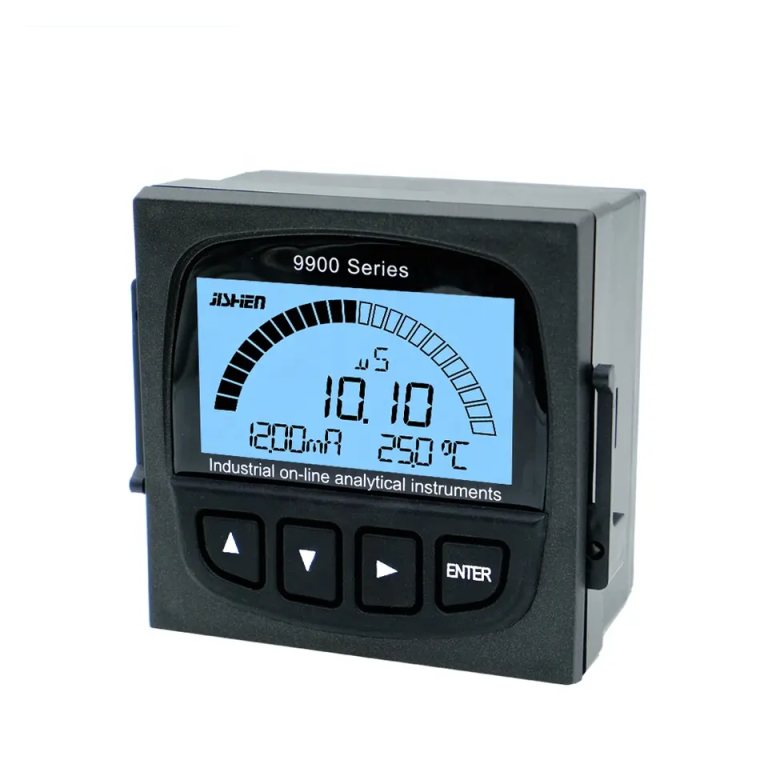
Precision monitoring systems are essential throughout the recycling process. Sensors measuring pH, conductivity, turbidity, and dissolved oxygen provide real-time data for process control. Shanghai ChiMay’s water quality monitoring solutions enable facilities to optimize their recycling operations while maintaining compliance with quality standards.
Applications for Recycled Industrial Water
Recycled water from industrial facilities can be used for various purposes, depending on the treatment level achieved. Non-potable applications such as cooling tower makeup, landscape irrigation, and toilet flushing require less intensive treatment and represent the most common reuse applications.
For more demanding applications, advanced treatment can produce water suitable for process water, boiler feedwater, and even indirect potable reuse. Industries such as semiconductor manufacturing require ultra-pure water that meets stringent specifications for resistivity, particulate content, and dissolved oxygen. Achieving such high water quality requires multiple treatment barriers and continuous monitoring.
Getting Started with Water Recycling
Facilities considering water recycling should begin with a comprehensive water audit to characterize wastewater streams and identify reuse opportunities. Key considerations include wastewater volume and variability, contaminant profiles, desired water quality for target applications, and available treatment footprint.
Pilot testing is recommended to validate treatment performance before committing to full-scale implementation. Many equipment suppliers offer pilot programs that allow facilities to test their technology under actual operating conditions. This approach reduces implementation risk and helps optimize system design.
Shanghai ChiMay provides comprehensive support for facilities implementing water recycling systems, including water quality assessment, sensor selection guidance, and ongoing technical support. Their expertise in water monitoring helps ensure successful recycling program implementation.
Conclusion
Industrial water recycling represents a proven approach to addressing water scarcity while improving operational efficiency and sustainability. With the global water reuse market projected to grow at nearly 10% annually, facilities that invest in recycling technology today will be well-positioned for tomorrow’s water-constrained world. The key to success lies in selecting appropriate treatment technologies and implementing robust monitoring systems to ensure consistent water quality.