Table of Contents
Key Takeaways
- Residual chlorine monitoring ensures 99.9% protection against waterborne pathogen transmission when maintained at recommended levels of 0.2-0.5 mg/L throughout distribution systems
- Electrochemical residual chlorine sensors achieve measurement precision of ±0.02 mg/L, enabling precise disinfection control that reduces chemical costs by 15-25%
- Continuous online monitoring provides 50-70% faster response to disinfection events compared to laboratory sampling programs, protecting public health during contamination incidents
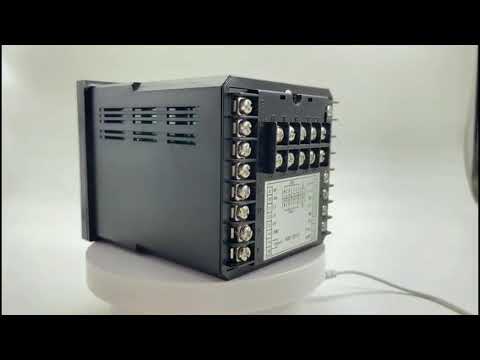
- ChiMay's residual chlorine transmitters combine amperometric detection with advanced signal processing, delivering the reliability required for drinking water compliance monitoring
Disinfection represents the most critical barrier preventing waterborne disease transmission in municipal drinking water systems. Residual chlorine maintains this protection throughout distribution networks, from treatment plant to consumer tap. Accurate online monitoring of residual chlorine ensures protection while optimizing chemical consumption and preventing overexposure that affects water taste and potentially forms disinfection byproducts.
Fundamentals of Chlorine Disinfection
Chemistry of Chlorine in Water
Chlorine Species Distribution
When chlorine is added to water, several reactions occur:
Primary Reaction
- HOCl (hypochlorous acid) forms when chlorine dissolves in water
- HOCl dissociates to OCl⁻ (hypochlorite ion) at higher pH
- Distribution depends on pH and temperature
Equilibrium Distribution
| pH | HOCl (%) | OCl⁻ (%) | Relative Disinfection Efficiency |
|---|---|---|---|
| 6.0 | 96% | 4% | 100% |
| 7.0 | 75% | 25% | 78% |
| 7.5 | 52% | 48% | 54% |
| 8.0 | 23% | 77% | 24% |
The World Health Organization notes that hypochlorous acid (HOCl) provides 80-100 times more effective disinfection than hypochlorite ion (OCl⁻), making pH management critical for disinfection efficiency.
Breakpoint Chlorination
Complete chlorine demand satisfaction requires dosing to breakpoint:
- Initial chlorine addition reacts with reducing compounds (iron, manganese, organic matter)
- Chloramine formation occurs after initial demand satisfied
- Free chlorine appears after breakpoint
- Total chlorine = free chlorine + combined chlorine (chloramines)
Disinfection Effectiveness
CT Concept
Disinfection dosage depends on concentration (C) and contact time (T):
- CT value = Concentration (mg/L) × Time (minutes)
- Required CT varies by pathogen and temperature
- Log inactivation targets determine required values
Pathogen Inactivation Requirements
| Pathogen | Log Reduction | CT Required (mg·min/L) at pH 7, 20°C |
|---|---|---|
| E. coli | 4-log | 3.5 |
| Giardia | 3-log | 145 |
| Viruses | 4-log | 12 |
| Cryptosporidium | 3-log | 12,600 |
The EPA Surface Water Treatment Rules mandate specific CT values for surface water sources, requiring continuous monitoring of both chlorine residual and flow rate for contact time calculation.
Electrochemical Detection Technologies
Amperometric Sensors
Amperometric sensors measure chlorine through electrochemical reaction:
Two-Electrode System
- Working electrode: Platinum or gold surface
- Reference electrode: Silver/silver chloride (Ag/AgCl) in KCl electrolyte
- Applied voltage drives chlorine reaction
- Current proportional to chlorine concentration
Reaction Chemistry
At the working electrode:
- HOCl + 2e⁻ → Cl⁻ + OH⁻ (reduction reaction)
- Current magnitude relates directly to HOCl concentration
The American Water Works Association (AWWA) recognizes amperometric sensors as the standard technology for continuous free chlorine monitoring in drinking water applications.
Membrane-Covered Sensors
Design Architecture
Membrane technology protects electrodes while allowing analyte diffusion:
Components
- PTFE membrane: Permeable to HOCl, excludes interfering species
- Electrolyte layer: Potassium hydrogen phthalate solution
- Working electrode: Gold or platinum
- Counter electrode: Silver
- Reference electrode: Silver/silver chloride
Advantages
- Selective HOCl measurement excluding OCl⁻
- Reduced interference from temperature, flow rate
- Extended calibration intervals (2-4 weeks)
- Suitable for low-chlorine applications (0.05-5 mg/L)
Free vs. Total Chlorine Measurement
Free Chlorine Sensors
- Measure only HOCl and OCl⁻
- Response time: 30-90 seconds
- Maintenance: Weekly inspection, 2-4 week calibration
- Membrane life: 3-6 months depending on water quality
Total Chlorine Sensors
- Measure free chlorine + chloramines
- Require additional chemistry (iodometric method)
- Response time: 60-180 seconds
- Higher maintenance requirements due to reagent addition
| Parameter | Free Chlorine | Total Chlorine |
|---|---|---|
| Measurement | HOCl + OCl⁻ | HOCl + OCl⁻ + chloramines |
| Interference | Low | pH-sensitive |
| Maintenance | Moderate | Higher (reagent replacement) |
| Application | Disinfection control | Compliance reporting |
Performance Specifications
Measurement Characteristics
Detection Parameters
| Specification | Free Chlorine | Total Chlorine |
|---|---|---|
| Range | 0.02-20 mg/L | 0.02-10 mg/L |
| Resolution | 0.01 mg/L | 0.01 mg/L |
| Accuracy | ±0.02 mg/L or ±5% | ±0.05 mg/L or ±10% |
| Response time | < 60 seconds | < 120 seconds |
| Drift | < 2% per week | < 3% per week |
Interference Factors
Water Quality Effects
Calibration and Maintenance
Calibration Procedures
Standard Solution Method
- Prepare free chlorine standard (0.5-2.0 mg/L using sodium hypochlorite)
- Verify concentration with DPD colorimetric method (NIST-traceable)
- Install sensor in calibration cell with standard
- Allow stabilization (5-10 minutes)
- Adjust instrument to match standard value
Frequency Guidelines
| Application | Calibration Interval |
|---|---|
| Distribution system | 2-4 weeks |
| Treatment plant | 1-2 weeks |
| Critical compliance | 1 week |
Maintenance Requirements
| Task | Frequency |
|---|---|
| Visual inspection | Daily |
| Membrane cleaning | Weekly |
| Electrolyte refill | 2-4 weeks |
| Membrane replacement | 2-4 months |
| Full sensor replacement | 12-24 months |
| Symptom | Probable Cause | Solution |
|---|---|---|
| Low readings | Fouled membrane | Replace membrane |
| High readings | Air bubbles | Remove bubbles |
| Drifting readings | Reference drift | Replace reference |
Economic Value of Online Monitoring
Chemical Optimization
Without continuous monitoring, facilities typically overdose by 20-40%, wasting sodium hypochlorite and increasing disinfection byproduct formation. Continuous monitoring enables precise dosing, achieving 15-25% chemical savings while maintaining compliance.
Public Health Protection
The Centers for Disease Control documents multiple contamination events where online chlorine monitoring provided early warning preventing widespread illness. Online detection time of 5-30 minutes versus 4-24 hours for laboratory sampling can prevent exposure of entire populations to waterborne pathogens.
Electrochemical residual chlorine monitoring provides the essential data for maintaining safe drinking water while optimizing chemical consumption. Selection of appropriate sensor technology, installation in representative locations, and consistent calibration ensure reliable performance that protects public health.