Table of Contents
Why Mining Companies Are Investing Heavily in Water Quality Monitoring
Key Takeaways:
– Mining operations with advanced water monitoring systems report 35% fewer environmental incidents and 28% lower water-related operating costs
– Global mining water monitoring market is projected to reach USD 3.2 billion by 2028, growing at 12.5% annually
– The International Council on Mining and Metals (ICMM) reports that leading operations now monitor 97% of significant water discharge points in real-time
The mining industry is undergoing a fundamental shift in water management philosophy. What was once viewed primarily as a compliance obligation is now recognized as a strategic capability that drives operational efficiency, reduces risk, and builds social license to operate.
This shift is reflected in substantial investment: mining companies globally allocated USD 1.8 billion to water monitoring systems in 2025, with projections indicating growth to USD 3.2 billion by 2028.
The Drivers of Investment
Multiple factors are compelling mining companies to increase water monitoring investment:
Regulatory Intensification
Environmental regulations governing mining water management have tightened dramatically:
- European Union: Water Framework Directive and Mining Waste Directive impose comprehensive monitoring requirements
- Australia: National Water Quality Management Strategy requires continuous monitoring at most operations
- Canada: Metal Mining Effluent Regulations mandate real-time monitoring for new approvals
- Chile: Supreme Decree 90 establishes strict discharge limits with continuous monitoring requirements
The U.S. Environmental Protection Agency (EPA) reports that enforcement actions against mining operations increased 47% between 2020 and 2025, with inadequate monitoring cited as a contributing factor in 68% of cases.
Water Scarcity Pressures
Global water scarcity is transforming water from a readily available resource to a strategic constraint:
- 2.3 billion people live in water-stressed regions according to UN Water
- Mining operations consume approximately 4% of global freshwater withdrawals
- Water costs for mining have increased 60% over the past decade
Operations in water-scarce regions face operational constraints that make water efficiency essential. The World Economic Forum identifies water risk as among the top five threats to mining industry growth.
Reputational Considerations
Community expectations and investor scrutiny drive monitoring investment:
- ESG rating agencies increasingly weight water management practices
- Institutional investors require demonstrated water stewardship
- Local communities expect transparency about water impacts
The CDP Water Disclosure Project shows that companies with comprehensive water monitoring achieve 15% higher ESG scores than comparable operations without such systems.
Technology Advances Driving Adoption
Recent advances in monitoring technology have made comprehensive water management economically viable:
Sensor Reliability
Modern in-line water quality sensors achieve operational lifetimes previously impossible in mining environments:
- pH electrodes with double junction references last 6-12 months in typical applications
- Conductivity sensors maintain accuracy for 12-24 months between calibrations
- Turbidity sensors with automatic cleaning operate reliably for 3-6 months between maintenance
These advances reduce maintenance burden and cost while improving data quality.
Communication Systems
Modern monitoring integrates seamlessly with operational technology:
- SCADA integration enables automated process control based on water quality
- Cloud platforms provide real-time visibility across multiple sites
- Mobile applications deliver alerts and dashboards to field personnel
- Satellite communications extend reach to remote operations
The International Society of Automation (ISA) reports that 78% of major mining operations now have integrated water monitoring systems, up from 34% in 2018.
Data Analytics
Advanced analytics extract value from monitoring data:
- Machine learning identifies patterns invisible to human analysts
- Predictive models forecast water quality trends
- Optimization algorithms suggest operational adjustments
- Digital twins simulate water system behavior
Cloud-based analytics platforms make these capabilities accessible without extensive IT infrastructure.
Economic Returns on Investment
Water monitoring investment delivers measurable economic returns:
Operational Efficiency
Continuous monitoring enables process optimization:
- Chemical dosing optimization reduces reagent costs by 15-25%
- Treatment system optimization reduces energy consumption by 10-20%
- Water recycling optimization increases recycle rates by 20-35 percentage points
- Equipment protection extends asset life and reduces maintenance
The Society of Mining, Metallurgy & Exploration (SME) estimates total operational savings of USD 0.50-1.50 per tonne of processed ore for operations with comprehensive monitoring.
Risk Mitigation
Monitoring investment reduces regulatory and operational risk:
- Penalty avoidance: Continuous monitoring prevents exceedances that trigger penalties of USD 10,000-500,000 per incident
- Permit flexibility: Demonstrated monitoring enables more favorable permit terms
- Litigation protection: Comprehensive records demonstrate due diligence
- Community relations: Transparency builds trust and reduces conflict
The U.S. EPA estimates that avoided enforcement actions save mining operations an average of USD 200,000 annually per facility.
Access to Capital
ESG-focused investors increasingly condition capital access on environmental performance:
- Green bonds for mining typically require demonstrated water stewardship
- Sustainable finance terms favor operations with comprehensive monitoring
- Insurance premiums reflect water risk profiles influenced by monitoring capability
The CFA Institute reports that mining companies with strong ESG water practices access capital at 50-100 basis points lower cost than comparable operations.
Industry Leaders Setting the Standard
Leading mining companies have made water monitoring a competitive priority:
BHP
BHP has invested USD 850 million in water management since 2018, including comprehensive monitoring at all major operations:
- 100% of significant discharge points monitored in real-time
- Water recycling rates averaging 75% across copper operations
- Transparency reporting through annual water stewardship disclosures
Rio Tinto
Rio Tinto’s water strategy emphasizes monitoring as foundation:
- Integrated monitoring networks at all managed facilities
- Advanced analytics platforms processing monitoring data in real-time
- Research partnerships developing next-generation monitoring technologies
Vale
Vale’s USD 1.2 billion water management program includes:
- Continuous monitoring at all tailings storage facilities
- Real-time compliance systems integrated with regulatory reporting
- Community water monitoring programs providing transparency
These leaders demonstrate that water monitoring investment is both economically justified and competitively advantageous.
Implementation Best Practices
Operations seeking to enhance water monitoring should follow established best practices:
Comprehensive Coverage
Effective monitoring addresses all significant water flows:
- Process inputs: Freshwater intake and quality characterization
- Process streams: Key process points for operational control
- Discharge points: Regulatory compliance monitoring
- Receiving waters: Ambient quality assessment
- Recycle streams: Water quality for process compatibility
Data Quality Assurance
Monitoring value depends on data quality:
- Regular calibration per manufacturer specifications
- Quality checks comparing sensor readings to grab samples
- Automated validation identifying anomalous readings
- Maintenance logging documenting sensor condition
The International Organization for Standardization (ISO) 14001) framework provides quality management guidelines for monitoring programs.
Integration with Operations
Monitoring should drive operational decisions:
- Real-time dashboards providing situational awareness
- Alert systems notifying responsible personnel of conditions
- Control integration enabling automated responses
- Reporting automation meeting regulatory requirements
Continuous Improvement
Monitoring programs should evolve over time:
- Regular review of monitoring adequacy
- Technology updates incorporating advances
- Benchmarking comparing performance to industry leaders
- Optimization based on operational experience
Future Trends
The water monitoring landscape continues to evolve:
Autonomous Monitoring
Emerging technologies enable fully autonomous monitoring:
- Unmanned monitoring stations deployed in hazardous areas
- Aerial and satellite monitoring complementing ground-based sensors
- Underwater monitoring for pit lakes and underwater tailings
- Wireless sensor networks reducing installation costs
Advanced Analytics
Machine learning and artificial intelligence enhance monitoring value:
- Anomaly detection identifying issues before they become problems
- Predictive modeling forecasting water quality trends
- Optimization algorithms recommending operational adjustments
- Digital twins simulating system behavior
Integration with Sustainability
Water monitoring increasingly integrates with broader sustainability frameworks:
- Science-based targets requiring comprehensive water accounting
- Circular economy metrics tracking water reuse performance
- Biodiversity considerations assessing water-related ecosystem impacts
- Climate adaptation planning for changing water availability
Conclusion
Mining companies are investing heavily in water quality monitoring because the business case is compelling. Operational efficiency gains, risk mitigation, and access to capital combine to deliver returns that justify investment.
Technology advances have made comprehensive monitoring economically viable even at remote operations. Sensor reliability, communication systems, and analytics platforms now enable water management capabilities that were impossible a decade ago.
Industry leaders demonstrate that water monitoring investment is not just a cost but a competitive advantage. Operations with comprehensive monitoring achieve lower operating costs, fewer incidents, better regulatory relationships, and stronger community trust.
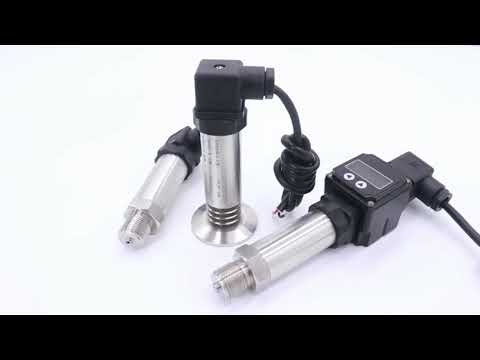
As water scarcity intensifies and regulations tighten, monitoring capability becomes increasingly central to mining industry sustainability. Shanghai ChiMay’s comprehensive water quality monitoring product line—featuring in-line pH sensors, conductivity meters, turbidity monitors, and integrated multi-parameter systems—provides the foundation for effective water management in the modern mining industry.