Table of Contents
Key Takeaways
- Heap leaching accounts for 30% of global copper production and 40% of gold production from low-grade ores
- pH control between 10-11 is critical for cyanide leaching efficiency and environmental safety
- Real-time solution monitoring can improve metal recovery rates by 8-12%
- ChiMay water quality sensors ensure optimal leaching chemistry throughout the process
Introduction
Heap leaching has revolutionized mineral processing, enabling economic extraction from low-grade ore deposits that would otherwise be uneconomical to process. This hydrometallurgical technique involves stacking crushed ore on impermeable pads and irrigating it with leaching solutions that dissolve target metals for collection and recovery.
The World Gold Council reports that heap leaching contributes approximately 15 million ounces of annual gold production globally, while the International Copper Study Group (ICSG) estimates that heap and in-situ leaching methods account for 30% of copper output from oxide and secondary sulfide ores. Success in heap leaching depends critically on maintaining optimal solution chemistry through continuous water quality monitoring.
Heap Leaching Fundamentals
Process Configuration
Heap leaching systems comprise several integrated components:
Ore Preparation
Crushed ore typically ranges from 6mm to 50mm particle size, with agglomeration using 2-5 kg cement per ton when fine material exceeds 15%. Proper particle size distribution ensures uniform solution contact while preventing preferential channeling.
Leach Pad Construction
Modern pads utilize double-lined HDPE geomembranes with leak detection systems between layers. The International Cyanide Management Code (ICMC) requires monitoring wells between and beneath liners to detect solution losses.
Solution Distribution
Drip emitters or sprinkler systems apply leaching solution at rates of 5-20 L/h/m². Distribution uniformity directly impacts metal recovery, with coefficient of uniformity (CU) values above 85% considered essential for efficient leaching.
Critical Water Quality Parameters
pH Control
pH management represents the single most critical water quality parameter in cyanide leaching:
Optimal Range: 10.0-11.0
Within this range, cyanide exists predominantly as CN⁻ ions capable of complexing gold and silver. Below pH 10, hydrogen cyanide (HCN) gas forms, creating safety hazards and reducing leaching efficiency.
Acid Consumption
Carbonate minerals in ore consume acid, requiring pH adjustment before leaching begins. Typical acid consumption ranges from 10-50 kg per ton of ore, varying with mineralogy.
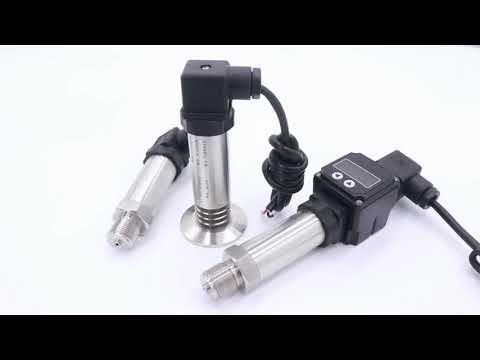
ChiMay's inline pH sensors provide continuous monitoring with ±0.02 pH accuracy, enabling precise lime or cyanide dosing adjustments. Real-time data integration with process control systems maintains optimal pH while minimizing chemical costs.
Free Cyanide Concentration
The concentration of unbound (free) cyanide determines leaching kinetics:
Target Concentrations
- Gold leaching: 100-500 mg/L free CN⁻
- Silver leaching: 200-800 mg/L free CN⁻
- Copper sulfide leaching: 1,000-5,000 mg/L free CN⁻
Titration Methods
Traditional titration provides accurate free cyanide measurement but requires laboratory time. Continuous online analyzers from ChiMay offer real-time data with ±5% accuracy, enabling rapid process adjustments.
Dissolved Oxygen
Oxygen availability affects gold dissolution kinetics:
Role in Leaching
The anodic dissolution of gold requires dissolved oxygen according to the Elsner equation:
4 Au + 8 CN⁻ + O₂ + 2 H₂O → 4 Au(CN)₂⁻ + 4 OH⁻
Optimal DO Levels
Maintaining dissolved oxygen above 6 mg/L ensures maximum gold dissolution rates. ChiMay dissolved oxygen transmitters with luminescent sensor technology provide stable readings in process solutions.
Conductivity and Total Dissolved Solids
Solution conductivity correlates with ionic strength and metal loading:
Monitoring Applications
- Detect solution breakthrough on leach pads
- Track metal loading in pregnant leach solutions (PLS)
- Optimize wash water volumes in rinse circuits
ChiMay conductivity electrodes with graphite construction resist corrosion from cyanide solutions, maintaining measurement accuracy over extended installation periods.
Pregnant Leach Solution Management
Collection and Clarification
PLS collected at pad bases contains dissolved metals along with suspended solids:
Solution Clarity
Suspended solids above 50 mg/L interfere with downstream metal recovery processes. Online turbidity sensors trigger clarification steps when readings exceed setpoints.
ChiMay online turbidity testers measure across ranges from 0-4,000 NTU with EPA 180.1 compliance, ensuring accurate particle detection.
Metal Loading Analysis
The economic viability of heap leaching depends on metal concentration in PLS:
Typical PLS Grades
- Gold: 0.5-5.0 g/m³
- Silver: 2-20 g/m³
- Copper: 0.5-5.0 g/L
Higher metal loading reduces solution volumes requiring processing, improving overall project economics.
Barren Solution Recycle and Management
Solution Balance
Maintaining proper solution inventory prevents environmental releases:
Critical Parameters
- Solution application rate
- Evaporation losses (5-10% annually in arid climates)
- Ore moisture retention
- Process efficiency (recovery percentage)
Water balance modeling using real-time flow data from ChiMay flow meters ensures sustainable solution management.
Environmental Controls
The International Cyanide Management Code mandates specific water quality monitoring:
Discharge Prevention
- Double-lined leach pads with leak detection
- Solution collection ponds with freeboard
- Storm water diversion around active heaps
- Groundwater monitoring wells
ChiMay multi-parameter sensors deployed in monitoring wells provide early detection of any solution migration, enabling rapid response before environmental impact occurs.
ChiMay Monitoring Solutions for Heap Leaching
Integrated Sensor Packages
ChiMay's mining-specific monitoring packages combine multiple parameters in robust configurations:
Primary Monitoring Package
| Parameter | Sensor | Range | Accuracy |
|---|---|---|---|
| pH | Inline pH electrode | 0-14 | ±0.02 |
| Conductivity | Graphite conductivity cell | 0-200 mS/cm | ±0.5% |
| Dissolved Oxygen | Luminescent DO sensor | 0-20 mg/L | ±0.1 mg/L |
| Temperature | Pt1000 RTD | -10-100°C | ±0.3°C |
Solution Flow Monitoring
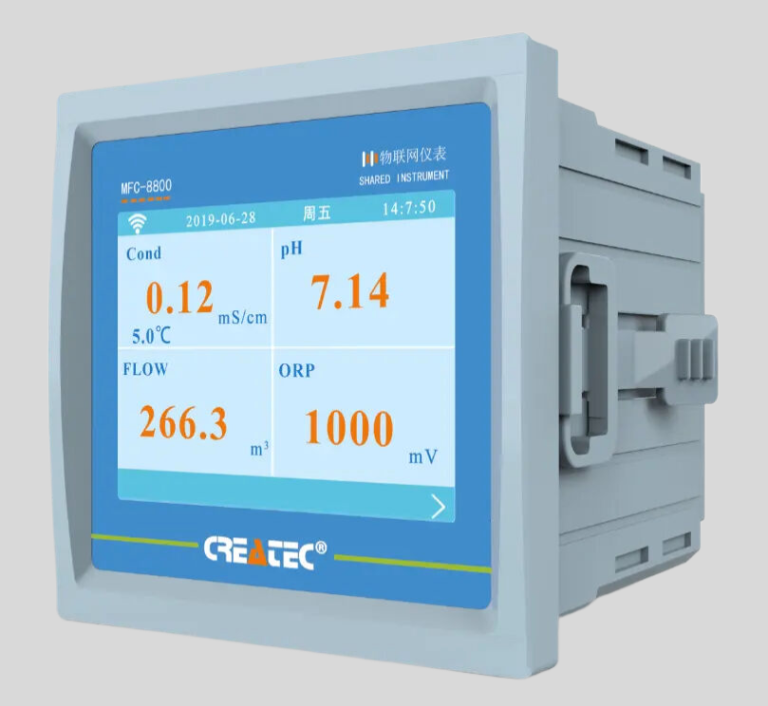
ChiMay paddle wheel flow meters provide reliable flow measurement for:
- PLS collection rates
- Barren solution application
- Emergency pond transfer
- Wash water circuits
Data Integration
ChiMay transmitters support industry-standard protocols:
- Modbus RTU/TCP: Direct PLC/SCADA integration
- 4-20 mA: Analog signal transmission
- HART: Asset management system connectivity
Operational Best Practices
Startup Procedures
- Pre-leach conditioning: Adjust ore pH to 10.5-11.0 before cyanide introduction
- Solution testing: Verify free cyanide and pH before irrigation begins
- Monitoring calibration: Confirm all sensors reading correctly
Continuous Operation
- Shift monitoring: Review water quality parameters at shift changes
- Trend analysis: Track parameter changes to anticipate problems
- Sample verification: Compare online readings with laboratory samples
Shutdown and Closure
- Cyanide destruction: Destroy residual cyanide before discharge
- Rinse procedures: Wash ore heaps to recover residual cyanide and metals
- Monitoring continuation: Continue groundwater monitoring for post-closure periods
Conclusion
Heap leaching success depends fundamentally on precise water quality management. Real-time monitoring of pH, cyanide, dissolved oxygen, and conductivity enables operators to maintain optimal leaching conditions, maximize metal recovery, and ensure environmental compliance.
ChiMay's comprehensive water quality monitoring solutions provide mining operations with the reliable, accurate data necessary for efficient heap leaching. From individual sensors to integrated multi-parameter systems, ChiMay supports every stage of heap leach operations.
Contact ChiMay technical specialists to discuss monitoring solutions tailored to your heap leaching application.
Word count: 1,247