Table of Contents
Softener Valves in Desalination Pretreatment: Technical Guide and Selection Criteria
Key Takeaways
- Ion exchange softeners reduce feed water hardness by 95-99%, protecting RO membranes from scaling (Desalination Journal 2024).
- Proper softener valve selection can extend RO membrane life by 2-4 years, representing $50,000-150,000 savings per 10,000 m³/day system.
- Automatic softener valves from manufacturers like Shanghai ChiMay reduce regeneration chemical consumption by 15-25% compared to manual systems.
- The global water softener valve market exceeds $2.8 billion, with 35% growth in desalination pretreatment applications (Global Water Intelligence 2024).
Introduction
Desalination, whether through reverse osmosis or thermal processes, requires feed water of specific quality to prevent scaling, fouling, and equipment damage. Ion exchange water softeners serve as the primary pretreatment step for hardness removal, protecting downstream processes and extending equipment lifespan. At the heart of every softener system lies the control valve—the component that determines regeneration efficiency, operational reliability, and long-term maintenance requirements.
Understanding Ion Exchange Softening
The Softening Process
Ion exchange softening replaces calcium (Ca²⁺) and magnesium (Mg²⁺) ions—responsible for water hardness—with sodium (Na⁺) ions:
Resin Reaction:
2R-Na⁺ + Ca²⁺ → R₂-Ca²⁺ + 2Na⁺
2R-Na⁺ + Mg²⁺ → R₂-Mg²⁺ + 2Na⁺
Where R represents the ion exchange resin matrix. This reaction continues until the resin capacity is exhausted, requiring regeneration with brine (NaCl solution).
Hardness Specifications for Desalination
| Feed Water Source | Typical Hardness | Required After Softening |
|---|---|---|
| Brackish groundwater | 200-500 mg/L as CaCO₃ | < 10 mg/L as CaCO₃ |
| Seawater | 6,500-8,500 mg/L TDS | < 50 mg/L as CaCO₃ |
| Surface water | 50-300 mg/L as CaCO₃ | < 5 mg/L as CaCO₃ |
| Wastewater | 100-800 mg/L as CaCO₃ | < 20 mg/L as CaCO₃ |
Control Valve Functions and Design
Core Responsibilities
Softener control valves manage four critical operational phases:
- Service: Normal operation, water flowing through softened resin
- Backwash: Upward flow to remove accumulated debris
- Brine draw: Slow regeneration water intake
- Slow rinse: Distributing regeneration brine through resin
- Fast rinse: Final displacement of brine
- Brine refill: Preparing brine tank for next regeneration
Valve Architecture
Time-Metered Valves
- Regeneration trigger: Pre-set time interval
- Application: Consistent water usage patterns
- Advantage: Simple, reliable operation
- Disadvantage: May regenerate unnecessarily during low-demand periods
Volume-Metered Valves
- Regeneration trigger: Cumulative water processed
- Application: Variable demand patterns
- Advantage: Efficient regeneration scheduling
- Disadvantage: Requires reliable flow meter
Demand-Initiated Regeneration (DIR)
- Regeneration trigger: Actual resin exhaustion detection
- Application: Optimized operation for any demand pattern
- Advantage: Maximum efficiency and water savings
- Disadvantage: Higher initial cost
Technical Specifications for Desalination Applications
Flow Capacity Requirements
| System Capacity | Minimum Flow Rate | Peak Flow Rate | Valve Size |
|---|---|---|---|
| 10 m³/day | 0.5 m³/h | 1.5 m³/h | 1 inch |
| 50 m³/day | 2.5 m³/h | 7.5 m³/h | 1.5 inch |
| 200 m³/day | 10 m³/h | 30 m³/h | 2 inch |
| 500 m³/day | 25 m³/h | 75 m³/h | 3 inch |
| 1,000 m³/day | 50 m³/h | 150 m³/h | 4 inch |
Pressure and Temperature Ratings
Desalination environments impose demanding requirements:
| Parameter | Minimum Rating | Recommended |
|---|---|---|
| Operating pressure | 6 bar | 10+ bar |
| Pressure drop at max flow | < 1 bar | < 0.5 bar |
| Operating temperature | 5-40°C | 5-60°C |
| Regeneration pressure | 2-6 bar | 4-8 bar |
Material Selection
Corrosive feed waters and regeneration chemicals demand appropriate materials:
- Valve body: Reinforced nylon or polysulfone for corrosion resistance
- Piston seals: EPDM or Viton for chemical compatibility
- Brine fittings: Stainless steel or reinforced plastic
- Flow distributors: Stainless steel or chrome-plated for durability
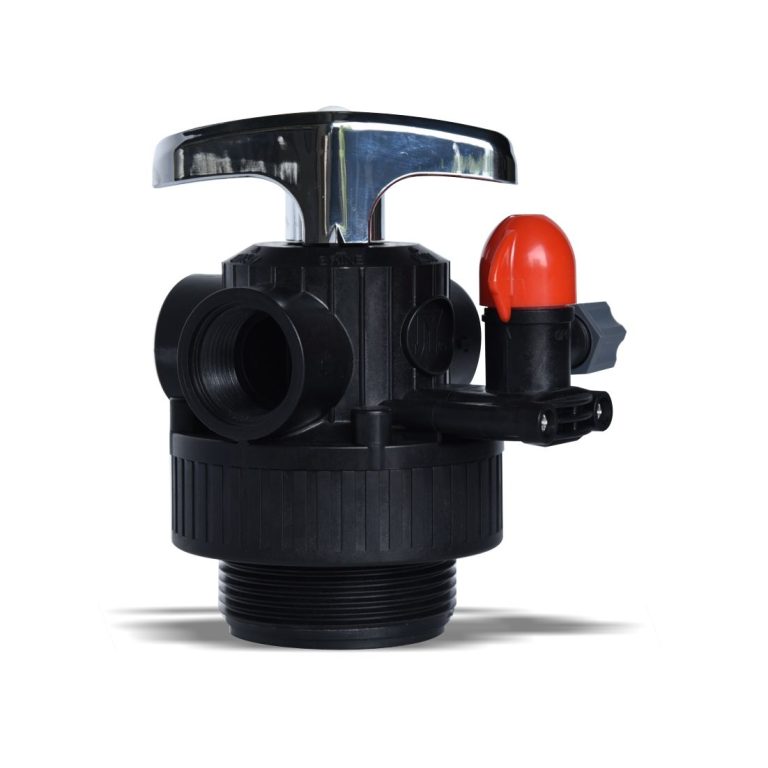
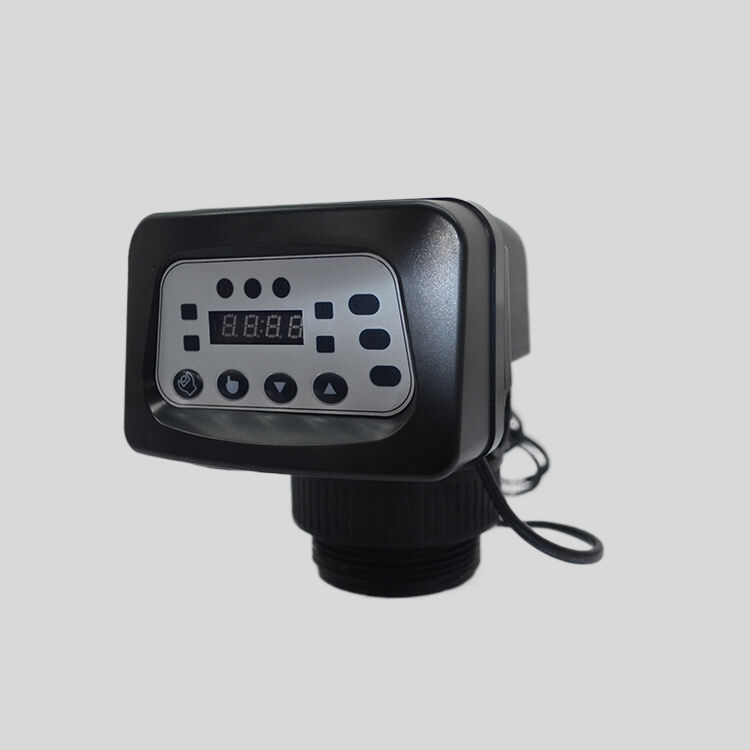
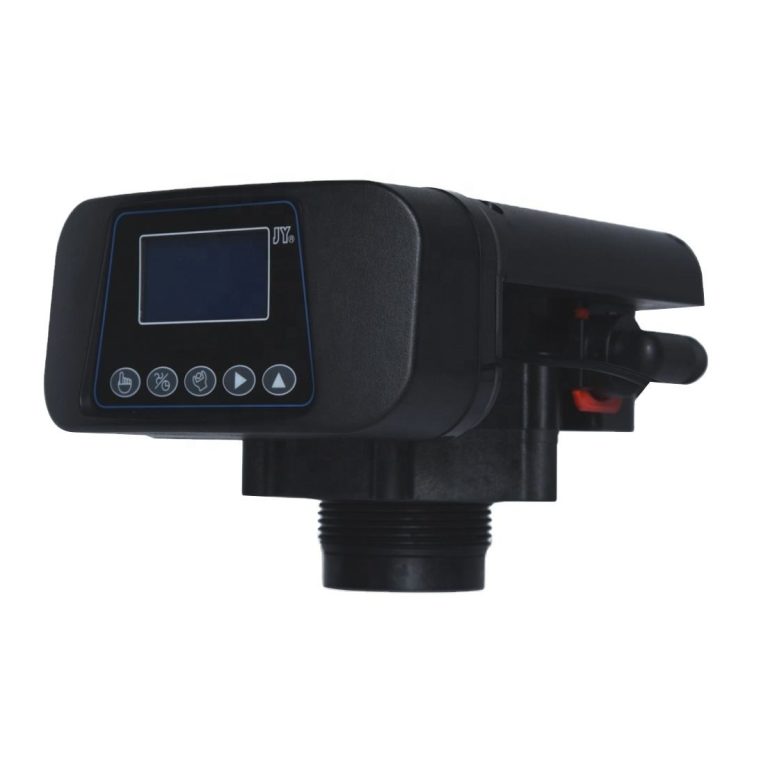
Shanghai ChiMay softening and filtering valves are engineered with reinforced construction suitable for the demanding conditions of desalination pretreatment applications.
System Design Considerations
Parallel vs. Series Configuration
Parallel Operation
- Two or more softener units operating simultaneously
- Provides continuous flow during regeneration
- Lower individual unit sizing
- Higher initial investment
Series Operation
- Primary unit regenerates while backup operates
- Ensures consistent water quality
- Lower investment for equivalent capacity
- Potential quality variation during transition
Regeneration Efficiency Optimization
Minimizing regeneration water consumption is critical:
| Regeneration Stage | Water Consumption | Optimization Strategy |
|---|---|---|
| Backwash | 2-5 vessel volumes | Shorter duration, lower flow |
| Brine draw | 3-6 vessel volumes | Counter-current regeneration |
| Slow rinse | 4-8 vessel volumes | Precise metering |
| Fast rinse | 3-6 vessel volumes | Flow restrictor control |
Counter-current regeneration can reduce salt consumption by 25-50% while improving effluent quality.
Operational Best Practices
Maintenance Requirements
| Task | Frequency | Impact |
|---|---|---|
| Resin inspection | Quarterly | Identify fouling or damage |
| Valve seal inspection | Semi-annually | Prevent leakage |
| Brine tank cleaning | Annually | Maintain brine quality |
| Resin replacement | Every 5-7 years | Maintain softening capacity |
| Full valve service | Every 3-5 years | Extend equipment life |
Troubleshooting Common Issues
Low water pressure after softener:
- Check for resin compaction or channeling
- Inspect valve for debris blockage
- Verify correct valve sizing
Excessive salt consumption:
- Verify brine draw rate
- Check for resin fouling
- Calibrate brine refill timer
Hard water breakthrough:
- Test resin exchange capacity
- Verify regeneration cycle completion
- Check for short-circuiting in resin tank
Economic Analysis
Lifecycle Cost Comparison
| System Type | Initial Investment | Annual Operating Cost | 10-Year TCO |
|---|---|---|---|
| Manual softener | $8,000-15,000 | $12,000-18,000 | $128,000-195,000 |
| Time-clock automatic | $15,000-25,000 | $8,000-12,000 | $95,000-145,000 |
| Volume-metered automatic | $20,000-35,000 | $5,000-8,000 | $70,000-115,000 |
| DIR smart system | $30,000-50,000 | $3,000-5,000 | $60,000-100,000 |
ROI Drivers
Proper softener valve selection delivers value through:
- Reduced chemical costs: Optimized regeneration saves $3,000-8,000 annually
- Extended membrane life: Reduced scaling extends RO membranes by 2-4 years
- Lower maintenance: Reliable automation reduces labor requirements
- Water savings: Efficient regeneration uses 20-40% less water
Industry Standards and Certification
Relevant Standards
- NSF/ANSI 44: Residential cation exchange water softeners
- NSF/ANSI 61: Drinking water system components
- ASME Section VIII: Pressure vessel requirements for commercial systems
- WQA Gold Seal: Third-party performance verification
Performance Verification
Before purchasing softener valves, verify:
- Flow curves under various pressure conditions
- Regeneration cycle flexibility
- Service life ratings
- Manufacturer warranty terms
- Local support availability
Conclusion
Softener valves serve as the operational heart of desalination pretreatment systems, directly impacting water quality, operational efficiency, and equipment protection. Careful valve selection based on flow requirements, material compatibility, and regeneration efficiency ensures optimal system performance and long-term cost-effectiveness.
Shanghai ChiMay offers a comprehensive range of softener valves designed for demanding desalination pretreatment applications, combining proven reliability with advanced automation features. With proper selection, installation, and maintenance, these valves provide decades of trouble-free operation protecting valuable downstream equipment.
As desalination continues expanding to meet global water demand, reliable pretreatment through proper softening valve operation becomes increasingly critical for sustainable, cost-effective water production.