Table of Contents
How to Choose the Right Water Quality Sensors for AI-Powered Monitoring Systems
Key Takeaways:
– Sensor selection determines 80% of AI system accuracy
– Modern inline sensors achieve ±0.1% measurement accuracy
– Total cost of ownership varies 3-5x between sensor tiers
– Compatibility with existing infrastructure is critical for success
Artificial intelligence is only as good as the data it processes. When implementing AI-powered water quality monitoring, sensor selection becomes the most critical decision—one that determines whether your investment delivers results or becomes an expensive disappointment.
Understanding AI Sensor Requirements
Data Quality Fundamentals
AI systems require consistent, accurate data to function effectively. Poor sensor quality introduces noise that obscures the patterns AI algorithms need to identify.
NIST research demonstrates that AI anomaly detection accuracy drops from 94% to 67% when sensor data quality decreases from laboratory-grade to industrial-grade specifications.
Key data quality metrics for AI applications:
| Metric | AI Requirement | Standard Monitoring |
|---|---|---|
| Accuracy | ±0.1% or better | ±1-5% acceptable |
| Response Time | <1 second | <30 seconds okay |
| Stability | <0.5% drift/month | <2% drift/month |
| Resolution | 16-bit minimum | 12-bit acceptable |
Parameter Selection Strategy
Not all water quality parameters are equally important for AI applications. Focus your sensor investment on:
Tier 1 – Critical for AI (Invest Premium)
– pH – Universal indicator of chemical balance
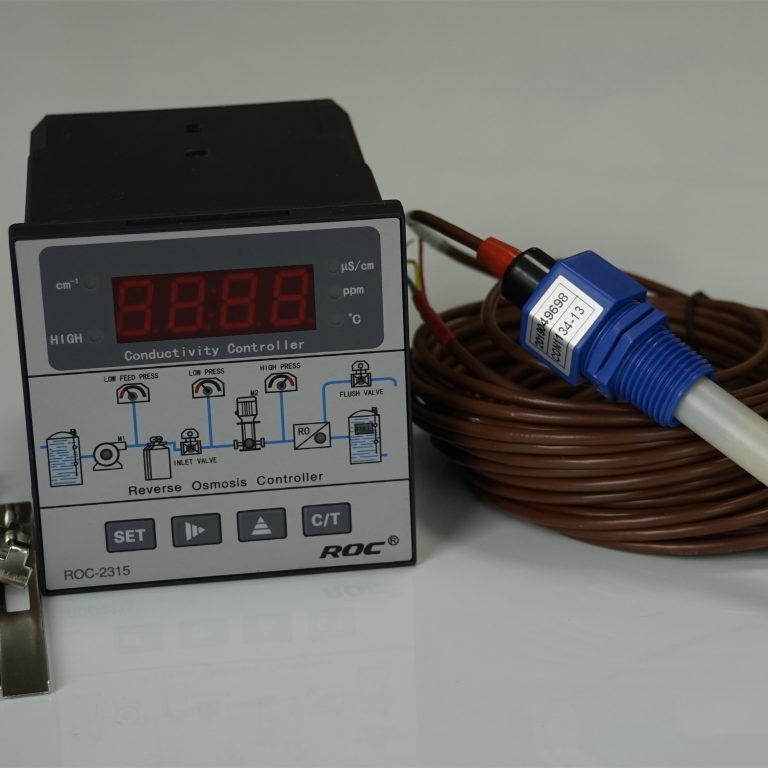
– Conductivity – Total dissolved solids proxy
– Dissolved oxygen – Biological process indicator
– Turbidity – Particulate matter quantification
Tier 2 – Important for Specific Applications
– Residual chlorine – Disinfection monitoring
– ORP – Oxidation-reduction potential
– Temperature – Environmental compensation
– Flow – Mass balance calculations
Tier 3 – Optional for Advanced Applications
– COD/BOD – Organic load monitoring
– Ammonia – Nitrogen cycle tracking
– Nitrate/Nitrite – Nutrient monitoring
– Phosphate – Eutrophication prediction
Sensor Technology Comparison
pH Sensors
| Technology | Accuracy | Stability | Maintenance | Best For |
|---|---|---|---|---|
| Glass Combination | ±0.02 pH | Good | Weekly calibration | General purpose |
| ISFET | ±0.05 pH | Excellent | Monthly calibration | Harsh applications |
| Optical | ±0.1 pH | Very Good | Annual calibration | Remote monitoring |
| Solid State | ±0.1 pH | Good | Quarterly calibration | Chemical resistance |
Recommendation: For AI applications, glass combination electrodes with automatic temperature compensation provide the best accuracy-to-cost ratio. Look for sensors with digital output (Modbus, HART) for reliable data transmission.
Conductivity Sensors
| Technology | Accuracy | Range | Temperature Effect | Best For |
|---|---|---|---|---|
| 2-Electrode | ±0.5% | Limited | High | Pure water |
| 4-Electrode | ±0.1% | Wide | Low | Industrial process |
| Inductive | ±1% | Very Wide | Minimal | Harsh chemicals |
| Toroidal | ±0.5% | Wide | Minimal | Fouling environments |
Recommendation: 4-electrode conductivity sensors offer the best combination of accuracy and range for AI applications. Ensure temperature compensation covers your expected operating range.
dissolved oxygen sensors
| Technology | Accuracy | Response | Maintenance | Best For |
|---|---|---|---|---|
| Polarographic | ±0.1 mg/L | Slow (30s) | Weekly electrolyte | Laboratory |
| Galvanic | ±0.1 mg/L | Moderate | Monthly membrane | General purpose |
| Optical (LDO) | ±0.1 mg/L | Fast (5s) | Annual cap | Aeration control |
| Fluorescence | ±0.05 mg/L | Fast (3s) | Annual cap | Precise control |
Recommendation: Optical dissolved oxygen sensors (LDO/fluorescence) are ideal for AI applications due to fast response, minimal maintenance, and excellent stability.
Turbidity Sensors
| Technology | Accuracy | Range | Fouling Resistance | Best For |
|---|---|---|---|---|
| 90° Nephelometric | ±0.3 NTU | Limited | Low | Drinking water |
| Ratio Nephelometric | ±0.2 NTU | Wide | Moderate | General purpose |
| Backscatter | ±1% FS | Very Wide | High | Wastewater |
| Transformable | ±0.1 NTU | Wide | High | All applications |
Recommendation: Ratio nephelometric sensors provide the best performance for most AI applications. Consider automatic wiper systems for wastewater applications prone to fouling.
Integration Considerations
Communication Protocols
AI systems require reliable data transmission:
| Protocol | Speed | Reliability | AI Compatibility |
|---|---|---|---|
| Analog (4-20mA) | Good | Excellent | Acceptable |
| HART | Good | Very Good | Good |
| Modbus RTU | Excellent | Excellent | Excellent |
| Modbus TCP | Excellent | Very Good | Excellent |
| OPC UA | Excellent | Excellent | Ideal |
| MQTT | Excellent | Good | Excellent |
Recommendation: Prioritize sensors with Modbus RTU/TCP or OPC UA support for AI applications. These protocols ensure reliable, timestamped data delivery.
Physical Installation
Consider installation requirements:
- Inline vs. Insertion: Inline sensors provide higher accuracy but require pipe modifications
- Flow cells: Ensure adequate flow for sensor response time
- Sample conditioning: Temperature, pressure, and flow stabilization improve accuracy
- Accessibility: Maintain calibration and maintenance accessibility
Environmental Protection
Industrial environments require appropriate protection:
- IP67/IP68 ratings for wet environments
- Explosion-proof certifications for hazardous areas
- Corrosion-resistant materials for chemical exposure
- Temperature extremes accommodation
Total Cost of Ownership
Initial vs. Ongoing Costs
| Cost Category | Economy Sensors | Premium Sensors |
|---|---|---|
| Initial Purchase | $500-1,500 | $2,000-8,000 |
| Annual Calibration | $800-1,500 | $300-600 |
| Replacement Parts | $400-800 | $200-400 |
| Labor (Maintenance) | 40 hours/year | 8 hours/year |
| Downtime Cost | High | Low |
| 5-Year Total Cost | $6,500-11,500 | $4,500-9,500 |
Premium sensors often have lower total cost of ownership despite higher initial prices.
Hidden Costs to Consider
- Downtime during calibration: Automated calibration reduces this cost
- Quality assurance testing: NIST-traceable standards for AI validation
- Data gaps: Unreliable sensors create gaps that compromise AI training
- Integration rework: Proprietary protocols may require custom integration
Selection Decision Framework
Step 1: Define Application Requirements
- What parameters need monitoring?
- What accuracy is required for AI analysis?
- What is acceptable maintenance frequency?
- What is the environmental condition?
Step 2: Evaluate Existing Infrastructure
- What communication protocols are supported?
- What installation options exist?
- What is the available budget?
- What integration platform will be used?
Step 3: Compare Options
- Request sensor specifications from multiple vendors
- Request sample data for validation testing
- Check references from similar applications
- Evaluate vendor support and training capabilities
Step 4: Pilot Testing
- Deploy sensors in parallel with existing systems
- Validate accuracy against laboratory methods
- Test integration with AI platform
- Measure maintenance requirements
Step 5: Full Deployment
- Scale successful pilot configuration
- Establish calibration and maintenance procedures
- Train operators on new sensor systems
- Monitor AI system performance with new data
Vendor Evaluation Criteria
| Criterion | Weight | Evaluation Method |
|---|---|---|
| Accuracy specifications | 25% | Datasheet review, testing |
| Stability and drift | 20% | Long-term testing |
| Communication support | 15% | Integration testing |
| Maintenance requirements | 15% | User references |
| Total cost of ownership | 15% | TCO calculation |
| Technical support | 10% | Vendor engagement |
Conclusion
Sensor selection determines AI monitoring success. Invest in high-quality sensors for critical parameters, prioritize reliable communication protocols, and consider total cost of ownership rather than initial price.
The right sensors will:
– Provide accurate, stable data for AI analysis
– Reduce maintenance burden and downtime
– Enable reliable AI anomaly detection
– Deliver measurable operational improvements
Poor sensor choices undermine even the most sophisticated AI systems. Choose wisely.