Table of Contents
Key Takeaways
- pH control determines 95% of AMD treatment effectiveness
- Automatic pH control reduces chemical consumption by 20-35% compared to manual adjustment
- Maintaining pH 6.5-8.5 enables metal precipitation to regulatory limits
- ChiMay inline pH sensors provide the accuracy mining operations require
Introduction
pH represents the most critical parameter in acid mine drainage (AMD) treatment. The concentration of hydrogen ions in solution drives every aspect of AMD chemistry—from the dissolution of heavy metals to their precipitation in treatment systems. Without precise pH control, treatment operations waste chemicals, fail to meet discharge limits, and risk environmental damage.
The Mine Drainage Technology Initiative (MDTI) reports that 87% of AMD treatment failures trace directly to inadequate pH control. Understanding pH chemistry and implementing reliable monitoring systems are essential for successful AMD management.
pH Fundamentals in AMD Systems
The pH Scale and AMD
pH measures hydrogen ion concentration on a logarithmic scale:
Scale Definition
- pH 7 = neutral (equal H⁺ and OH⁻ concentrations)
- pH < 7 = acidic (excess H⁺ ions)
- pH > 7 = alkaline (excess OH⁻ ions)
Typical AMD pH Values
| Source | Typical pH | Acidity |
|---|---|---|
| Coal mine drainage | 2.5-4.5 | High |
| Metal mine drainage | 2.0-5.0 | Very high |
| Aggregate wash water | 6.0-8.0 | Low |
Why pH Matters in AMD Treatment
pH affects AMD treatment through multiple mechanisms:
Metal Solubility
The solubility of most metals varies dramatically with pH:
| Metal | Soluble Below | Precipitates Above |
|---|---|---|
| Iron | pH < 3.5 | pH 3.5-4.5 |
| Aluminum | pH < 5.0 | pH 5.5-6.5 |
| Manganese | pH < 8.0 | pH 8.5-9.5 |
| Zinc | pH < 6.0 | pH 6.5-7.5 |
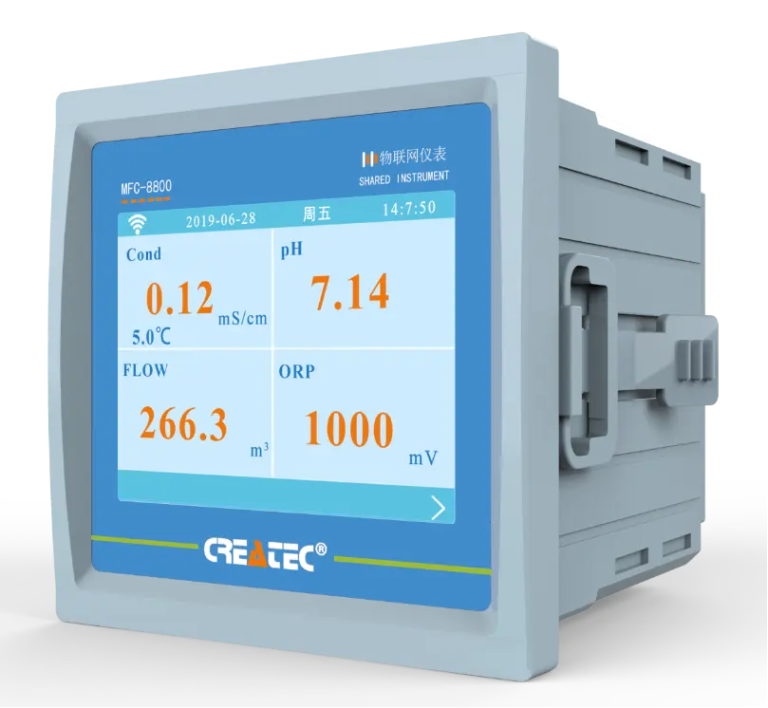
ChiMay's multi-parameter sensors enable operators to track pH alongside metal concentrations, understanding treatment progress in real time.
Chemical Reaction Kinetics
Alkaline reagent reaction rates increase with pH, up to optimal points. Below optimal pH, reactions proceed slowly, requiring longer retention times and larger treatment tanks.
Sludge Characteristics
The physical properties of metal hydroxide sludges—settling rates, dewatering characteristics, and stability—all depend on precipitation pH.
pH Control Strategies
Manual Adjustment
Traditional AMD treatment relies on operator judgment:
Limitations
- Sampling frequency (typically daily or weekly)
- Laboratory turnaround delays
- Operator availability and training
- Human error in calculations and additions
Performance
Manual systems typically achieve ±0.5 pH units control, often insufficient for meeting modern discharge limits.
Automatic Control Systems
Modern treatment plants employ closed-loop pH control:
System Components
- ph sensor: Measures solution pH continuously
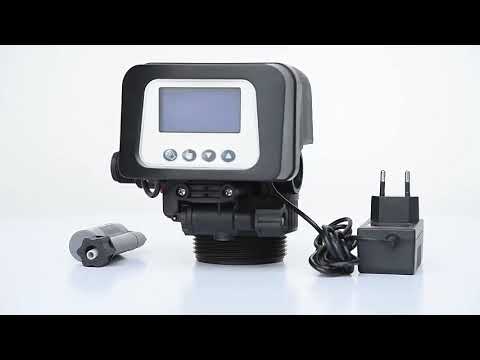
- Controller: Compares measured pH to setpoint, calculates reagent dose
- Metering pump: Adds alkaline reagent proportional to calculated dose
- Mixing system: Ensures uniform reagent distribution
Performance
Automatic systems achieve ±0.1 pH units control, reliably meeting treatment targets.
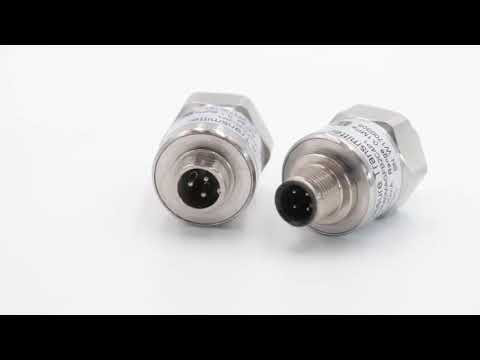
ChiMay inline pH sensors integrate with all major control systems, providing the accuracy and reliability automatic control requires.
Cascade Control
Large treatment systems often employ cascade control:
Configuration
- Primary loop: Neutralization tank pH control
- Secondary loop: Secondary reaction tank pH control
- Tertiary loop: Effluent pH verification
Benefits
Cascade control handles large flow variations better than single-loop systems, maintaining consistent treatment during storm events or operational changes.
Alkaline Reagents for AMD Treatment
Lime (Calcium Oxide/Calcium Hydroxide)
Lime is the most common AMD treatment reagent:
Advantages
- Low cost: $80-150 per ton depending on location
- Effective over wide pH range
- Widely available
- Well-understood chemistry
Disadvantages
- Handling difficulties (dust, skin irritation)
- Variable reactivity depending on quality
- Sludge production volume
Optimal Use pH
Lime effectively precipitates metals at pH 8.0-9.0, with polishing steps achieving pH 9.5-10.5 for manganese removal.
Soda Ash (Sodium Carbonate)
Soda ash offers advantages in specific applications:
Advantages
- More soluble than lime, easier to handle
- Faster reaction kinetics
- Lower sludge volume
- Suitable for small flows
Disadvantages
- Higher cost: $200-350 per ton
- Less effective for some metal combinations
- Sodium discharge concerns
Sodium Hydroxide (Caustic Soda)
Sodium hydroxide provides precise control:
Advantages
- Exact concentration control
- Immediate reaction
- Minimal handling hazards
- Compact storage requirements
Disadvantages
- Highest cost: $400-600 per ton
- Requires careful handling
- Concentrated solution delivery required
Case Study: pH Optimization at a Coal Mine
Facility Background
A 50,000 GPD AMD treatment system at an Appalachian coal mine experienced persistent compliance issues:
Initial Conditions
- Flow: 30,000-50,000 GPD (highly variable)
- Influent pH: 2.8-3.5
- Target effluent pH: 6.5-9.0 (metals limits also applies)
- Historical performance: Monthly exceedances
Problem Analysis
Engineers identified pH control as the primary issue:
Root Causes
- Manual reagent addition with infrequent sampling
- Variable flow rates causing pH swings
- Insufficient mixing resulting in dead zones
- Inaccurate pH measurement due to coating
Solution Implementation
Equipment Upgrades
- ChiMay inline pH sensors with automatic cleaning system
- Dual reagent metering pumps with VFD control
- Flash mixing chamber with mechanical agitation
- SCADA integration for monitoring and control
Operational Changes
- Continuous pH monitoring replacing daily sampling
- Reagent dose automated based on flow and pH
- Weekly calibration verification
- Monthly influent characterization
Results
Performance Improvement
| Metric | Before | After |
|---|---|---|
| pH control | ±0.5 | ±0.1 |
| Chemical consumption | 100% | 68% |
| Compliance rate | 67% | 100% |
| Annual chemical cost | $185,000 | $126,000 |
Savings
- Chemical cost reduction: $59,000/year
- Avoided penalties: $40,000/year
- Total annual savings: $99,000
Payback on monitoring investment: 4.2 months
Best Practices for pH Control in AMD Treatment
Sensor Selection
Considerations
- Measurement range: pH 0-14 for most applications
- Accuracy: ±0.02 pH for treatment control
- Response time: <10 seconds for effective control
- Reference system: Double junction for contaminated solutions
ChiMay pH electrodes feature double junction references and PTFE junctions that resist coating, maintaining accuracy in AMD applications.
Sensor Maintenance
Calibration Frequency
- Laboratory comparison: Weekly
- Two-point calibration: Monthly
- Electrode replacement: Every 6-12 months depending on conditions
Cleaning Procedures
- Daily: Rinse with deionized water
- Weekly: Manual cleaning if coating observed
- Monthly: Acid soak for precipitate removal
Control System Design
Setpoint Selection
- Primary treatment: pH 8.0-8.5 for iron and aluminum removal
- Polishing treatment: pH 9.5-10.0 for manganese removal
- Final adjustment: pH 6.5-9.0 to meet discharge requirements
Alarm Configuration
- Low pH alarm: Setpoint – 0.5 pH units
- High pH alarm: Setpoint + 0.5 pH units
- Critical alarm: Automatic shutdown if pH falls below 5.5
ChiMay pH Monitoring Solutions
Product Range
ChiMay offers pH sensors for every AMD application:
| Model | Application | Key Features |
|---|---|---|
| CM-PH-100 | General service | Standard industrial electrode |
| CM-PH-200 | AMD/high acidity | Double junction, PTFE junction |
| CM-PH-300 | High temperature | Extended temp range |
| CM-PH-400 | Low conductivity | Glass electrode, high impedance |
Transmitter Options
ChiMay transmitters support various integration methods:
- 4-20 mA output: Universal compatibility
- Modbus RTU/TCP: Digital communication
- HART: Asset management integration
- Wireless: Remote installation options
Conclusion
pH control is fundamental to AMD treatment success. Without precise, continuous pH monitoring and automated control, treatment operations cannot reliably meet discharge limits or optimize chemical consumption.
Investment in quality pH monitoring delivers rapid payback through chemical savings and compliance assurance. ChiMay's proven pH sensors and systems provide the reliability mining operations need for effective AMD management.
Contact ChiMay technical specialists to discuss pH monitoring solutions for your AMD treatment application.
Word count: 1,267