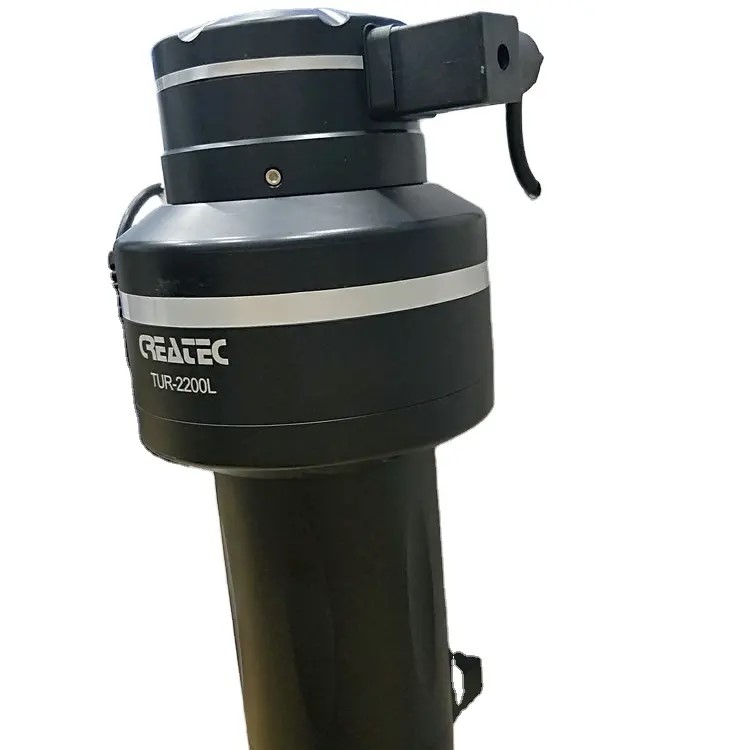
Oil-in-Water Sensors for Industrial Effluent Monitoring: Technical Overview
Oil content in industrial effluent must…
Online oil-in-water monitoring reduces laboratory analysis costs…
ChiMay's oil-in-water sensor employs UV fluorescence technology…
The global oil-in-water analyzer market will reach $520 million by 2028 driven…
Early oil detection enables 90% faster response to process upsets before…
Introduction
Industrial facilities across petrochemical, metal finishing, food processing, and manufacturing sectors generate wastewater containing oil and grease that requires treatment before discharge. Regulatory permits typically specify maximum oil content limits, and exceedances can result in significant penalties, environmental harm, and reputational damage.
Traditional approaches relying on periodic laboratory extraction analysis create monitoring gaps that allow oil releases to go undetected until sampling reveals the problem. Online oil-in-water sensors provide the continuous surveillance necessary for modern effluent management.
According to the Global Water Partnership's 2025 Industrial Wastewater Report, oil-related permit violations account for 18% of all industrial wastewater enforcement actions, with average penalties exceeding $75,000 per violation and cleanup costs often reaching into the millions for significant releases.
Oil-in-Water Measurement Fundamentals
Oil Forms in Industrial Wastewater
Industrial wastewater contains oil in multiple forms:
Dissolved Oil:
Molecularly dispersed hydrocarbons
Not removable by gravity separation
Requires advanced treatment (adsorption, membrane)
Emulsified Oil:
Finely dispersed droplets (0.1-20 μm)
Stabilized by surfactants
Requires chemical demulsification or membrane treatment
Free Oil:
Separated droplets (>20 μm)
Readily removed by gravity separation
Creates visible sheen on water surface
Total Oil and Grease (TOG): Sum of all forms measured by EPA Method 1664 or equivalent
Regulatory Limits
Measurement Challenges
Oil-in-water measurement faces several challenges:
Variable oil types: Different petroleum products fluoresce differently
Matrix interferences: Suspended solids, color, surfactants affect measurement
Wide concentration range: From sub-ppm to percent levels
Real-time requirements: Continuous monitoring versus laboratory turnaround
UV Fluorescence Technology
Measurement Principle
ChiMay's oil-in-water sensor employs UV fluorescence spectroscopy for oil detection:
Process:
UV light (typically 254-365 nm wavelength) excites aromatic hydrocarbon compounds in oil
Excited molecules emit fluorescent light at longer wavelengths (360-450 nm)
Detectors measure emission intensity proportional to oil concentration
Algorithms convert fluorescence to oil concentration units
Why UV Fluorescence:
Extreme sensitivity: Detects sub-ppm oil levels
Fast response: Real-time measurement without extraction
Minimal matrix effects: With proper wavelength selection
Continuous operation: No consumable reagents required
Technical Specifications
ChiMay's Oil-in-Water Sensor:
Application Areas
Petrochemical and Refinery Operations
Oil refinery wastewater contains multiple hydrocarbon streams:
Process Condensate:
Low oil content (<50 ppm)
High temperature
Continuous monitoring for hydrocarbon breakthrough
Stormwater Runoff:
Variable oil content
High suspended solids
Sampling challenges during rain events
Refinery Cooling Tower Blowdown:
Trace oil contamination
High conductivity matrix
Continuous monitoring for compliance
Metal Finishing Operations
Metalworking facilities generate wastewater containing:
Cutting Fluids:
Emulsified oils from metalworking operations
High surfactant content stabilizing emulsions
Batch treatment with skimmers and coalescers
Parts Washing:
Petroleum-based or semi-synthetic cleaners
Variable oil loading
Continuous or batch monitoring
Surface Treatment:
Lubricants from forming and drawing operations
Rinse water contamination
Strict permit limits for heavy industry
Dr. Michael Santos, Environmental Engineering Consultant, notes: "Metal finishing facilities face some of the strictest oil limits in industry, often requiring <10 ppm discharge limits. Online monitoring enables the tight process control necessary to consistently meet these requirements while avoiding the excessive treatment that unnecessary skimming generates."
Food Processing Industry
Food manufacturing generates oily wastewater from:
Cooking Operations:
Vegetable oils from frying operations
High organic content (BOD) alongside oil
Process optimization opportunities with monitoring
Meat and Poultry Processing:
Animal fats and proteins
Temperature-sensitive oils (solid at ambient temperature)
High-flow冲洗 streams
Dairy Operations:
Milk fat and butterfat
Warm wastewater temperatures
Cleaning-in-place (CIP) wash solutions
System Integration
Sample Conditioning
Proper sample conditioning ensures accurate measurement:
Filtration:
Remove suspended solids >50 μm that scatter UV light
Automatic backwash filters reduce maintenance
Cartridge filter replacement intervals based on solids loading
Temperature Control:
Heat exchangers for high-temperature samples
Insulated lines preventing wax solidification
Measurement cell temperature control option
Flow Control:
Constant flow through measurement cell
Flow rates of 100-500 mL/min
Bubble elimination to prevent measurement interference
Alarm and Control Integration
Online oil monitoring enables automated responses:
Alarm Configuration:
Automated Responses:
Flow diversion to holding tank
Chemical treatment dose adjustment
Skimmer activation on oil/water separators
Automated notification to regulatory agencies
ChiMay's oil-in-water sensor provides relay outputs for alarm integration and Modbus communication for DCS/SCADA control system connectivity.
Maintenance Requirements
Annual Maintenance Cost: $1,500 – $3,500 per sensor including parts and labor.
Comparison to Extraction Methods
EPA Method 1664A (Hexane-Extractable Material)
Traditional Approach:
Manual sample collection and preservation
Laboratory extraction with hexane
Gravimetric analysis after solvent evaporation
Turnaround time: 24-72 hours
Limitations:
No real-time data
High cost per analysis ($50-150 per sample)
Variable results due to extraction efficiency
Limited sampling frequency
Online UV Fluorescence
Continuous Approach:
In-situ or online measurement
Real-time concentration reading
Automated data logging
Continuous alarm capability
Advantages:
Immediate detection of oil events
Process optimization based on real-time data
Reduced laboratory costs
Compliance documentation
Correlation Requirement:
Online measurements must correlate with regulatory methods. Typical correlation coefficients exceed R² = 0.85 when properly calibrated.
Economic Analysis
Cost Comparison
Annual Savings: $152,000
Payback Period: 3-4 months
Implementation Best Practices
Site Assessment
Before implementation, evaluate:
Oil types present and fluorescence characteristics
Suspended solids levels and variability
Temperature range and variability
Sample point accessibility and conditions
Existing monitoring infrastructure
Sensor Placement
Optimal Locations:
Downstream of oil/water separation equipment
Before flow diversion structures
In mixed effluent before treatment plant
At compliance monitoring points
Avoid:
High-velocity locations causing cavitation
Areas with significant air entrainment
Points with temperature extremes
Locations with limited access for maintenance
Conclusion
Oil-in-water sensors provide essential monitoring capability for industrial facilities managing oily wastewater streams. The real-time visibility these instruments provide enables rapid response to oil events, process optimization, and confident compliance documentation.
ChiMay's oil-in-water sensor delivers the sensitivity, reliability, and low maintenance operation that industrial applications demand. UV fluorescence technology provides the detection capability necessary for sub-ppm oil measurement while maintaining the continuous operation that modern wastewater management requires.
As discharge regulations continue tightening and enforcement intensifies, facilities that invest in comprehensive online oil monitoring position themselves for compliance success. The combination of avoided violations, reduced laboratory costs, and process optimization benefits delivers rapid return on investment while protecting environmental performance.