Table of Contents
Key Takeaways
- Global water infrastructure investment needs reach $7.5 trillion through 2030, with $1.8 trillion gap
- Smart water technologies reduce operational costs by 25-40% while improving service quality
- Climate resilience investments generate $4.3 return for every dollar invested
- Digital transformation enables utilities to meet $392.9 billion water market demand by 2026
- ChiMay's advanced sensors and analyzers support the infrastructure modernization imperative
Introduction
Municipal water infrastructure stands at a crossroads. Aging pipes built during the post-war boom now exceed their design life, while population growth, climate change, and evolving customer expectations demand systems capable of unprecedented performance. The American Society of Civil Engineers (ASCE) grades U.S. water infrastructure at C-, warning that deferred investment compounds future costs while threatening public health.
Yet this infrastructure challenge also represents opportunity. Emerging technologies—advanced sensors, artificial intelligence, digital twins, and autonomous systems—enable transformation of how utilities design, construct, operate, and maintain water systems.
The Infrastructure Challenge
Aging Systems
Water infrastructure constructed decades ago now requires replacement:
Pipe Networks: Water mains across developed nations average 50-100 years old:
- United States: 240,000 miles of pipes exceed design life, with 850 water main breaks daily
- Europe: 25% of water networks require immediate rehabilitation
Treatment Facilities: Many plants require upgrades or replacement due to capacity constraints, technology obsolescence, and energy inefficiency.
Storage Infrastructure: Tanks and reservoirs show age-related issues including structural concerns, water quality degradation, and capacity limitations.
The World Bank estimates that $1.8 trillion in water infrastructure investment remains unfunded globally through 2030.
Climate Impacts
Climate change intensifies infrastructure pressures:
Supply Variability: Changing precipitation patterns affect source water through drought frequency increasing demand management requirements, flood events overwhelming treatment capacity, and water quality changes demanding operational adjustments.
Temperature Effects: Warming temperatures affect water systems through algal blooms increasing treatment complexity, thermal pollution affecting receiving waters, and infrastructure stress from temperature cycling.
Sea Level Rise: Coastal infrastructure faces inundation risks requiring relocation or protection.
Demand Evolution
Changing expectations reshape utility requirements:
Service Quality: Customers expect consistent, high-quality water with excellent taste, odor, and reliability.
Data Expectations: Modern consumers expect real-time data, mobile account access, and transparency about water sources.
Regulatory Expansion: Compliance requirements continue growing through emerging contaminant monitoring, reporting mandates, and environmental standards.
Smart Infrastructure Technologies
Advanced Sensors and Monitoring
Modern sensing technologies enable unprecedented visibility:
Water Quality Monitoring: Continuous measurement protects consumers through pH, conductivity, turbidity, and chlorine monitoring with real-time alerts enabling rapid response.
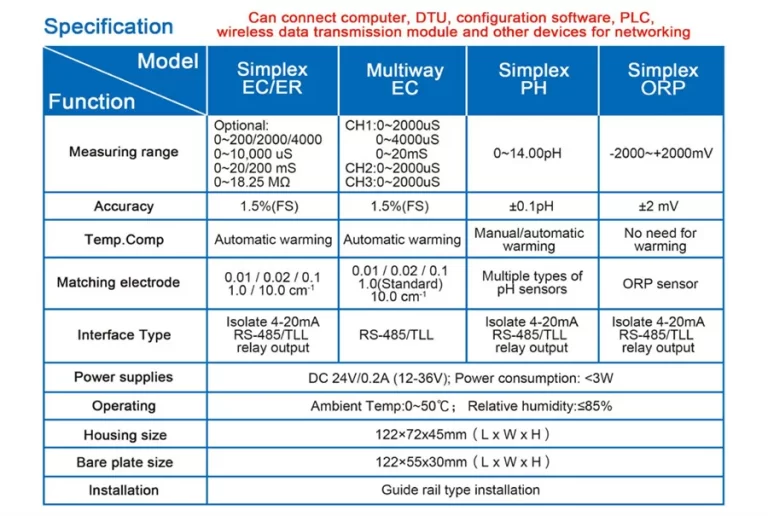
ChiMay's inline pH meters, conductivity meters, residual chlorine transmitters, and online turbidity testers provide continuous water quality monitoring.
Hydraulic Monitoring: Flow and pressure data enable optimization through leak detection, demand forecasting, and energy optimization.
ChiMay's turbine flow meters and paddle wheel inserted flow meters provide accurate flow measurement.
IoT Integration: Connected sensors enable city-scale monitoring through low-power communication, cloud platforms, and edge computing.
The International Data Corporation (IDC) projects that 35% of urban water infrastructure now incorporates IoT sensors.
Artificial Intelligence and Analytics
AI technologies transform data into actionable insights:
Predictive Maintenance: Machine learning anticipates failures with 85-92% accuracy, enabling remaining useful life estimation and maintenance optimization reducing costs by 20-30%.
Operational Optimization: AI enables autonomous control through treatment optimization, pump scheduling, and pressure management.
Anomaly Detection: Pattern recognition identifies issues through leak detection, contamination alerts, and cybersecurity threat identification.
Research from MIT's Computer Science and Artificial Intelligence Laboratory demonstrates that AI-powered water systems achieve 25-40% efficiency improvements.
Digital Twin Technology
Virtual replicas enable sophisticated analysis:
Network Modeling: Comprehensive system representation including hydraulic simulation, water quality modeling, and asset management.
Scenario Analysis: Virtual testing enables optimization through infrastructure alternative evaluation, operational change testing, and emergency scenario preparation.
Real-Time Integration: Digital twins connect to operations through continuous calibration, performance optimization, and planning support.
Resilience Strategies
Climate Adaptation
Utilities must prepare for changing conditions:
Supply Diversification: Reducing dependence on single sources through alternative sources including recycled water, regional interconnection enabling mutual support, and desalination where viable.
Demand Management: Reducing pressure on supply through conservation pricing, efficiency programs, and reuse incentives.
Infrastructure Hardening: Protecting systems through flood barriers for critical facilities, backup systems ensuring continuity, and redundant connections enabling flexibility.
The National Wildlife Federation reports that every dollar invested in climate resilience generates $4.3 in avoided damages and costs.
Emergency Preparedness
Planning for inevitable disruptions:
Risk Assessment: Understanding vulnerability through hazard identification, impact analysis, and mitigation prioritization.
Response Planning: Preparing for incidents through communication protocols, resource pre-positioning, and recovery procedures.
Testing and Training: Validating preparedness through exercise programs, training requirements, and improvement processes.
Investment and Financing
Capital Requirements
Meeting infrastructure needs requires substantial investment:
Global Investment Gap: The World Bank estimates $7.5 trillion required for water infrastructure through 2030, with $1.8 trillion gap between needs and planned investment.
United States: The ASCE estimates $434 billion needed for water infrastructure over 10 years, with $82 billion annual funding gap.
Technology Investment: Smart infrastructure requires additional spending including sensors, communication infrastructure, and data management systems.
Financing Strategies
Meeting investment needs requires diverse approaches:
Rate Structure Optimization: Recovering costs through full-cost recovery ensuring financial sustainability and conservation pricing encouraging efficient use.
Debt Financing: Leveraging future revenues through revenue bonds, green bonds, and state revolving funds.
Alternative Financing: Exploring public-private partnerships, federal grants, and private investment for technology projects.
The Water Industry Financial Alliance reports that diversified financing strategies enable utilities to access 20-40% more capital than single-source approaches.
Future Outlook
Technology Evolution
Emerging technologies will further transform infrastructure:
Autonomous Systems: Self-operating infrastructure through automated treatment, self-healing networks, and predictive maintenance.
Advanced Materials: New pipe technologies including self-cleaning surfaces, smart materials, and composite structures.
Energy Harvesting: Powering sensors from environment through pressure-powered generators and solar/battery systems.
Market Evolution
Global water markets will continue growth:
- $392.9 billion global water market by 2026
- 6.46% compound annual growth rate
- $74.8 billion smart water market by 2030 with 25.9% CAGR
Conclusion
The future of municipal water infrastructure is smart and resilient. While aging systems, climate change, and evolving demands present significant challenges, emerging technologies offer unprecedented capabilities for addressing these challenges.
Smart water technologies—advanced sensors, artificial intelligence, digital twins, and autonomous systems—enable utilities to operate more efficiently, respond more effectively, and serve communities more reliably. The investment required is substantial but generates compelling returns: $4.3 in resilience benefits for every dollar invested and 25-40% operational cost reductions.
ChiMay's advanced sensors and analyzers—featuring inline pH meters, conductivity meters, residual chlorine transmitters, dissolved oxygen transmitters, turbidity testers, and multi-parameter sensors—provide the measurement foundation for smart water infrastructure.
The infrastructure we build today will serve communities for decades. By investing wisely in smart, resilient systems, we can ensure that future generations inherit water infrastructure capable of delivering the safe, reliable, sustainable service that communities deserve.