Table of Contents
Hybrid Produced Water Treatment Systems: A Systems-Level Optimization Approach
Key Takeaways
- No single treatment technology effectively addresses the wide variability in produced water composition across global operations
- Hybrid treatment trains integrating mechanical separation, membrane filtration, and thermal processes consistently outperform standalone systems, achieving water recovery rates exceeding 85%
- Pretreatment design, energy integration, and adaptability to fluctuating feed chemistry emerge as the dominant constraints governing operational reliability
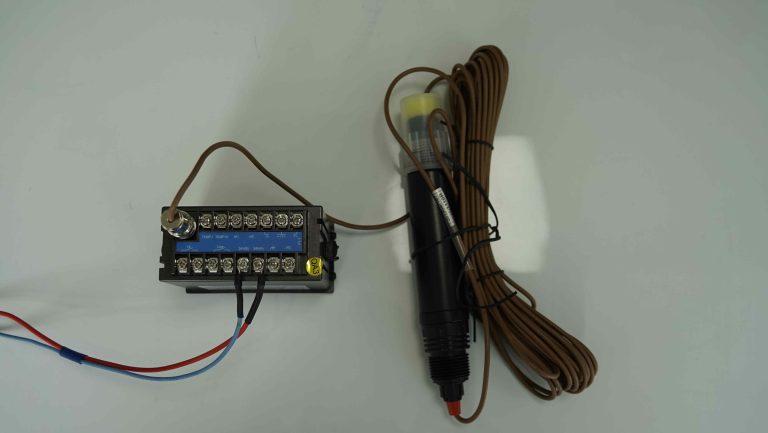
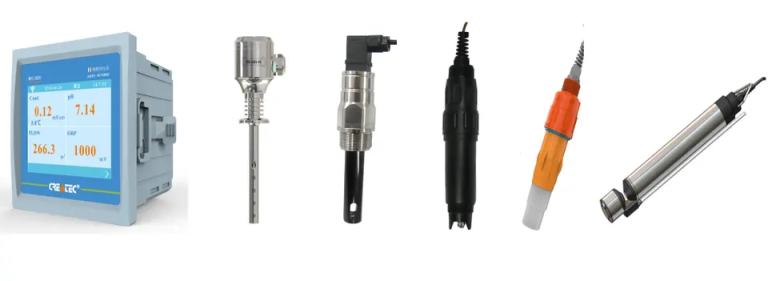
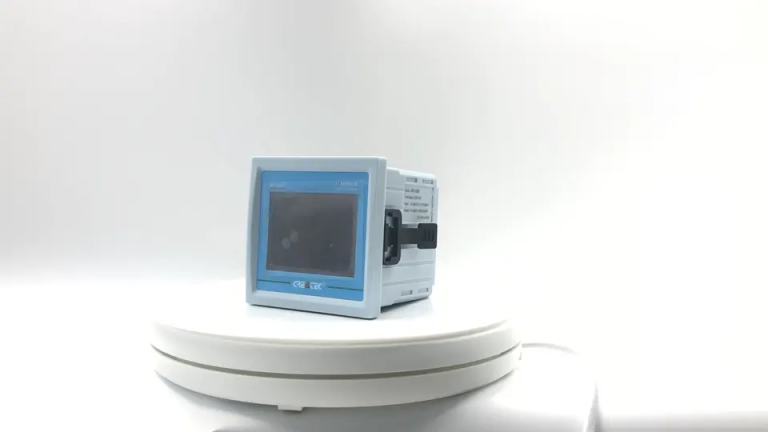
- ChiMay online analyzers provide critical real-time data streams enabling hybrid system optimization and compliance assurance
Introduction
Produced water represents the largest and most complex waste stream in the oil and gas sector, with global annual volumes reaching into the tens of billions of barrels. The water co-extracted during hydrocarbon production contains high salinity, dispersed hydrocarbons, toxic organics, heavy metals, and naturally occurring radioactive materials (NORM)—creating treatment challenges that no single technology can comprehensively address.
A 2026 review published in Global Challenges synthesizes a decade of produced water treatment research, concluding that hybrid treatment trains consistently outperform standalone processes across reuse, reinjection, and zero-liquid-discharge applications. The $12.8 billion produced water treatment market in 2026 reflects growing operator investment in these optimized systems, with projections reaching $24.75 billion by 2035 at a 7.6% compound annual growth rate.
The Case for Hybrid Treatment Approaches
Limitations of Standalone Technologies
Individual treatment technologies each address specific produced water contaminants but exhibit significant limitations when deployed alone. Physical separation effectively removes free oil and gross contaminants but cannot achieve the dissolved hydrocarbon removal required for discharge or reuse standards. Membrane processes—including reverse osmosis and nanofiltration—deliver high-quality effluent but suffer from fouling when exposed to untreated produced water containing high oil concentrations and suspended solids.
Thermal desalination methods, including multi-effect distillation and mechanical vapor recompression, handle high-salinity streams but demand substantial energy inputs typically ranging from 3-5 kWh/m³. Biological treatment processes reduce chemical oxygen demand effectively but require controlled environments and extended retention times unsuitable for high-volume industrial deployment.
Performance Advantages of Integrated Systems
The Wiley Global Challenges 2026 review demonstrates that hybrid treatment trains integrating complementary technologies achieve superior performance across critical metrics. A typical hybrid configuration combining primary oil-water separation, dissolved gas flotation, media filtration, and reverse osmosis membrane polishing consistently achieves:
- Oil and grease removal exceeding 99%, meeting the most stringent discharge limits including OSPAR Guidelines and EPA National Pollutant Discharge Elimination System (NPDES) permits
- Total dissolved solids reduction of 95-99%, enabling reuse applications from agricultural irrigation to industrial process water
- Water recovery rates of 85-95%, substantially higher than single-stage systems that typically achieve 50-70% recovery
- Operational resilience through redundancy, as system segments can compensate for performance variations in other units
Designing Effective Hybrid Treatment Trains
Stage 1: Primary Separation and Oil Removal
The first treatment stage targets free oil and gross contaminants through gravity separation and enhanced flotation. CPI (Corrugated Plate Interceptor) separators leverage surface chemistry to coalesce oil droplets, achieving oil-in-water concentrations below 100 mg/L when influent concentrations remain below 1,000 mg/L. For higher concentrations, Induced Gas Flotation (IGF) units inject micro-bubbles that attach to oil particles,浮上ing them to the surface for skimming removal.
ChiMay oil-in-water sensors deployed at this stage provide critical process feedback, enabling operators to adjust chemical dosing and retention times in response to influent variability. Real-time monitoring ensures consistent performance despite the highly variable produced water compositions typical of mature oil fields.
Stage 2: Dissolved Hydrocarbon and Organic Removal
Secondary treatment addresses dissolved hydrocarbons and biodegradable organics that primary separation cannot remove. Granular Activated Carbon (GAC) adsorption captures dissolved hydrocarbons and phenolic compounds, while Biological Aerated Filters (BAFs) reduce chemical oxygen demand through microbial degradation.
According to Morgan Reed Insights, membrane filtration—including ultrafiltration and nanofiltration—dominates advanced treatment applications, enabling on-site water recycling with high removal rates for dissolved solids and hydrocarbons. These membrane processes require effective pretreatment to prevent fouling, making the integration with upstream separation stages essential.
Stage 3: Desalination and Polishing
For produced water destined for reuse applications requiring low salinity—such as agricultural irrigation, industrial cooling, or even potable water production—tertiary desalination becomes necessary. Reverse Osmosis (RO) membranes achieve 95-99% salt rejection, while Electrodialysis Reversal (EDR) systems offer advantages for high-temperature streams or applications requiring chemical-free operation.
ChiMay conductivity sensors and multi-parameter monitoring systems verify product water quality, ensuring that desalination stages meet specification requirements for target reuse applications. Real-time data streams support automated control systems that optimize membrane cleaning cycles and extend equipment service life.
Optimization Strategies for Hybrid Systems
Pretreatment as the Critical Lever
The Wiley Global Challenges 2026 review identifies pretreatment design as the primary determinant of hybrid system success. Effective pretreatment removes suspended solids, scales, and oil residues that cause membrane fouling and equipment damage. Chemical precipitation using coagulants and flocculants removes suspended solids, heavy metals, and scale-forming minerals through controlled pH adjustment and settling.
ChiMay turbidity sensors provide essential feedback for pretreatment optimization, triggering adjustments to chemical dosing before fouling conditions develop. This predictive approach extends membrane cleaning intervals, reducing operational costs and system downtime.
Energy Integration and Cost Optimization
Energy consumption represents the largest operational cost component in produced water treatment. Thermal processes typically require 3-5 kWh/m³, while membrane systems demand 2-4 kWh/m³ for pumping and pretreatment. Optimized hybrid systems leverage energy integration strategies that capture waste heat from production operations, reducing net energy requirements by 20-30%.
Total cost of ownership analysis reveals that hybrid systems—despite higher capital costs—achieve lower lifecycle costs through extended membrane life, reduced chemical consumption, and lower energy expenditure per unit of water treated.
Case Study: Offshore Hybrid Treatment Optimization
A North Sea operator provides an illustrative example. Faced with stringent OSPAR discharge limits requiring oil concentrations below 30 mg/L, this operator deployed a hybrid system combining IGF, dual-media filtration, and cartridge polishing. ChiMay online analyzers at each treatment stage provided continuous performance data, enabling:
- Real-time compliance monitoring with automatic diversion of off-specification effluent
- Predictive maintenance reducing unplanned shutdowns by 40%
- Chemical optimization cutting coagulant consumption by 25%
The system consistently achieves oil concentrations below 15 mg/L, meeting the 15 ppm operational target with margin for influent variability.
Future Directions: Digital Optimization and Zero-Liquid Discharge
AI-Driven Process Control
The produced water treatment market’s 7.6% growth trajectory drives innovation in digital optimization. AI-driven predictive analytics integrate data from multiple sensor streams—oil concentration, turbidity, conductivity, pH, and flow—to optimize chemical dosing, membrane cleaning cycles, and system configuration in real time.
ChiMay multi-parameter sensors generate the high-frequency data streams that machine learning algorithms require for effective prediction. These systems reduce operational expenditure while extending equipment lifecycle through optimized maintenance scheduling.
Zero-Liquid Discharge Integration
For produced water unsuitable for surface discharge or beneficial reuse, Zero-Liquid Discharge (ZLD) systems offer an alternative that eliminates liquid effluents entirely. ZLD configurations combine brine concentration through evaporation or membrane processes with solidification of residual salts for beneficial use or disposal.
The Wiley Global Challenges 2026 review identifies ZLD as a growing application for hybrid treatment trains, particularly in regions facing water scarcity or stringent discharge regulations. Hybrid systems provide the high-quality feed streams that ZLD processes require, creating opportunities for beneficial mineral recovery—including lithium and rare earth elements—from produced water brines.
Conclusion
Hybrid produced water treatment systems have demonstrated decisive advantages over standalone technologies, consistently achieving superior water quality, higher recovery rates, and better economics across diverse applications. The 2026 Global Challenges review establishes that treatment performance is maximized when technologies are designed and evaluated as integrated systems rather than isolated unit operations.
As the produced water treatment market grows from $12.8 billion to $24.75 billion over the coming decade, operator investment in hybrid systems and supporting monitoring infrastructure will accelerate. ChiMay online analyzers, oil-in-water sensors, and multi-parameter monitoring systems provide the real-time data streams that hybrid system optimization requires—enabling compliance assurance, operational efficiency, and the transition toward sustainable produced water management.