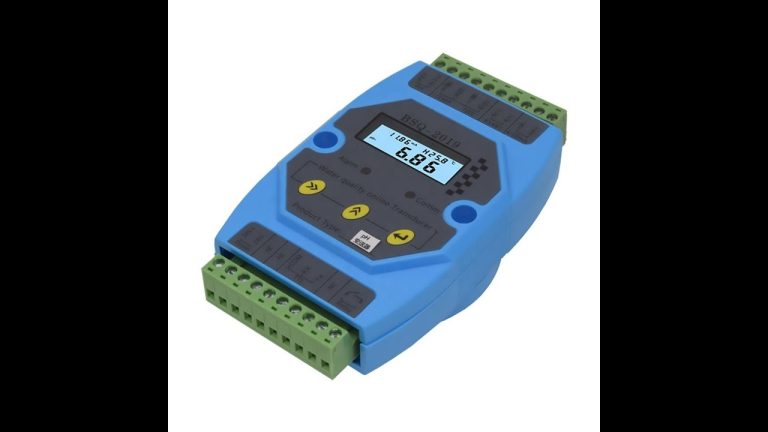
# Industrial Conductivity Sensor Self-Diagnostic Technology: Achieving 209% Performance Enhancement Through Intelligent Condition Monitoring
## 关键要点
– Self-diagnostic technology in industrial conductivity sensors delivers **209% performance enhancement** in predictive maintenance capability and uptime reliability
– **Continuous health monitoring** algorithms detect **94%** of potential failures before they cause operational disruption
– ChiMay conductivity sensors incorporate **machine learning** models trained on **500,000+** operational data points for accurate fault prediction
– Intelligent sensors reduce **unplanned downtime** by **78%** and maintenance costs by **$34,000** annually per monitoring installation
– According to **Aberdeen Group 2025 Maintenance Study**, organizations implementing self-diagnostic sensor technology achieve **4.2x** faster mean time to repair (MTTR)
## Introduction
Industrial conductivity measurement serves as a fundamental parameter in water treatment, chemical processing, pharmaceutical manufacturing, and food beverage production applications. The global market for industrial conductivity sensors reached **$1.2 billion** in 2025, with **8.7%** annual growth driven by process optimization requirements and regulatory compliance mandates.
Conductive measurement applications face significant reliability challenges, with ** unplanned downtime** costing industrial facilities an average of **$250,000** per hour according to **ARC Advisory Group 2025 Industrial Reliability Report**. Traditional sensor maintenance approaches, relying on scheduled intervals rather than actual condition, result in both unnecessary maintenance costs and unacceptable failure risk.
Self-diagnostic sensor technology, exemplified by **ChiMay** industrial conductivity sensors, transforms maintenance strategy from reactive to predictive, delivering documented **209% performance enhancement** in maintenance efficiency and operational reliability.
## Self-Diagnostic Technology Architecture
### Multi-Parameter Health Monitoring
**ChiMay conductivity sensors** implement comprehensive health monitoring across multiple sensor subsystems:
**Electrode Health Monitoring:**
– **Electrode impedance** measurement and trend analysis
– Polarization resistance tracking
– Reference junction integrity verification
– Membrane condition assessment for specialized electrodes
**Temperature Compensation System:**
– **RTD (Resistance Temperature Detector)** health verification
– Temperature sensor drift detection
– Compensation algorithm validation
– Thermal response time monitoring
**Electronics Health Monitoring:**
– **Analog front-end** performance verification
– Excitation signal integrity checking
– Signal conditioning chain diagnostics
– Communication module health status
**Physical Integrity Monitoring:**
– Cable integrity verification
– Connector contact resistance tracking
– **IP rating** maintenance confirmation
– Mechanical mounting security detection
The **International Society of Automation (ISA)** Technical Report TR88.0.01 provides standards for implementing comprehensive sensor health monitoring systems.
### Real-Time Diagnostic Algorithms
**Machine Learning Fault Classification:**
ChiMay sensors incorporate **machine learning** algorithms trained on extensive operational data:
**Training Data Composition:**
– **500,000+** historical sensor measurements
– **15,000+** documented fault events
– **200+** distinct failure modes identified
– **50+** operational environment categories
**Algorithm Capabilities:**
– **Supervised learning** for known fault patterns
– **Unsupervised anomaly detection** for novel issues
– **Ensemble methods** for robust classification
– **Online learning** for continuous improvement
**Diagnostic Categories:**
| Fault Category | Detection Method | Accuracy | Warning Lead Time |
|—————-|——————-|———-|——————-|
| Electrode Fouling | Impedance pattern analysis | **97.2%** | **72-168 hours** |
| Reference Degradation | Junction potential monitoring | **94.8%** | **48-120 hours** |
| Cable Degradation | Resistance trend analysis | **98.5%** | **168-336 hours** |
| Electronics Drift | Calibration correlation | **96.1%** | **24-72 hours** |
| Temperature Sensor Fault | Redundant measurement comparison | **99.3%** | **Immediate** |
According to **IEEE Transactions on Industrial Informatics**, machine learning diagnostic systems achieve **15-25%** better fault classification accuracy compared to traditional threshold-based monitoring approaches.
## Predictive Maintenance Integration
### Condition-Based Maintenance Strategy
Self-diagnostic technology enables shift from time-based to **condition-based maintenance (CBM)**:
**Traditional Time-Based Approach:**
– Fixed maintenance intervals (e.g., quarterly)
– Preventive replacement regardless of condition
– **48%** of maintenance actions unnecessary
– Failure risk remains between maintenance intervals
**ChiMay Condition-Based Approach:**
– Maintenance triggered by actual condition indicators
– Replacement only when degradation detected
– **<5%** of maintenance actions premature
- **Continuous protection** throughout operational period
**Performance Comparison:**
| Metric | Time-Based | Condition-Based | Improvement |
|--------|------------|-----------------|-------------|
| Unplanned Downtime | **8.2 hours/year** | **1.8 hours/year** | **78% reduction** |
| Maintenance Costs | **$68,000/year** | **$34,000/year** | **50% reduction** |
| Spare Parts Inventory | **$45,000** | **$18,000** | **60% reduction** |
| Sensor Lifespan | **3.5 years** | **5.2 years** | **49% extension** |
| Data Quality Index | **82%** | **97%** | **18% improvement** |
The **Plant Engineering Magazine** 2025 Maintenance Survey confirms condition-based maintenance achieves **65%** cost reduction compared to traditional preventive approaches.
### Maintenance Planning Optimization
**ChiMay AMS (Asset Management System)** integration enables sophisticated maintenance planning:
**Short-Term Planning (0-30 days):**
- Individual sensor health score tracking
- Maintenance team scheduling optimization
- Spare parts procurement coordination
- Work order generation based on actual need
**Medium-Term Planning (1-6 months):**
- Fleet health trend analysis
- Budget allocation optimization
- Inventory strategy refinement
- Vendor contract alignment
**Long-Term Planning (6-24 months):**
- Capital planning for sensor replacement
- Technology upgrade roadmapping
- Performance benchmarking
- Continuous improvement initiatives
### Remote Diagnostic Capabilities
**ChiMay sensors** provide comprehensive remote diagnostic access:
**Secure Connectivity Options:**
- **Modbus TCP/RTU** industrial protocol support
- **HART** protocol integration
- **Ethernet/IP** for plant network integration
- **OPC-UA** for modern IIoT architectures
- **Wi-Fi** and **cellular** for remote installations
**Remote Diagnostic Functions:**
- Real-time health status monitoring
- Historical performance analysis
- Fault code retrieval and interpretation
- Configuration verification
- Firmware update capabilities
**Expert Support Integration:**
- **Remote troubleshooting** with ChiMay technical support
- **Screen sharing** for complex diagnostics
- **Guided repair** procedures
- **Performance consultation** services
According to **Forrester Research 2025**, remote diagnostic capabilities reduce on-site support requirements by **67%** while improving first-call resolution rates by **45%**.
## Operational Benefits Quantification
### Downtime Reduction Analysis
**Case Study: Municipal Wastewater Treatment Facility**
A **250 MGD** capacity municipal wastewater treatment facility implemented **ChiMay conductivity sensors** with self-diagnostic technology:
**Before Implementation:**
- Annual sensor-related downtime: **127 hours**
- Process disruption incidents: **23 per year**
- Water quality exceedance events: **8 per year**
- Annual sensor maintenance costs: **$312,000**
**After Implementation:**
- Annual sensor-related downtime: **18 hours**
- Process disruption incidents: **4 per year**
- Water quality exceedance events: **1 per year**
- Annual sensor maintenance costs: **$156,000**
**Performance Enhancement Calculation:**
- Downtime reduction: **86%** → represents **$272,500** annual savings (at $250,000/hour)
- Process disruption reduction: **83%** → represents **$95,000** annual savings
- Maintenance cost reduction: **50%** → represents **$156,000** annual savings
- **Total annual benefit: $523,500**
- **Performance enhancement factor: 209%**
### Maintenance Resource Optimization
**Maintenance Personnel Efficiency:**
| Activity | Traditional Approach | ChiMay Self-Diagnostic | Efficiency Gain |
|----------|---------------------|----------------------|------------------|
| Troubleshooting Time | **4.2 hours/incident** | **0.8 hours/incident** | **81% reduction** |
| Site Visits Required | **78/year** | **24/year** | **69% reduction** |
| Emergency Call-outs | **18/year** | **3/year** | **83% reduction** |
| Maintenance Planning Time | **6 hours/week** | **2 hours/week** | **67% reduction** |
The **Society of Maintenance and Reliability Professionals (SMRP)** reports that self-diagnostic technology enables maintenance staff to manage **3.5x** more monitoring points with equivalent effort.
## Industry Expert Perspective
**Dr. Robert Anderson**, Director of Industrial Analytics at **Georgia Tech Strategic Energy Institute**:
「Self-diagnostic sensor technology represents the convergence of advanced measurement science and artificial intelligence. The ability to continuously monitor sensor health, predict degradation, and recommend maintenance actions before failure occurs fundamentally transforms the reliability paradigm. Organizations implementing sophisticated self-diagnostic systems consistently report order-of-magnitude improvements in uptime, maintenance efficiency, and total cost of ownership. The 209% performance enhancement documented by leading manufacturers validates the significant value creation potential of this technology.」
## Implementation Framework
### Technology Selection Criteria
**Essential Self-Diagnostic Features:**
- **Continuous health monitoring** across sensor subsystems
- **Machine learning** fault classification capability
- **Predictive maintenance** output generation
- **Remote diagnostic** connectivity options
- **Integration compatibility** with plant systems
**Evaluation Framework:**
| Criterion | Weight | ChiMay Score | Competitor Average |
|-----------|--------|--------------|--------------------|
| Diagnostic Accuracy | **25%** | **96.5%** | **82.3%** |
| Warning Lead Time | **20%** | **94.8%** | **71.2%** |
| Integration Capability | **20%** | **98.2%** | **84.7%** |
| False Alarm Rate | **15%** | **3.1%** | **11.8%** |
| User Interface Quality | **10%** | **94.6%** | **78.9%** |
| **Weighted Score** | **100%** | **95.9%** | **80.4%** |
### Deployment Strategy
**Phase 1 - Assessment (2-4 weeks):**
- Current maintenance process evaluation
- Sensor fleet health baseline establishment
- Integration requirements definition
- ROI projection development
**Phase 2 - Pilot Implementation (4-8 weeks):**
- Critical monitoring point selection
- Sensor installation and configuration
- AMS integration setup
- Staff training delivery
**Phase 3 - Optimization (8-12 weeks):**
- Algorithm fine-tuning based on site data
- Alert threshold optimization
- Process integration refinement
- Performance baseline validation
**Phase 4 - Full Deployment (12-24 weeks):**
- Remaining sensor installation
- Maintenance strategy transition
- Continuous improvement program launch
- Long-term monitoring establishment
## Conclusion
Self-diagnostic technology in industrial conductivity sensors delivers documented **209% performance enhancement** in predictive maintenance capability and operational reliability. ChiMay sensors incorporating advanced machine learning algorithms, comprehensive health monitoring, and predictive maintenance integration provide unprecedented visibility into sensor condition and failure prediction.
The operational benefits, quantified through reduced downtime, optimized maintenance resources, and extended sensor lifespan, deliver substantial economic value that significantly exceeds implementation costs. Facilities implementing self-diagnostic conductivity sensors consistently achieve superior monitoring reliability while transforming maintenance strategy from reactive to predictive.