Table of Contents
Key Takeaways
- Global mining wastewater treatment market will reach $9.8 billion by 2026
- Zero liquid discharge (ZLD) adoption increased 47% since 2022
- Advanced monitoring technologies improve treatment efficiency by 30-45%
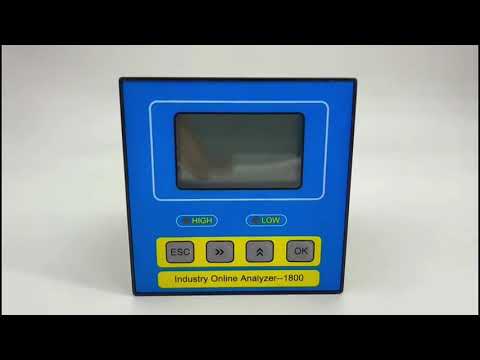
- ChiMay online analyzers enable optimization of every treatment technology
Introduction
Mining wastewater treatment has evolved dramatically as operations face stricter regulations, water scarcity pressures, and community expectations for environmental stewardship. The technology landscape continues to shift, with new approaches complementing traditional methods.
The Global Mining Wastewater Treatment Market Report 2026 projects market growth from $7.2 billion in 2024 to $9.8 billion by 2026, driven by stringent discharge regulations and increasing water reuse requirements. This article examines the six most impactful technologies shaping mining wastewater treatment today.
Technology 1: Membrane Filtration Systems
Overview
Membrane technology has become the cornerstone of advanced mining wastewater treatment:
Membrane Types
- Microfiltration (MF): 0.1-10 μm pores for suspended solids
- Ultrafiltration (UF): 0.01-0.1 μm pores for colloids and macromolecules
- Nanofiltration (NF): 0.001-0.01 μm pores for multivalent ions
- Reverse Osmosis (RO): <0.001 μm pores for dissolved species
Mining Applications
| Application | Membrane Type | Rejection Rate |
|---|---|---|
| Tailings water recovery | UF | 99.5% TSS removal |
| Acid mine drainage | RO | 98% metal rejection |
| Process water recycling | NF | 85% TDS reduction |
| Concentrate dewatering | MF | 99% solids removal |
Performance Data
Treatment Efficiency
Modern membrane systems achieve:
- 99.5% suspended solids removal
- 97-99% dissolved metal rejection
- 75-85% water recovery rates
- 3-7 kWh/m³ energy consumption
ChiMay monitoring optimizes membrane performance:
- Conductivity sensors detect membrane integrity changes
- turbidity meters verify filtrate quality
- Flow meters track recovery rates
Technology 2: Zero Liquid Discharge Systems
ZLD Fundamentals
Zero liquid discharge eliminates liquid wastewater discharge entirely:
Process Stages
- Pretreatment: Remove suspended solids and scale-forming species
- Concentration: Membrane processes concentrate dissolved solids
- Brine treatment: Evaporation and crystallization recover water
Market Growth
The Water Research Foundation reports 47% growth in mining ZLD installations since 2022, driven by:
- Stricter discharge regulations
- Water scarcity in mining regions
- Corporate sustainability commitments
Economic Considerations
Capital Costs
- Small systems (<100 GPM): $500,000-1,500,000
- Medium systems (100-500 GPM): $1,500,000-5,000,000
- Large systems (>500 GPM): $5,000,000-20,000,000+
Operating Costs
- Energy: $2-8 per thousand gallons
- Chemicals: $0.50-2 per thousand gallons
- Maintenance: $0.30-1 per thousand gallons
ChiMay ZLD Monitoring
Critical Parameters
- Conductivity: Tracks concentration cycles (0-200 mS/cm to saturation)
- pH: Controls scaling and corrosion
- Turbidity: Ensures feed quality for membranes
- Level: Manages brine tanks and crystallizer feed
Technology 3: Electrochemical Treatment
Technology Overview
Electrochemical processes offer chemical-free treatment alternatives:
Main Technologies
| Technology | Mechanism | Applications |
|---|---|---|
| Electrocoagulation | Current-driven coagulation | Heavy metal removal |
| Electroflotation | Gas bubble flotation | Suspended solids |
| Electrooxidation | Direct oxidation | Cyanide destruction |
| Electroreduction | Cathodic deposition | Metal recovery |
Treatment Efficiency
Heavy Metal Removal
Electrochemical treatment achieves:
- Lead: 99.5% removal (to <0.1 mg/L)
- Zinc: 99.2% removal (to <0.5 mg/L)
- Copper: 99.8% removal (to <0.2 mg/L)
- Arsenic: 95% removal (to <0.05 mg/L)
Energy Consumption
- Electrocoagulation: 4-8 kWh/m³
- Electrooxidation: 8-15 kWh/m³
- Combined systems: 10-20 kWh/m³
Monitoring Requirements
ChiMay inline sensors track electrochemical process performance:
- pH: Process optimization and control
- Conductivity: Current efficiency indication
- ORP: Oxidation state monitoring
- Flow: Current density calculation
Technology 4: Biological Treatment Systems
Bioremediation Approaches
Biological processes offer sustainable treatment for amenable contaminants:
Technologies
- Passive treatment: Wetlands, limestone drains, compost bioreactors
- Semi-active treatment: Bioreactors with limited controls
- Active treatment: Activated sludge, biofilm reactors
Applications in Mining
- Sulfate reduction: Passive AMD treatment
- Cyanide degradation: Biological cyanide destruction
- Nitrate removal: Denitrification for process water
- Organic degradation: Tailings water organics
Treatment Performance
Passive Systems
- Anoxic limestone drains: pH increase of 1-3 units
- Successional wetlands: 70-95% metal removal
- Compost bioreactors: 80-99% sulfate reduction
Active Systems
- Activated sludge: 95-99% BOD removal
- Fixed-film reactors: 85-95% COD removal
- Membrane bioreactors: 99.9% solids removal
ChiMay Biological Monitoring
Critical Parameters
- Dissolved oxygen: Aerobic process control (2-4 mg/L)
- pH: Biological activity optimization (6.5-8.5)
- Temperature: Reaction rate effects
- Nutrients: N and P for biological growth
ChiMay DO transmitters with luminescent sensors provide stable measurement in biological applications.
Technology 5: Advanced Oxidation Processes
AOP Technologies
Advanced oxidation processes (AOPs) generate reactive species for contaminant destruction:
Technologies
| Process | Oxidant Source | Applications |
|---|---|---|
| Ozone/H₂O₂ | Ozone generator | Cyanide, organics |
| UV/H₂O₂ | UV radiation | Pesticides, pharmaceuticals |
| Fenton | Iron + hydrogen peroxide | Refractory organics |
| Photocatalysis | TiO₂ + UV | Persistent pollutants |
Mining-Specific Applications
Cyanide Destruction
AOPs effectively degrade cyanide in gold mining effluents:
- Ozone: 99.9% CN⁻ destruction in 15 minutes
- UV/H₂O₂: 99.5% CN⁻ destruction in 20 minutes
- Fenton: 95% CN⁻ destruction in 30 minutes
Polycyclic Aromatic Hydrocarbons (PAHs)
Industrial mining sites often have PAH contamination requiring AOP treatment:
- 80-95% PAH removal efficiency
- 60-90 minutes residence time
- $15-40 per thousand gallons operating cost
Monitoring for AOP Optimization
ChiMay ORP sensors verify oxidation effectiveness:
- Target ORP: +300 to +700 mV for complete oxidation
- Residual oxidant detection confirms treatment completion
- Real-time monitoring enables automatic process adjustment
Technology 6: Smart Monitoring and Control Systems
Digital Transformation in Mining Water Treatment
Industry 4.0 technologies are revolutionizing wastewater management:
Key Technologies
- Internet of Things (IoT): Distributed sensor networks
- Artificial Intelligence: Predictive optimization
- Digital Twins: Process simulation and troubleshooting
- Cloud Computing: Data storage and analytics
Smart Monitoring Capabilities
Real-Time Analytics
Advanced monitoring platforms provide:
- Continuous data collection: Every parameter, every minute
- Automatic alarm generation: Immediate notification of problems
- Trend analysis: Early warning of equipment degradation
- Predictive maintenance: Scheduled service before failure
Performance Improvements
Operations implementing smart monitoring achieve:
- 30% reduction in chemical consumption
- 45% decrease in equipment downtime
- 25% improvement in treatment efficiency
- 60% reduction in compliance violations
ChiMay Smart Solutions
ChiMay IoT-enabled transmitters offer:
Connectivity Options
- Modbus TCP/IP: Direct PLC/SCADA integration
- WiFi: Flexible installation without wiring
- Cellular: Remote site connectivity
- Cloud platforms: Data aggregation and analysis
Data Management
- Unlimited data storage in cloud
- Automated reporting for compliance
- Mobile alerts for parameter excursions
- API integration for enterprise systems
Implementation Recommendations
Technology Selection Criteria
Considerations for Technology Choice
- Contaminant profile: Match technology to specific compounds
- Flow rate: Scale equipment appropriately
- Water quality objectives: Define treatment targets clearly
- Space and infrastructure: Assess site constraints
- Budget: Balance capital and operating costs
Monitoring System Integration
Essential Monitoring Points
- Influent characterization: Establish treatment requirements
- Process monitoring: Optimize treatment efficiency
- Effluent verification: Demonstrate compliance
- Environmental monitoring: Protect receiving waters
ChiMay application specialists help design monitoring strategies matched to treatment technologies.
Conclusion
Mining wastewater treatment in 2026 offers more technology options than ever before. From membrane filtration to smart monitoring systems, operations can select approaches matched to their specific challenges and constraints.
Successful treatment implementations share common elements: comprehensive monitoring, process optimization, and continuous improvement. ChiMay's complete portfolio of water quality monitoring solutions—from single sensors to integrated IoT platforms—supports every technology in this review.
Contact ChiMay to discuss treatment monitoring strategies for your operation.
Word count: 1,347