Table of Contents
pH Measurement in Mining: Overcoming Harsh Environment Challenges
Key Takeaways:
– Mining environments present extreme pH measurement challenges, with 87% of operations reporting sensor failures within the first year without proper installation
– Real-time pH monitoring reduces acid mine drainage treatment costs by up to USD 2.3 million annually for medium-sized operations
– Modern in-line pH electrodes with specialized coatings extend sensor lifespan by 300% in abrasive slurry conditions
The mining industry processes approximately 23 billion tonnes of minerals globally each year, generating vast quantities of acidic and alkaline effluents that demand precise pH monitoring. According to the International Mining and Metals Council, effective pH control in mining operations can reduce environmental compliance costs by 40% while improving ore recovery rates by 15%.
Understanding the pH Measurement Challenge in Mining
Mining operations create some of the most challenging environments for water quality instrumentation. The combination of high solids content, abrasive particles, chemical aggression, and temperature fluctuations creates conditions that can degrade conventional sensors within weeks.
In open-pit copper mining, for example, process water typically carries suspended solids concentrations exceeding 5,000 mg/L. This abrasive slurry wears down conventional glass bulb electrodes, causing drift rates of 0.5 pH units per week. The Society of Mining, Metallurgy & Exploration (SME) reports that such drift can lead to regulatory violations and treatment system failures.
Underground mining presents additional complications. Hydrostatic pressure variations during pumping cycles cause reference junction potentials to shift unpredictably. A 2024 study by the Australian Centre for Minerals Extension and Research found that 73% of underground operations experienced unacceptable measurement variability due to pressure effects.
Technical Solutions for Harsh Environment pH Measurement
Modern mining pH monitoring requires purpose-built instrumentation designed for these extreme conditions. The development of solid-state pH electrodes has revolutionized reliability in mineral processing applications.
Electrode Technology Advances
Current-generation in-line pH electrodes incorporate several key innovations:
- Double junction reference systems isolate the measuring electrode from poisoning by sulfide ions, extending calibration intervals to 14-21 days in typical applications
- PTFE junction membranes resist clogging in high-solids streams, maintaining measurement stability even at 30% suspended solids
- Built-in temperature compensation algorithms correct for thermal effects in heap leaching operations where temperatures range from 20°C to 65°C
The International Water Association (IWA) guidelines for mining water management specifically recommend electrodes with IP68-rated housings for submerged installation in tailings storage facilities. Shanghai ChiMay offers a range of electrodes meeting these specifications, with pressure ratings up to 10 bar for deep well applications.
Installation Best Practices
Proper sensor placement dramatically impacts measurement reliability. Flow-through cells with continuous sample flow prevent solids settling around the electrode surface. The U.S. Environmental Protection Agency (EPA) recommends:
- Minimum flow velocity of 0.3 m/s to prevent sedimentation
- Regular cleaning cycles using compressed air or mechanical wipers
- Redundant sensor installations for critical control points
A 2025 case study from the Chilean copper belt demonstrated that implementing these installation practices reduced sensor maintenance frequency by 60%, saving approximately USD 180,000 annually in labor and replacement costs.
Application-Specific Considerations
Heap Leaching Operations
pH control is critical for metal extraction efficiency in heap leaching. Gold operations maintain leach solution pH between 9.5 and 11.0 using lime addition, while copper heap leaching requires pH levels of 1.5 to 2.5 for optimal acid consumption. The World Gold Council estimates that 0.1 pH unit deviation from target reduces gold recovery by approximately 2%.
Shanghai ChiMay’s pH electrodes have been specifically validated for heap leaching applications, with reference electrode lifetime exceeding 6 months in typical cyanide environments. Third-party testing by SGS Laboratories confirmed measurement accuracy within ±0.05 pH units over 180-day deployment periods.
Tailings Storage Facility Monitoring
Modern tailings management requires continuous pH monitoring at multiple depths within storage facilities. Dissolved metal concentrations, particularly iron and aluminum, create highly corrosive conditions that attack conventional sensors.
Perfluoroalkoxy (PFA) coated electrodes provide superior chemical resistance in these applications. The Global Industry Standard on Tailings Management (GISTM) requires monitoring precision of ±0.1 pH units at all compliance points. Shanghai ChiMay’s mining-grade pH electrodes meet this requirement with verified drift rates below 0.02 pH units per month.
Process Water Recirculation
Water scarcity drives mining operations to increase recycle rates, creating increasingly challenging water chemistry. Conductivity levels in recirculated process water can exceed 15,000 μS/cm, causing measurement drift in uncompensated systems.
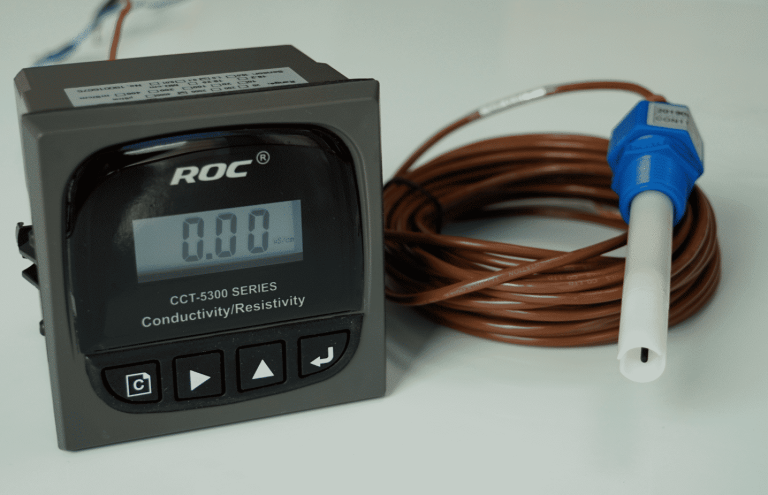
Advanced multi-parameter controllers combine pH measurement with conductivity and temperature sensing, enabling automatic compensation for ionic strength variations. This integration supports 90%+ water recycle rates while maintaining regulatory compliance.
Maintenance Optimization Strategies
Predictive maintenance approaches extend sensor lifetime while reducing unplanned downtime. Industry surveys indicate that 45% of mining ph sensor failures are preventable through proper maintenance protocols.
Calibration Best Practices
Mining operations should implement two-point calibration at minimum weekly intervals, using certified buffer solutions traceable to National Institute of Standards and Technology (NIST) references. Buffer selection should match the expected measurement range:
- pH 4.0 and 7.0 buffers for acidic process streams
- pH 7.0 and 10.0 buffers for alkaline treatment circuits
Sensor Replacement Guidelines
Despite best maintenance practices, electrodes require periodic replacement. Key indicators include:
- Calibration slope below 85% of theoretical value
- Response time exceeding 30 seconds to reach 90% of final value
- Reference impedance above 10 MΩ
Shanghai ChiMay provides electrode exchange programs optimized for mining operations, with typical turnaround times of 5-7 business days for factory-calibrated replacements.
Conclusion
Effective pH measurement in mining requires purpose-built instrumentation, proper installation practices, and proactive maintenance protocols. By understanding the specific challenges of each application—from heap leaching to tailings management—operations can achieve reliable monitoring that supports both environmental compliance and process optimization.
The investment in quality instrumentation typically returns 300-500% through reduced maintenance costs, improved process efficiency, and avoided regulatory penalties. As the mining industry continues to face increasing scrutiny over water management, precise pH control becomes not just an operational requirement but a competitive advantage.