Table of Contents
Investment Analysis: Modernizing Water Management in Power Generation Facilities
Key Takeaways
- Power plant water treatment system modernization investments average $1.2-2.5 million for medium-scale facilities, with typical returns exceeding 25% annually
- Legacy water monitoring systems consume $150,000-300,000 annually in excessive chemical treatment and inefficient operations
- Modern monitoring and control systems reduce unplanned outages related to water quality by 50-70%
- Regulatory compliance risks from inadequate water management now exceed $5 million per incident in potential penalties and remediation costs
Water management modernization represents a significant capital investment opportunity for power generation facilities. Board-level analysis requires comprehensive assessment of costs, benefits, risks, and strategic implications to support informed capital allocation decisions.
Understanding the Investment Landscape
Capital Requirement Categories
Water management modernization investments span multiple categories:
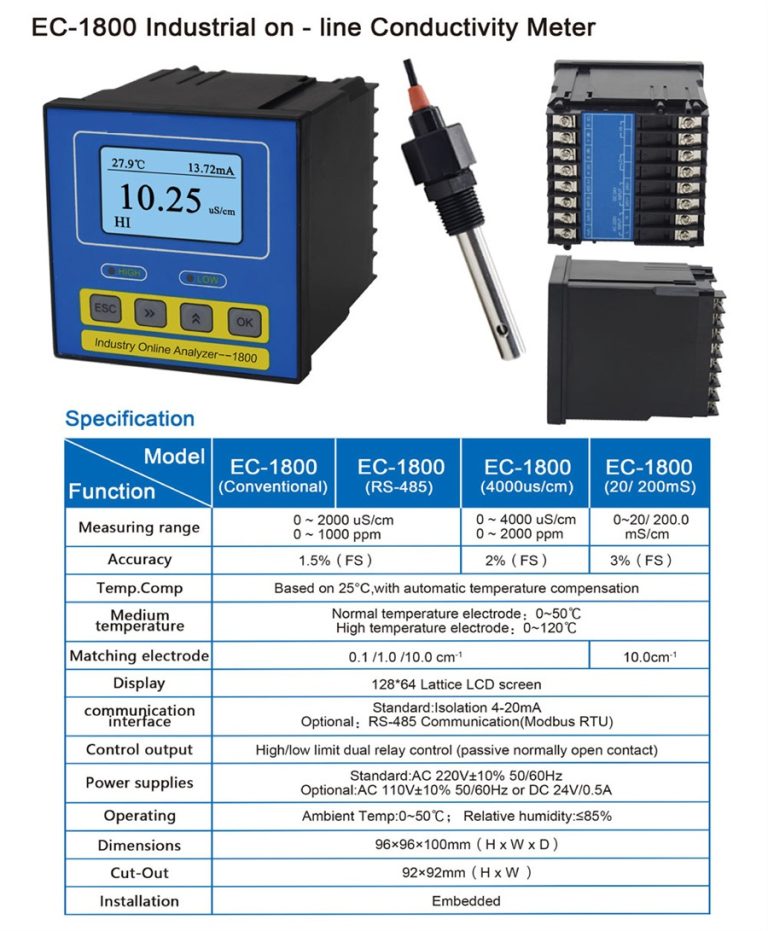
Instrumentation and controls: Sensor replacement, transmitter upgrades, control system modernization. Typical investment ranges from $200,000-800,000 for comprehensive instrumentation upgrades.
Treatment systems: Chemical dosing equipment, filtration systems, wastewater treatment additions. Investment varies widely based on treatment objectives, ranging from $300,000-5 million.
Integration infrastructure: Communication networks, data historians, operator interface upgrades. Often represents 15-25% of total program cost.
Auxiliary systems: Sample conditioning, calibration facilities, maintenance equipment. Typically $50,000-150,000.
Current State Evaluation
Before committing to modernization, boards should understand existing asset condition:
Instrument age analysis: Instrumentation exceeding 10 years typically experiences accuracy degradation and increased maintenance requirements. Industry data indicates 35% of legacy instrumentation operates outside original specifications.
System obsolescence: Control systems no longer supported by manufacturers create security vulnerabilities and maintenance challenges. Many facilities operate SCADA systems 15-20 years past planned replacement cycles.
Capability gaps: Compare current monitoring density and automation levels against peer facilities and current best practices. Significant gaps indicate both modernization opportunity and competitive disadvantage.
Financial Analysis Framework
Cost of Inaction
The counter-factual—continuing current operations—carries substantial costs often overlooked in modernization discussions:
Excessive chemical treatment: Inefficient monitoring causes 20-35% higher chemical consumption than achievable with modern systems. A medium-scale facility pays approximately $180,000-350,000 annually in avoidable chemical costs.
Unplanned downtime: Water quality-related failures account for 15-20% of unplanned thermal outages. Each day of forced outage represents $500,000-2 million in lost revenue depending on facility size and market prices.
Compliance penalties: Regulatory violations involving water management have resulted in penalties exceeding $1 million per incident, plus remediation costs often reaching $2-5 million.
Staff inefficiency: Legacy systems require more operator attention for monitoring and adjustment, diverting resources from other value-adding activities.
Return on Investment Calculation
Modernization ROI analysis incorporates multiple benefit categories:
| Benefit Category | Annual Value (Typical 600 MW Facility) |
|---|---|
| Chemical optimization | $180,000-280,000 |
| Reduced unplanned outages | $400,000-800,000 |
| Compliance risk reduction | $150,000-300,000 |
| Operational efficiency | $80,000-150,000 |
| Maintenance reduction | $60,000-120,000 |
| Total Annual Benefit | $870,000-1,650,000 |
With typical investment of $1.5-2.5 million, simple payback ranges from 18-36 months, representing 33-55% internal rate of return over a 10-year analysis period.
Risk-Adjusted Returns
Board analysis should incorporate scenario planning:
Base case: Assumes steady-state benefits from chemical optimization and maintenance reduction
Upside case: Includes avoided outage scenarios where modern systems detect problems early
Downside case: Benefits limited to chemical optimization if other factors remain unchanged
Even conservative assumptions typically support favorable investment recommendations given the magnitude of potential benefits.
Strategic Considerations
Competitive Positioning
Water availability increasingly constrains generation capacity in water-stressed regions. Facilities demonstrating efficient water management position themselves for:
Regulatory relationships: Demonstrated environmental stewardship builds regulatory goodwill potentially valuable in permit proceedings and enforcement discretion.
Community acceptance: Power plants face growing community scrutiny over water use. Demonstrated efficiency supports continued license to operate.
Corporate sustainability: Generation assets serving companies with sustainability commitments require demonstrated environmental performance.
Technology Evolution
Water management technology continues advancing:
Wireless sensors: Installation costs reduced 40-60% compared to hardwired alternatives, improving economics of expanded monitoring coverage.
Predictive analytics: Machine learning algorithms analyzing monitoring data can predict equipment degradation and treatment upsets before they cause operational problems.
Digital integration: Modern systems integrate seamlessly with plant data architectures, enabling optimization across systems.
Delaying modernization cedes these benefits to competitors while accepting legacy system maintenance burden.
Implementation Strategy
Phased Approach
Large modernization programs benefit from phased implementation:
Phase 1—Critical monitoring: Replace instrumentation affecting equipment reliability and compliance. Typically represents 40-50% of investment, delivering 60-70% of benefits.
Phase 2—Control optimization: Implement automated control systems enabling continuous optimization. Represents 30-40% of investment, adding 20-25% of benefits.
Phase 3—Integration and analytics: Complete system integration and implement advanced optimization capabilities. Represents 15-20% of investment, delivering final benefits increment.
Phased approaches reduce execution risk while allowing lessons learned to improve later phases.
Vendor Selection
Modernization success depends heavily on vendor partnerships:
Application expertise: Select partners with demonstrated power generation water management experience. General-purpose instrumentation suppliers may lack application-specific knowledge.
Integration capability: Evaluate vendors’ ability to integrate with existing plant systems. Compatibility with current control infrastructure reduces implementation risk.
Long-term support: Assess vendor financial stability and commitment to product lines. Products abandoned by manufacturers create long-term support challenges.
Reference facilities: Visit comparable installations to validate vendor claims and observe systems in operation.
Board Decision Framework
Key Questions
Informed board decisions address several critical questions:
- What is the current state of water management systems and what risks does this create?
- What investment is required to achieve modern best-practice performance?
- What returns does this investment deliver under various scenarios?
- What are the consequences of deferring or declining modernization?
- How does this investment align with strategic priorities and risk tolerance?
Approval Considerations
Board approval typically requires:
Clear strategic rationale: Connection to corporate strategy and competitive positioning
Favorable economics: Attractive returns with acceptable risk profile
Manageable execution: Implementation plan with appropriate governance and oversight
Stakeholder alignment: Support from operations, engineering, and environmental functions
Conclusion
Water management modernization represents a compelling investment opportunity for power generation facilities. The combination of attractive financial returns, risk reduction, and strategic positioning supports board-level endorsement of capital programs addressing this often-overlooked operational area.
Forward-looking organizations treat water management modernization as infrastructure investment deserving priority capital allocation. The costs of inaction—excessive operating expenses, reliability risks, and compliance vulnerabilities—far exceed the investments required to achieve best-practice performance.
Boards should request comprehensive analysis including current state assessment, investment requirements, benefit quantification, and implementation planning to support informed capital allocation decisions.