Table of Contents
Key Takeaways
- The EPA finalized the first national PFAS drinking water regulation in April 2024, establishing Maximum Contaminant Levels (MCLs) of 4 ppt for PFOA and PFOS
- Compliance monitoring begins in 2027, with full compliance required by 2029
- Industries must monitor wastewater effluent containing PFAS concentrations ranging from below detection limits to 2,824 ng/L based on semiconductor fab data
- The global PFAS remediation market is projected to reach USD 3.9 billion by 2028, creating significant monitoring equipment demand
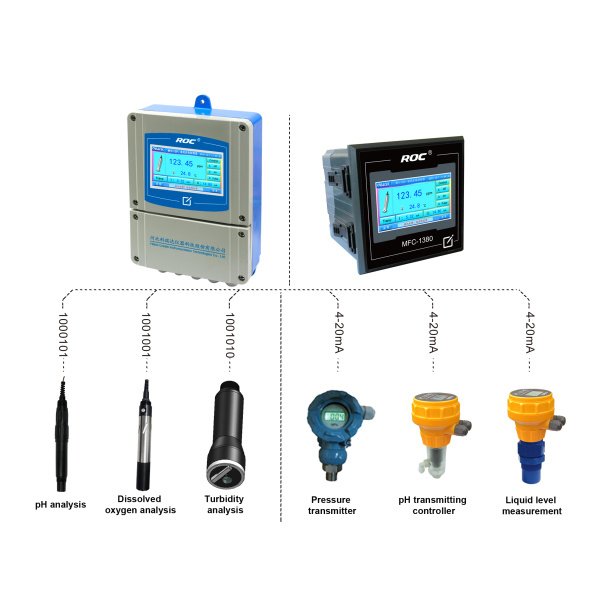
- ChiMay's water quality monitoring systems provide real-time parameters that complement specialized PFAS laboratory analysis
Introduction
Per- and polyfluoroalkyl substances (PFAS) have emerged as among the most significant environmental contaminants of the 21st century. These synthetic compounds, used in countless industrial and consumer applications since the 1950s, persist in the environment and bioaccumulate in living organisms. The EPA's April 2024 National Primary Drinking Water Regulation establishes legally enforceable limits on PFAS in drinking water for the first time.
Industries across multiple sectors now face unprecedented monitoring and treatment requirements. This article examines how advanced water quality sensors support PFAS monitoring programs and help industries prepare for regulatory compliance.
Understanding PFAS Contamination Sources
Industrial Sources of PFAS
PFAS enter water systems through multiple industrial pathways:
Semiconductor Manufacturing: PFAS are used extensively in semiconductor fabrication, particularly in photolithography, etching, and cleaning processes. The Semiconductor PFAS Consortium survey (2023) documented PFAS concentrations ranging from below detection limits to 2,824 ng/L in semiconductor fab wastewater effluent.
Electroplating Operations: Chromium plating and other metal finishing processes use PFAS-containing mist suppressants
Firefighting Foams: Aqueous film-forming foams (AFFF) used in firefighting and training exercises have contaminated numerous military and civilian sites
Textile and Paper Manufacturing: PFAS provide water and stain resistance in fabric and paper production
Plastics Manufacturing: Some polymer processing operations release PFAS compounds
Environmental Behavior
PFAS characteristics create unique monitoring challenges:
| Property | Impact | Monitoring Implication |
|---|---|---|
| Persistence | Does not degrade naturally | Historical contamination accumulates |
| Bioaccumulation | Concentrates in food chain | Human health via drinking water and food |
| Mobility | Moves easily in water | Widespread aquifer contamination |
| Partitioning | Varies by compound | Different PFAS require different treatment |
EPA Regulatory Framework
National Primary Drinking Water Regulation
The April 2024 EPA regulation establishes Maximum Contaminant Levels (MCLs) for specific PFAS compounds:
| Compound | MCL (ppt) | MCLG (ppt) |
|---|---|---|
| PFOA | 4.0 | 0 (zero) |
| PFOS | 4.0 | 0 (zero) |
| PFNA | 10 | 0 (zero) |
| PFHxS | 10 | 0 (zero) |
| HFPO-DA (GenX) | 10 | 0 (zero) |
| Mixtures | Hazard Index | — |
Compliance Timeline
- June 2024: Analytical methods required
- 2027: Monitoring must begin
- 2029: Compliance required
- 2031: Potential extensions for some compounds
Industrial Discharge Implications
The Safe Drinking Water Act does not directly regulate industrial discharge to POTWs, but:
- State regulations: Many states have more stringent PFAS discharge limits
- POTW concerns: Wastewater treatment plants receiving industrial discharge may face their own compliance challenges
- Pretreatment programs: Industrial users may face local limits from POTWs
- Surface water impacts: Industrial discharges affect drinking water sources
Role of Water Quality Sensors in PFAS Programs
Complementary Monitoring Approach
While specialized laboratory analysis is required for PFAS compound quantification, general water quality sensors provide valuable complementary information:
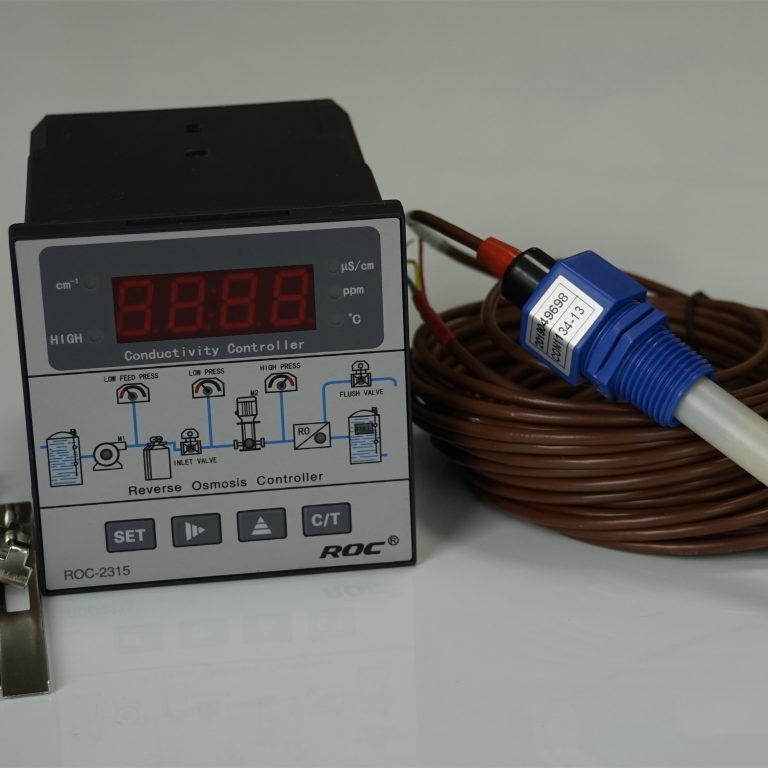
Conductivity Monitoring: Indicates overall ionic load; changes may signal process or treatment variations affecting PFAS
pH Monitoring: Affects PFAS speciation and treatment effectiveness; some treatment technologies require pH adjustment
TOC Monitoring: Total organic carbon monitoring correlates with PFAS precursors and treatment removal
Temperature Monitoring: Affects treatment kinetics and analytical method performance
Process Control Applications
Water quality sensors enable treatment system optimization:
| Treatment Technology | Key Parameters | Sensor Requirements |
|---|---|---|
| Granular Activated Carbon (GAC) | Flow, pressure, TOC | Continuous monitoring for breakthrough |
| Reverse Osmosis | Conductivity, pressure, flow | Membrane integrity verification |
| Ion Exchange | Conductivity, pH | Regeneration timing |
| Advanced Oxidation | pH, ORP, ozone residual | Process optimization |
Real-Time Alert Systems
Online water quality monitoring provides early warning:
- Conductivity spikes: Indicate system upsets affecting PFAS treatment
- pH excursions: Affect treatment efficiency
- TOC increases: May signal PFAS breakthrough or precursor release
- Flow variations: Impact hydraulic retention time
Monitoring Program Design
Industrial Wastewater Monitoring Strategy
Develop a comprehensive PFAS monitoring program:
Phase 1: Characterization
- Identify all PFAS sources in facility operations
- Characterize PFAS concentrations in waste streams
- Evaluate wastewater treatment system performance
- Assess discharge pathways and receiving waters
Phase 2: Baseline Monitoring
- Quarterly sampling at major discharge points
- Continuous monitoring of supporting parameters
- Source apportionment studies
- Treatment system performance tracking
Phase 3: Compliance Monitoring
- Establish monitoring frequency per regulatory requirements
- Implement continuous sensor monitoring for process control
- Develop response protocols for exceedances
- Document all monitoring activities
Monitoring Point Selection
| Location | Purpose | Frequency |
|---|---|---|
| Influent | Source characterization | Quarterly |
| Process monitoring points | Treatment optimization | Continuous |
| Effluent | Compliance verification | Monthly/Quarterly |
| Receiving water | Impact assessment | Per permit |
Treatment Technology Considerations
Activated Carbon Systems
Granular activated carbon (GAC) effectively removes long-chain PFAS:
Operating Parameters:
- Empty Bed Contact Time (EBCT): 10-20 minutes typical
- Media life: 6-24 months depending on PFAS loading
- Pressure drop: Monitor for breakthrough indication
Sensor Integration:
- Flow meters for mass loading calculations
- Pressure transmitters for bed monitoring
- TOC analyzers for breakthrough detection
- Temperature sensors for temperature effects
Reverse Osmosis Treatment
RO provides high PFAS removal efficiency:
Performance Specifications:
- PFAS rejection: >99% for most compounds
- Recovery rates: 60-85% depending on feedwater quality
- Operating pressure: 150-300 psi typical
Sensor Requirements:
- Conductivity monitoring for rejection verification
- Pressure monitoring for membrane integrity
- Flow meters for recovery calculations
- pH monitoring for feedwater conditioning
Advanced Oxidation Processes
AOPs can break down some PFAS compounds:
Technologies:
- UV/H₂O₂ oxidation
- Ozone treatment
- Plasma treatment
- Sonolysis
Monitoring Requirements:
- Oxidant residual monitoring
- pH control
- Energy input measurement
- Byproduct analysis
Compliance Documentation
Recordkeeping Requirements
Maintain comprehensive records:
- Sampling dates, times, and locations
- Laboratory analytical results
- Chain of custody documentation
- Calibration records for monitoring equipment
- Treatment system operational data
- Corrective action documentation
Reporting Obligations
| Report Type | Frequency | Recipient |
|---|---|---|
| Discharge Monitoring Reports | Per permit | Regulatory agency |
| Annual reports | Annually | Internal management |
| Exceedance notifications | Immediate | Regulatory agency |
| Treatment system performance | Quarterly | Operations management |
Future Regulatory Outlook
Anticipated Regulatory Expansion
Expect additional PFAS regulations:
- Additional compounds: More PFAS likely to be regulated
- Lower limits: Technology-based limits may decrease as treatment improves
- Industrial discharge: Direct federal regulation possible
- Surface water criteria: Ambient water quality standards for PFAS
Technology Development
Monitoring and treatment technologies continue advancing:
Sensor Innovation:
- Field-deployable PFAS sensors under development
- Real-time monitoring capability emerging
- Lower detection limits achievable
Treatment Advances:
- Electrochemical oxidation showing promise
- High-pressure RO for concentrate management
- Bioaugmentation for PFAS degradation
Conclusion
PFAS contamination monitoring represents one of the most significant environmental compliance challenges facing industrial facilities. The EPA's April 2024 National Primary Drinking Water Regulation establishes the regulatory framework, with compliance monitoring beginning in 2027 and full compliance required by 2029.
While specialized laboratory analysis remains necessary for PFAS compound quantification, general water quality sensors provide essential complementary monitoring for process control and treatment optimization. Conductivity, pH, TOC, and temperature monitoring enable real-time system performance assessment that supports PFAS management programs.
The USD 3.9 billion PFAS remediation market reflects the scale of the challenge facing industries. Early preparation, comprehensive monitoring programs, and treatment system optimization will distinguish facilities that achieve compliance smoothly from those that struggle with emergency remediation.
ChiMay's comprehensive water quality monitoring solutions provide the sensor technology, system integration, and data management capabilities that industrial facilities require for PFAS compliance preparation. Our experienced application engineers help customers develop monitoring strategies that satisfy regulatory requirements while optimizing treatment system performance and minimizing operational costs.