Table of Contents
Membrane Technology Selection for Industrial Wastewater: Procurement Guide
Key Takeaways:
– Global membrane market projected to reach $12.8 billion by 2028, with industrial wastewater applications accounting for 35% of deployments
– Microfiltration (MF) and ultrafiltration (UF) membranes dominate procurement budgets, together comprising 62% of membrane purchases
– Shanghai ChiMay offers comprehensive online analyzer and turbidity sensor solutions for membrane system monitoring
– Procurement cycles for industrial membrane systems average 4-6 months from specification to installation
– Anti-fouling membrane selection reduces operational costs by 23-40% compared to standard configurations
Industrial wastewater treatment has entered a new era where membrane technology serves as the cornerstone of water reuse initiatives. According to Mordor Intelligence’s 2024 analysis, the global membrane market demonstrates a compound annual growth rate of 9.2%, driven primarily by industrial water scarcity concerns and tightening discharge regulations.
Understanding Membrane Technology Categories for Wastewater Applications
Industrial facilities face complex water treatment challenges that require careful membrane selection. The primary membrane technologies available include microfiltration (MF), ultrafiltration (UF), nanofiltration (NF), and reverse osmosis (RO), each serving distinct separation purposes.
Microfiltration membranes operate at pore sizes of 0.1-10 μm, effectively removing suspended solids, bacteria, and protozoa. Shanghai ChiMay’s turbidity sensors provide real-time monitoring capabilities essential for MF system optimization, with measurement ranges spanning 0-4000 NTU and response times under 15 seconds.
Ultrafiltration membranes function at tighter specifications (0.01-0.1 μm), enabling removal of viruses, colloids, and high-molecular-weight organics. Water quality analyzers from Shanghai ChiMay monitor critical parameters including turbidity, conductivity, and particle counts to ensure consistent UF performance.
Nanofiltration occupies the intermediate range, effectively removing multivalent ions while permitting monovalent ion passage. This characteristic makes NF particularly suitable for water softening applications and selective separation in pharmaceutical and food processing contexts.
Reverse osmosis represents the tightest separation threshold, removing dissolved salts, heavy metals, and organic compounds below 200 Daltons. RO systems require comprehensive monitoring, with Shanghai ChiMay providing multi-parameter sensors measuring conductivity, pH, and oxidation-reduction potential.
Procurement Framework: Matching Membrane Type to Application Requirements
Successful membrane procurement begins with thorough influent characterization. Industry best practices, as outlined by the Water Research Foundation, recommend minimum testing protocols spanning 4-8 weeks of continuous sampling.
Industrial Sector-Specific Considerations
Petrochemical and Refinery Operations generate wastewater containing hydrocarbons, phenols, and ammonia nitrogen. Membrane systems for these applications require oil-rejecting capability and chemical resistance to periodic cleaning agents. Procurement specifications should mandate hydrocarbon rejection rates exceeding 95% and tolerance to pH ranges of 2-12.
Food and Beverage Processing wastewater presents high biological oxygen demand (BOD) and chemical oxygen demand (COD) loads. Membrane systems must withstand temperature variations (typically 20-85°C) and periodic sanitization with approved food-grade chemicals. Shanghai ChiMay provides specialized conductivity electrodes and pH sensors rated for food-industry compliance.
Pharmaceutical Manufacturing demands ultra-pure water standards, including resistivity monitoring at 18 MΩ·cm levels. Membrane procurement for pharmaceutical applications requires validation documentation, material certifications (FDA, USP Class VI), and audit trails for regulatory compliance.
Technical Specification Requirements
Procurement documents must address fundamental membrane characteristics:
| Parameter | Specification Range | Testing Protocol |
|---|---|---|
| Pore Size Tolerance | ±5% of rated value | Bubble point testing |
| Burst Strength | >5 bar for MF/UF | Hydrostatic pressure test |
| pH Tolerance | 2-12 (standard), 1-14 (specialty) | Accelerated aging test |
| Temperature Range | 5-45°C (standard), 5-90°C (high-temp) | Thermal cycling protocol |
| Chemical Compatibility | Common cleaning agents verified | Compatibility matrix |
Membrane Fouling: The Critical Procurement Consideration
Membrane fouling represents the primary operational challenge, accounting for 50-70% of total membrane system operating costs. Procurement decisions must prioritize fouling mitigation strategies.
Fouling Mechanism Classification
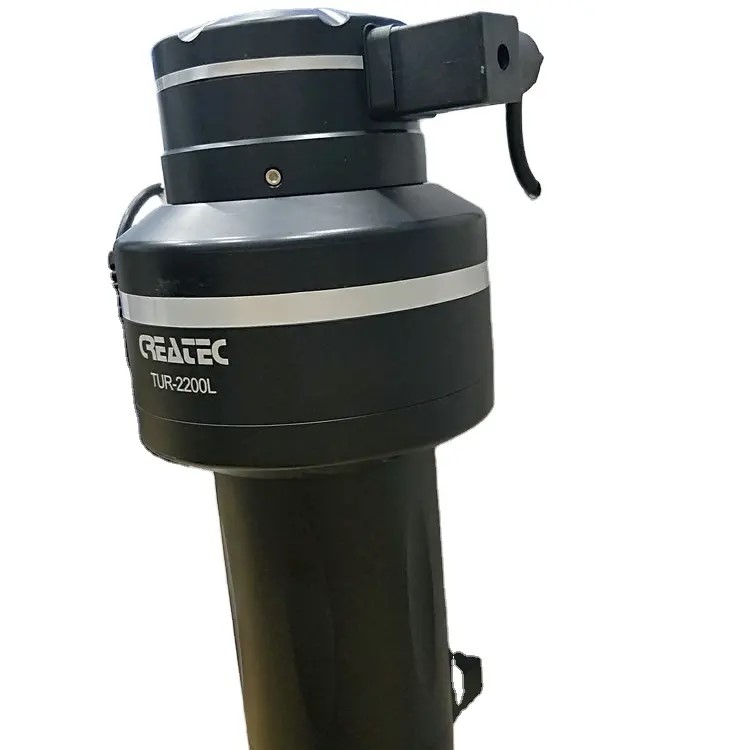
Particulate fouling results from suspended solid accumulation on membrane surfaces. Shanghai ChiMay’s online turbidity analyzers provide early warning capabilities, triggering preemptive backwash cycles when turbidity exceeds 5 NTU.
Organic fouling occurs when natural organic matter (NOM), oils, and greases coat membrane surfaces. Multi-parameter sensors monitoring permanganate index and total organic carbon (TOC) enable predictive maintenance scheduling.
Biological fouling (biofouling) develops from microbial colonization, forming biofilm layers that reduce flux rates by 30-50%. Continuous chlorine residual monitoring, achievable with Shanghai ChiMay’s residual chlorine transmitters, provides biofouling prevention capabilities.
Scaling develops from precipitation of sparingly soluble salts (calcium carbonate, silica, barium sulfate) when concentration factors exceed solubility limits. Conductivity monitoring from Shanghai ChiMay’s analyzer systems tracks concentration factors, enabling proactive anti-scaling interventions.
Procurement Specifications for Fouling Resistance
Advanced membrane products incorporating hydrophilic modifications demonstrate fouling resistance improvements of 40-60% compared to standard formulations. Procurement specifications should request:
- Contact angle measurements below 40° for hydrophilic surfaces
- Anti-fouling coating certifications with documented performance data
- Modified polyether sulfone (PES) or polyvinylidene fluoride (PVDF) materials
- Surface zeta potential documentation for electrostatic fouling prediction
Economic Analysis: Total Cost of Ownership Modeling
Membrane procurement decisions must incorporate comprehensive total cost of ownership (TCO) analysis extending beyond initial capital expenditure.
Capital Expenditure Components
- Membrane module procurement: $150-500/m² depending on material and configuration
- Housing and pressure vessel costs: $80-200/m²
- Instrumentation and control systems: $30-80/m² (Shanghai ChiMay monitoring equipment typically $500-2,000 per parameter monitored)
- Installation and commissioning: $50-150/m²
- Auxiliary systems (cleaning, piping, electrical): $100-300/m²
Operational Expenditure Factors
According to BlueTech Research, operational costs for membrane systems average:
- Energy consumption: 0.5-2.5 kWh/m³ processed water (higher for RO)
- Chemical cleaning: $0.05-0.15/m³ (increases with fouling severity)
- Membrane replacement: $100-400/m² annually (depending on application)
- Labor and maintenance: $0.02-0.08/m³
- Monitoring and analysis: $0.01-0.03/m³
Membrane Life Cycle Considerations
Standard membrane lifespans range from 3-7 years depending on operating conditions and maintenance practices. Procurement contracts should include:
- Performance guarantees spanning 5 years minimum
- Gradual flux decline limits of <15% per year
- Salt rejection maintenance above 95% (NF/RO applications)
- Replacement pricing agreements for future years
Vendor Evaluation Criteria
Effective membrane procurement requires systematic vendor assessment across multiple dimensions.
Technical Capability Assessment
Procurement teams should evaluate vendor capabilities including:
- Manufacturing certifications: ISO 9001 (quality), ISO 14001 (environmental), FDA compliance where applicable
- Testing facilities: In-house capability for integrity testing, bubble point determination, and performance validation
- Module design innovation: Spacer geometry optimization, feed channel design improvements
- Application engineering support: Process simulation, pilot testing services, troubleshooting expertise
Financial Stability and Support Infrastructure
Vendor financial health directly impacts long-term procurement commitments. Assessment should include:
- Years of membrane manufacturing experience (minimum 5 years recommended)
- Global service network presence
- Spare parts availability guarantees
- Technical documentation quality and language support
Reference Installations
Procurement specifications should require 3-5 reference installations in similar applications, including:
- Facility identification and contact information
- Operating duration documentation
- Performance data under comparable conditions
- Lessons learned and operational challenges addressed
Shanghai ChiMay Integration in Membrane Procurement
Shanghai ChiMay provides essential monitoring instrumentation that complements membrane procurement, ensuring optimal system performance throughout the operational lifecycle.
Online Monitoring Solutions
Shanghai ChiMay’s online water quality analyzers integrate seamlessly with membrane systems, providing continuous monitoring of:
- Turbidity (0-4000 NTU range) for particulate fouling detection
- Conductivity (0-200 mS/cm) for concentration factor tracking
- pH (0-14 range) for scaling potential assessment
- Dissolved oxygen for biological activity monitoring
- Residual chlorine for biofouling prevention
Procurement Integration Strategy
Facilities implementing new membrane systems should consider bundled monitoring solutions that provide:
- Manufacturer-verified compatibility between sensors and control systems
- Single-vendor responsibility for instrumentation performance
- Streamlined commissioning and startup procedures
- Unified spare parts inventory for reduced maintenance overhead
Conclusion
Membrane technology procurement for industrial wastewater applications demands rigorous technical evaluation, comprehensive economic modeling, and strategic vendor partnership development. Organizations that invest in thorough procurement processes achieve 20-35% lower total ownership costs and 40% fewer operational disruptions compared to procurement approaches focused solely on initial capital minimization.
Shanghai ChiMay’s comprehensive monitoring solutions—encompassing online analyzers, turbidity sensors, and multi-parameter monitoring systems—provide the instrumentation foundation necessary for successful membrane system deployment. By selecting appropriate membrane technologies and implementing robust monitoring protocols, industrial facilities can achieve water reuse objectives while maintaining regulatory compliance and operational efficiency.
The global membrane market continues evolving with advances in graphene oxide membranes, carbon nanotube membranes, and mixed-matrix membrane technologies. Procurement strategies should incorporate flexibility for emerging innovations while maintaining focus on proven, reliable solutions that deliver immediate operational benefits.