Table of Contents
Key Takeaways
- Water softener systems reduce scale-related equipment failures by 67% in hard water regions
- control valve selection influences 30-40% of total softening system operating costs
- Advanced valve technology reduces salt consumption by 25% compared to conventional designs
- The global industrial softener valve market reaches $2.8 billion by 2027
- ChiMay's softening valve solutions deliver reliable performance with optimized regeneration efficiency
Introduction
Water softening remains one of the most widespread water treatment applications across industrial, commercial, and residential sectors. The Water Quality Research Foundation estimates that scale buildup from hard water costs U.S. industries approximately $3.6 billion annually in energy inefficiency, equipment replacement, and maintenance expenses. Control valves for water softeners represent the critical component that determines system performance, operational efficiency, and maintenance requirements.
Selecting the appropriate softener valve requires balancing multiple factors including flow capacity, regeneration efficiency, durability, and lifecycle cost. The decision affects not only initial system performance but also ongoing operational expenses and maintenance burden throughout the equipment's service life.
Understanding Softener Valve Function
The Ion Exchange Process
Water softening relies on ion exchange chemistry where calcium and magnesium ions—the primary components of water hardness—are exchanged for sodium ions as water passes through cation exchange resin. Over time, the resin exhausts its sodium capacity and requires regeneration through brine solution exposure.
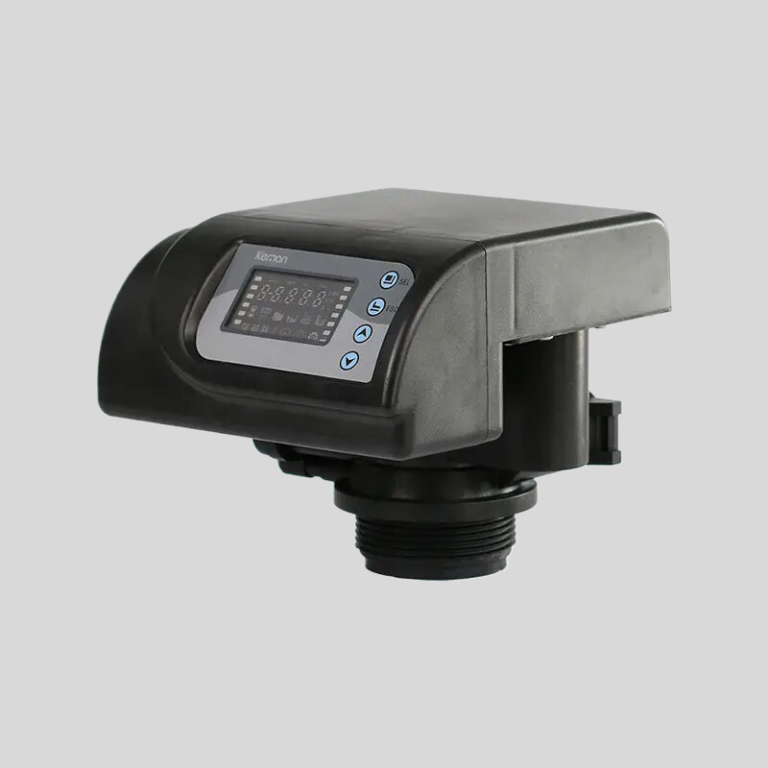
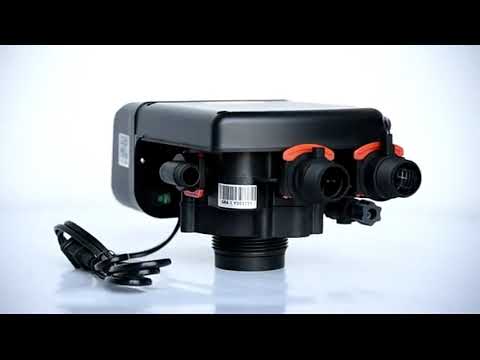
The softener control valve orchestrates this regeneration cycle, directing water flows between service, backwash, brine draw, slow rinse, and fast rinse positions. Valve design fundamentally determines regeneration effectiveness, brine efficiency, and water consumption during the renewal process.
Regeneration Cycle Efficiency
Modern softener valves incorporate design features that optimize regeneration efficiency. The Water Quality Association (WQA) identifies three critical efficiency factors: brine concentration uniformity, contact time optimization, and rinse efficiency.
ChiMay's softening and filtering valves employ upflow regeneration technology that improves brine utilization compared to conventional downflow designs. The upflow approach maintains consistent brine concentration throughout the resin bed, eliminating channeling effects that reduce regeneration effectiveness.
Valve Technology Comparison
Time-Clock vs. Demand-Initiated Control
Traditional softener valves operate on time-clock mechanisms that initiate regeneration at predetermined intervals regardless of actual water usage. This approach simplifies control logic but wastes regeneration resources when water demand falls below expectations.
Demand-initiated regeneration (DIR) systems monitor water usage and initiate regeneration only when cumulative flow reaches a threshold. The American Water Works Association (AWWA) research indicates that DIR systems reduce salt consumption by 25-35% compared to time-clock alternatives while maintaining equivalent softening performance.
DIR operation requires reliable flow measurement to track cumulative water usage. ChiMay's valve systems incorporate integrated flow measurement capability that enables demand-initiated regeneration without external instrumentation.
Single vs. Twin-Alternating Configurations
Single-tank softener systems experience service interruptions during regeneration cycles—when one tank regenerates, softened water production stops. For applications requiring continuous service, twin-tank alternating configurations maintain continuous softened water supply by dedicating one tank to regeneration while the other provides service.
The decision between single and twin configurations depends on flow continuity requirements and acceptable service interruption tolerance. The U.S. Department of Energy estimates that twin systems increase capital cost by 60-80% but eliminate service interruptions—a trade-off that many industrial applications find acceptable.
Lifecycle Cost Analysis
Initial vs. Operating Costs
Valve selection decisions should balance initial acquisition cost against ongoing operational expenses. The Strategic Environmental Research and Development Program (SERDP) analysis indicates that softener valve operating costs typically exceed initial cost by a factor of 3-5x over a ten-year service period.
Salt consumption represents the largest operational expense component. Advanced valves that achieve efficient regeneration can reduce salt requirements by 25% compared to conventional designs—translating to substantial savings in applications with high water consumption.
ChiMay's valve designs incorporate brine efficiency optimization that reduces salt consumption while maintaining or improving regeneration effectiveness. The improved efficiency offsets higher initial cost within 18-24 months in typical commercial applications.
Maintenance and Reliability
Control valve reliability directly impacts system uptime and maintenance burden. Valves operating in demanding environments—high hardness, elevated temperature, chemical exposure—require robust construction and regular maintenance to maintain performance.
The International Association of Plumbing and Mechanical Officials (IAPMO) identifies diaphragm wear, seal degradation, and brine injector plugging as the most common softener valve failure modes. ChiMay's valve designs incorporate durable materials and accessible maintenance features that extend service life and simplify repairs.
Application-Specific Considerations
Industrial Process Water Treatment
Industrial applications often require higher flow capacity and more precise control than commercial or residential systems. Process water softening demands consistent output quality regardless of flow variations—requiring valve designs that maintain regeneration effectiveness across operating ranges.
The semiconductor, food and beverage, and pharmaceutical industries exemplify applications where softener performance directly affects product quality. In these applications, valve selection criteria emphasize reliability and regeneration consistency over initial cost minimization.
Boiler Feed Water Preparation
Boiler feed water treatment represents one of the most demanding softener applications. Scale formation in boiler tubes can cause catastrophic failure, while carryover of hardness into steam systems damages turbines and process equipment.
Boiler feed water softeners require valves that deliver consistent performance over extended service cycles. The American Society of Mechanical Engineers (ASME) guidelines for boiler water treatment emphasize the importance of reliable softening in preventing scale-related failures that can exceed $500,000 per incident in large industrial systems.
Cooling Tower Makeup Treatment
Cooling tower makeup water treatment frequently incorporates water softening to prevent scale formation on heat transfer surfaces. The intermittent, variable-flow nature of cooling tower operation creates unique demands for softener control valves.
Demand-initiated regeneration proves particularly valuable in cooling tower applications where water consumption varies significantly with seasonal temperature changes. The ability to adapt regeneration frequency to actual demand prevents both over-regeneration during low-demand periods and under-regeneration during peak cooling seasons.
Procurement Recommendations
Performance Specifications
When evaluating softener valve options, procurement specifications should emphasize performance characteristics rather than merely physical dimensions or connection types. Key specifications include:
- Flow capacity at rated pressure drop
- Regeneration brine efficiency
- Operating pressure and temperature range
- Control system flexibility and communication capability
- Expected service life under specified operating conditions
Total Cost Evaluation
Comprehensive valve evaluation requires total cost analysis that accounts for initial price, installation expense, operational costs, and maintenance requirements. The Strategic Material Sustainability Center provides evaluation frameworks that enable apples-to-apples comparison across these cost categories.
ChiMay's softening valves offer competitive lifecycle cost through durable construction, efficient operation, and reduced maintenance requirements. The combination of initial quality and operational efficiency delivers favorable total cost of ownership in applications across the performance spectrum.
Conclusion
Softener valve selection fundamentally shapes water treatment system performance, operational efficiency, and lifecycle cost. The decision merits careful evaluation of performance requirements, operating conditions, and total cost implications rather than focus on initial price alone.
Advanced valve technology—including demand-initiated regeneration, efficient brine utilization, and durable construction—delivers operational savings that offset higher acquisition costs in most applications. ChiMay's softening valve solutions provide the performance foundation for reliable, efficient water softening across industrial, commercial, and institutional applications.