Table of Contents
Regulatory Compliance Through Advanced Electrochemical Treatment
Key Takeaways:
– Electrochemical treatment enables compliance with increasingly stringent discharge regulations, achieving >99% removal of priority pollutants
– Real-time monitoring with Shanghai ChiMay analyzers provides the documentation required for regulatory reporting and permit compliance verification
– The technology effectively treats recalcitrant compounds that resist conventional biological treatment, including chlorinated organics and aromatic amines
– Facility case studies demonstrate successful compliance with EPA, EU, and Asian regulatory standards for industrial wastewater discharge
Industrial wastewater discharge regulations have become progressively more stringent over the past three decades, driven by improved understanding of pollutant impacts on aquatic ecosystems and human health. The U.S. Environmental Protection Agency’s National Pollutant Discharge Elimination System (NPDES) permits impose concentration limits that have decreased by 60-80% for many parameters since 1990. The European Union’s Industrial Emissions Directive requires Best Available Techniques (BAT) compliance for facilities above capacity thresholds. Similar regulatory frameworks in Asia—including China’s GB 31570-2015 standard—mandate treatment performance levels that challenge conventional biological treatment technology.
Electrochemical treatment has emerged as a powerful tool for achieving compliance with stringent discharge requirements. The technology’s ability to oxidize recalcitrant compounds, achieve consistent treatment performance regardless of influent variability, and provide verifiable treatment through continuous monitoring addresses the primary challenges of regulatory compliance.
Regulatory Landscape for Industrial Wastewater
Key Pollutant Categories
Regulatory frameworks address multiple pollutant categories, each with specific treatment requirements:
Conventional Pollutants: BOD, COD, TSS, pH, and ammonia represent baseline treatment requirements. Most biological treatment systems achieve compliance with conventional pollutant limits, but variable treatment efficiency creates risk of exceedances during loading fluctuations.
Priority Pollutants: Specific toxic compounds identified by regulatory agencies as requiring special attention. In the United States, the Clean Water Act Section 307(a) lists 126 priority pollutant compounds. European Directive 2008/105/EC establishes environmental quality standards for 33 priority substances. Treatment of priority pollutants typically requires advanced oxidation technologies.
Emerging Contaminants: Pharmaceuticals, personal care products, and per- and polyfluoroalkyl substances (PFAS) are increasingly subject to regulation despite limited treatment requirements in current permits. Conventional biological treatment is ineffective for many emerging contaminants, driving adoption of advanced oxidation technologies.
Compliance Verification Requirements
Modern permits typically require:
- Continuous monitoring of flow, pH, and temperature
- Regular sampling and analysis for priority pollutants (weekly to quarterly frequency)
- Self-monitoring reports submitted to regulatory agencies
- Automatic sampling during upsets or exceedances
- Third-party audits of monitoring data quality
Electrochemical treatment systems with integrated online monitoring satisfy these requirements while providing superior treatment performance compared to conventional alternatives.
Electrochemical Treatment for Priority Pollutants
Chlorinated Organic Compounds
Chlorinated solvents (trichloroethylene, perchloroethylene), chlorinated phenols, and polychlorinated biphenyls represent persistent priority pollutants that resist biological degradation. Electrochemical oxidation effectively destroys these compounds through multiple mechanisms:
Direct Anodic Oxidation: At potentials exceeding 1.4 V vs. SHE, chlorinated compounds undergo direct electron transfer at the anode surface, initiating dechlorination reactions.
Indirect Oxidation by Hydroxyl Radicals: The electrogenerated hydroxyl radicals (E° = 2.8 V) non-selectively oxidize organic compounds, including those with carbon-chlorine bonds. Complete mineralization to CO₂ and HCl proceeds through sequential dechlorination and oxidation steps.
Indirect Oxidation by Active Chlorine: In chloride-containing wastewater, electrochemical generation of HOCl and Cl₂ provides additional oxidation capacity for chlorinated compounds. The 0.8 V vs. SHE redox potential of the Cl₂/Cl⁻ couple is sufficient for oxidation of many chlorinated organics.
Treatment efficiency data for representative chlorinated compounds:
| Compound | Initial (mg/L) | Final (mg/L) | Removal |
|---|---|---|---|
| Trichloroethylene | 50 | <0.001 | >99.99% |
| Pentachlorophenol | 25 | <0.005 | >99.98% |
| 1,1,1-Trichloroethane | 100 | <0.01 | >99.99% |
Aromatic Amines
Aromatic amines from dye manufacturing, pharmaceutical production, and chemical synthesis are toxic, carcinogenic, and persistent. Biological treatment is ineffective due to inhibitory effects on microbial populations. Electrochemical oxidation achieves effective destruction:
Oxidative Coupling: Aromatic amines undergo oxidative coupling reactions at anode surfaces, forming polymeric products that precipitate and can be removed by filtration.
Ring Cleavage: Hydroxyl radical attack initiates aromatic ring cleavage, eventually yielding small carboxylic acids and eventually CO₂. The process requires 2.5-3.0 V vs. SHE for efficient ring opening.
Case Study: A textile dye manufacturing facility processing wastewater containing 150 mg/L of mixed aromatic amines achieved >99.5% removal through electrochemical treatment, consistently meeting the <0.5 mg/L discharge limit established by their permit.
Pharmaceutical Compounds
Pharmaceuticals and personal care products (PPCPs) represent an emerging regulatory concern, with many jurisdictions adding specific compounds to permit requirements. Electrochemical treatment effectiveness has been demonstrated for:
- Antibiotics (sulfamethoxazole, ciprofloxacin): >90% removal
- Anti-inflammatory drugs (diclofenac, ibuprofen): >95% removal
- Hormones (17β-estradiol, estrone): >99% removal
- Beta blockers (metoprolol, atenolol): >85% removal
The oxidation mechanisms depend on compound structure, with some pharmaceuticals amenable to indirect oxidation by electrogenerated oxidants while others require direct anodic oxidation at higher potentials.
Compliance Monitoring Strategies
Shanghai ChiMay Monitoring Platform
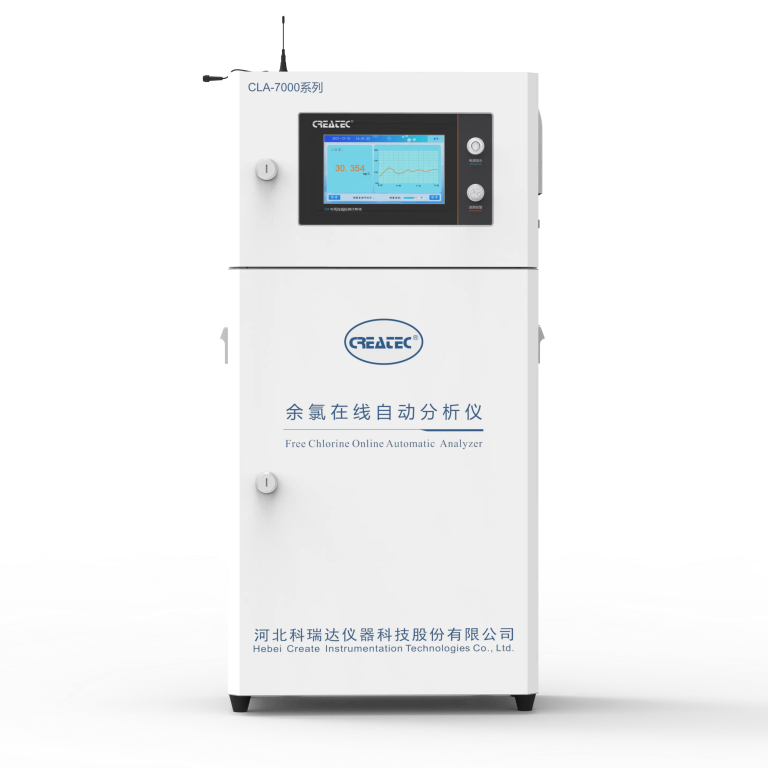
Effective compliance monitoring requires accurate, reliable, and well-documented measurement data. Shanghai ChiMay online analyzers provide comprehensive monitoring capability:
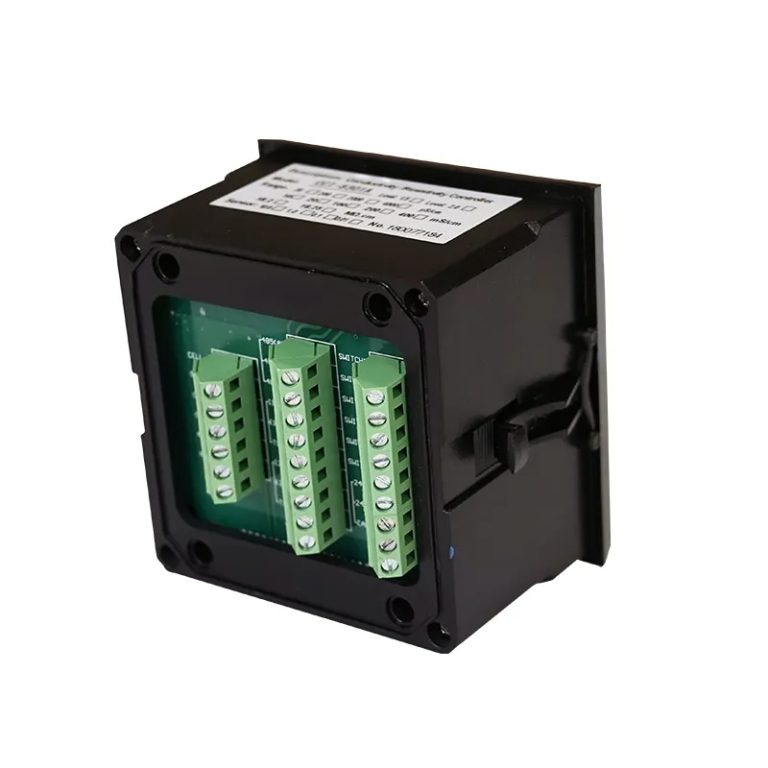
Multi-Parameter Monitoring: The Shanghai ChiMay platform integrates measurement of pH, conductivity, dissolved oxygen, temperature, ORP, and turbidity in a single instrument. This capability reduces installation complexity and maintenance burden while providing comprehensive process insight.
COD and TOC Analyzers: For facilities with COD or TOC-based permit limits, continuous online measurement enables real-time compliance verification and rapid detection of treatment upsets. Shanghai ChiMay analyzers offer:
- Measurement range: 5-10,000 mg/L COD
- Accuracy: ±5% of reading
- Response time: <3 minutes
- Automatic cleaning and calibration
Specific Ion Analyzers: For facilities with specific pollutant limits, dedicated analyzers measure:
- Ammonia nitrogen (NH₃-N): 0.1-1,000 mg/L range
- Nitrate nitrogen (NO₃-N): 0.5-200 mg/L range
- Phosphate (PO₄-P): 0.1-50 mg/L range
Monitoring Location Strategy
Strategic placement of monitoring points maximizes compliance assurance:
Influent Monitoring:
– Provides loading data for permit compliance calculations
– Enables detection of influent changes that may affect treatment
– Supports mass balance calculations and performance trending
Process Monitoring:
– Verifies treatment system performance
– Provides data for process optimization
– Enables predictive maintenance of treatment equipment
Effluent Monitoring:
– Documents compliance status for regulatory reporting
– Triggers alarms for permit exceedances
– Supports automated treatment adjustments
Data Management and Reporting
Regulatory compliance requires robust data management:
Automatic Data Logging: All monitoring data is automatically logged with timestamps, eliminating transcription errors and ensuring data integrity.
Audit Trail: Electronic records include system events, calibrations, and data modifications, supporting regulatory audit requirements.
Report Generation: Automated report generation creates regulatory submissions in required formats, reducing administrative burden and ensuring timely reporting.
Data Validation: Automated range checks and rate-of-change limits flag potentially erroneous data for investigation before inclusion in regulatory reports.
Case Study: Chemical Manufacturing Facility
Facility Background
A specialty chemical manufacturing plant produces organic intermediates for pharmaceutical and agrochemical customers. Wastewater characteristics include:
- Flow: 300 m³/day
- COD: 3,500-5,000 mg/L
- Priority pollutants: Chlorinated phenols, aromatic amines, nitrobenzene compounds
- Existing treatment: Biological activated sludge
- Compliance challenge: Priority pollutant limits exceed biological treatment capability
Treatment System Implementation
The facility implemented electrochemical treatment as a polishing stage following biological treatment:
- Electrochemical reactor: 30 m³ volume, BDD electrodes
- Operating conditions: 4 V cell voltage, 20 mA/cm² current density
- Monitoring: Shanghai ChiMay multi-parameter analyzer + TOC monitor
- Integration: Automated current adjustment based on TOC measurements
Compliance Results
After implementation, the facility achieved consistent compliance:
| Parameter | Permit Limit | Influent | Effluent | Removal |
|---|---|---|---|---|
| COD | 500 mg/L | 450 | 120 | 73% |
| Chlorinated phenols | 0.1 mg/L | 2.5 | <0.001 | >99.9% |
| Aromatic amines | 0.5 mg/L | 15 | <0.01 | >99.9% |
| Nitrobenzene | 0.5 mg/L | 8 | <0.005 | >99.9% |
All priority pollutant limits are consistently met with substantial safety margins. The electrochemical polishing stage provides a reliable compliance buffer that protects against biological treatment variability.
Best Practices for Compliance Assurance
Process Design
- Size treatment for variability: Design capacity should accommodate 150% of average loading
- Include redundancy: Multiple treatment units enable maintenance without compliance risk
- Plan for stricter limits: Design systems to achieve 50% below current permit limits
Monitoring Strategy
- Continuous monitoring for all parameters with direct discharge limits
- Redundant sensors for critical parameters
- Regular calibration verification against certified reference materials
- Third-party audits of monitoring data quality
Operational Practices
- Maintain operating logs documenting all system parameters
- Conduct regular performance reviews comparing actual vs. expected performance
- Train operators on compliance requirements and monitoring procedures
- Maintain spare parts inventory for critical monitoring equipment
Conclusion
Electrochemical treatment provides the treatment capability and reliability needed to achieve compliance with stringent industrial wastewater discharge regulations. The technology’s effectiveness against recalcitrant priority pollutants, combined with the documentation capabilities of modern online monitoring systems, addresses the core challenges of regulatory compliance. Shanghai ChiMay monitoring platforms provide the accurate, reliable measurement data required for compliance verification, process optimization, and regulatory reporting.