Water quality monitoring represents a significant investment for industrial facilities, with the global water analyzer market valued at $4.7 billion in 2025 and projected to grow at 5.7% annually through 2030, according to MarketsandMarkets research. For procurement specialists evaluating monitoring equipment, the choice between portable analyzers and online monitoring systems fundamentally shapes both initial costs and long-term operational characteristics. Making the optimal selection requires understanding application requirements, budget constraints, and organizational capabilities.
Key Takeaways:
- Global water analyzer market valued at $4.7B with 5.7% annual growth through 2030
- Portable analyzers offer flexibility but higher per-measurement costs above 40 samples annually
- Online systems require $75,000-$200,000 initial investment but reduce variable costs dramatically
- Application requirements—continuous monitoring vs. spot checking—should drive technology selection
Table of Contents
Understanding the Technology Trade-offs
Portable water quality analyzers provide laboratory-grade measurement capability in field-deployable form factors. These instruments typically offer multi-parameter capability, measuring pH, conductivity, dissolved oxygen, ORP, and other parameters with accuracy approaching fixed laboratory equipment. The primary advantages include deployment flexibility, lower initial capital requirements, and capability to serve multiple monitoring locations with single instruments.
Online water quality analyzers provide continuous, automated measurement at fixed installation points. These systems eliminate the labor requirements associated with manual sampling and enable real-time alarming for parameter excursions. The continuous data stream supports both operational optimization and regulatory compliance documentation without ongoing technician involvement.
Initial Investment and Cost Structure Analysis
The capital requirements for water quality monitoring programs vary significantly based on technology selection. Portable analyzer programs require investment in instruments ($3,000-$15,000 per unit), consumables (reagents, calibration standards), and ongoing laboratory fees for parameters requiring more sophisticated analysis. A facility monitoring 10 locations weekly typically requires 3-5 portable analyzers with total capital investment of $15,000-$50,000.
Online monitoring systems require higher initial investment, with complete monitoring stations (sensor, transmitter, installation hardware) costing $8,000-$25,000 per measurement point. A 10-point continuous monitoring system represents capital investment of $80,000-$250,000. However, this investment eliminates per-sample costs and dramatically reduces ongoing labor requirements.
| Cost Factor | Portable Program | Online System |
|---|---|---|
| Initial Investment | $15,000-$50,000 | $80,000-$250,000 |
| Annual Consumables | $5,000-$20,000 | $2,000-$8,000 |
| Annual Labor | $40,000-$100,000 | $5,000-$15,000 |
| Laboratory Fees | $15,000-$40,000 | $5,000-$15,000 |
| 5-Year Total Cost | $325,000-$625,000 | $165,000-$385,000 |
The 5-year total cost comparison reveals that online monitoring becomes economically favorable when monitoring requirements exceed 40-50 samples annually per measurement point. Facilities with continuous monitoring requirements or multiple sampling locations benefit most from online system deployment.
Application-Specific Selection Criteria
Continuous Process Monitoring: Manufacturing facilities where water quality directly impacts production processes require online monitoring. Pharmaceutical water systems, semiconductor UPW loops, and food processing applications demand real-time parameter tracking to prevent quality excursions that could affect product integrity or regulatory compliance.
Environmental Discharge Monitoring: NPDES permit requirements typically specify sampling frequencies ranging from daily to annually depending on discharge characteristics and receiving water sensitivity. Online systems provide compliance documentation while reducing labor requirements for permitted outfalls, particularly when sampling frequency exceeds weekly intervals.
Characterization Studies: Research applications, process optimization projects, and pilot studies often benefit from portable instrumentation that can be deployed flexibly across multiple locations without permanent installation. The portability advantage dominates when monitoring requirements are temporary or variable.
Regulated Industries: FDA-regulated pharmaceutical and food facilities face specific monitoring requirements that may mandate particular technology approaches. 21 CFR Part 11 compliance requirements for electronic records influence system selection, favoring validated online systems with audit trail capabilities over portable instruments with manual record-keeping.
ChiMay’s Online Water Quality Sensors: The Continuous Monitoring Advantage
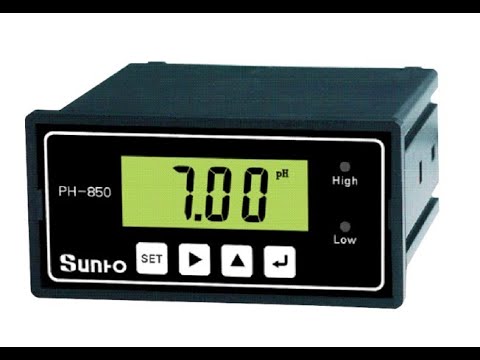
ChiMay's online pH meters and conductivity sensors provide the foundation for continuous water quality monitoring programs across industrial applications. These instruments combine measurement stability with communication flexibility, supporting integration with SCADA systems, data historians, and cloud-based monitoring platforms.
The selection of online sensors should consider measurement range, accuracy requirements, and environmental conditions including temperature, pressure, and chemical exposure. ChiMay's sensor technologies address these requirements through materials and designs optimized for specific application environments, from high-purity water monitoring to challenging industrial wastewater applications.
Total Cost of Ownership: Beyond Initial Purchase
Procurement specialists should evaluate total cost of ownership (TCO) across the instrument lifecycle rather than focusing solely on acquisition costs. Key TCO components include:
Calibration and Maintenance: Portable analyzers require regular calibration verification and electrode replacement, with typical annual maintenance costs of $2,000-$5,000 per instrument. Online sensors may operate reliably for 12-24 months between replacements, reducing recurring maintenance expenses.
Training and Competency: Portable analyzer programs require ongoing technician training to maintain measurement consistency across operators. Online systems reduce operator-dependent variability through automated measurement and calibration functions.
Data Management: Manual data collection from portable analyzers creates transcription errors and documentation burden. Online systems automatically capture and store measurement data, supporting both operational analysis and regulatory compliance requirements.
Implementation Recommendations
For facilities evaluating water quality monitoring technology, a systematic evaluation process identifies the optimal approach:
- Characterize monitoring requirements: Document all monitoring points, required parameters, sampling frequencies, and compliance obligations
- Calculate sample volume: Determine total annual sample count to identify the technology crossover point
- Assess integration requirements: Evaluate existing SCADA, DCS, or data management systems that must accommodate monitoring data
- Evaluate operator capabilities: Consider available technician skills and training resources for portable vs. online approaches
- Conduct TCO analysis: Project 5-year total cost for both portable and online approaches
- Consider strategic factors: Evaluate organizational priorities including operational efficiency, regulatory risk, and sustainability commitments
Conclusion: Matching Technology to Requirements
The choice between portable and online water quality analyzers should reflect application requirements, operational context, and economic considerations rather than habit or initial budget availability. Procurement specialists who evaluate total cost of ownership, consider future monitoring requirements, and align technology selection with organizational capabilities will make investments that serve operational needs throughout the equipment lifecycle.
For facilities with continuous monitoring requirements or high sample volumes, ChiMay's online water quality sensors provide the reliability, accuracy, and integration capabilities necessary to support effective water quality management programs. These systems eliminate the recurring costs and labor burdens associated with manual sampling while providing the continuous data streams that enable operational optimization and regulatory compliance.