Table of Contents
Key Takeaways
- control valve acquisition costs represent only 15-23% of total cost of ownership (TCO) over a 15-year lifecycle
- Incorrect valve sizing increases energy consumption by 18-35%, creating hidden operational costs that dwarf purchase price savings
- Predictive maintenance enabled by smart valve positioners reduces unplanned downtime by 41% and extends mean time between failures (MTBF) to 100,000+ hours
- Valve inventory carrying costs for redundant spare parts represent 3-5% of valve purchase price annually
- Procurement teams using comprehensive TCO analysis achieve 23% lower lifecycle costs compared to those selecting based on purchase price alone
Industrial control valves represent critical process infrastructure that directly impacts production efficiency, product quality, and operational safety. Procurement decision-makers face increasing pressure to optimize valve selection based on total cost of ownership (TCO) rather than initial purchase price. This analysis provides a comprehensive framework for evaluating control valve investments across the complete lifecycle.
Deconstructing Total Cost of Ownership
Control valve TCO encompasses multiple cost categories that extend far beyond the initial purchase transaction:
Acquisition Costs
- Base valve purchase price: $2,000-$45,000 depending on size, materials, and features
- Smart positioner upgrade: $1,200-$4,500
- Installation hardware and mounting: $800-$3,500
- Engineering and documentation: $1,500-$8,000
- Total acquisition cost: $5,500-$61,000 per valve installation
Installation and Commissioning
- Field installation labor: $2,000-$12,000 depending on site conditions
- Calibration and testing: $500-$2,500
- Loop tuning and optimization: $800-$3,000
- Total installation cost: $3,300-$17,500
Operating Costs
- Energy consumption: $1,200-$8,500 annually depending on valve size and duty cycle
- Process efficiency impact: Variable based on control performance
- 15-year operating cost: $18,000-$127,500
Maintenance Costs
- Preventive maintenance parts and labor: $800-$3,500 annually
- Corrective maintenance parts and labor: $1,200-$6,000 annually
- Spare parts inventory carrying cost: $200-$900 annually
- 15-year maintenance cost: $33,000-$157,500
Failure and Downtime Costs
- Unplanned downtime impact: $5,000-$50,000 per hour depending on process
- Emergency repair premium: 50-150% above standard repair cost
- Product quality impact: Variable based on process sensitivity
- 15-year failure cost: $45,000-$500,000+ depending on application criticality
The Hidden Cost of Valve Mis-Selection
Procurement teams focused solely on purchase price often overlook selection errors that dramatically increase operational costs:
Oversized Valves
Valves selected above required capacity operate at excessively low opening positions, creating:
- Poor control precision with wide process oscillation
- Accelerated seat wear from continuous high-pressure drop
- Increased actuator hunting causing mechanical fatigue
- Elevated energy consumption from throttled flow
The International Society of Automation (ISA) estimates that oversized control valves consume 18-35% more energy than properly sized valves over their operational lifecycle.
Undersized Valves
Valves selected below required capacity experience:
- Complete opening at maximum demand, eliminating control reserve
- Accelerated erosion damage from excessive flow velocity
- Frequent replacement cycles due to premature failure
- Process throughput limitation during peak production
Poor Material Selection
Valves specified with incompatible materials for process fluid conditions suffer:
- Corrosion damage requiring premature replacement
- Leakage past stem seals creating environmental and safety hazards
- Contamination of process fluid affecting product quality
TCO Comparison Framework
A comprehensive TCO analysis enables data-driven procurement decisions:
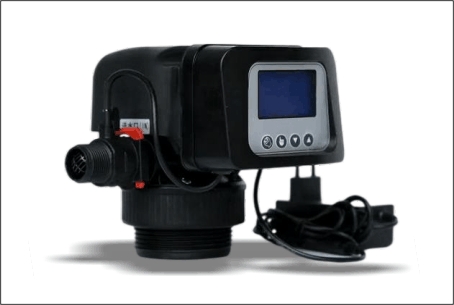
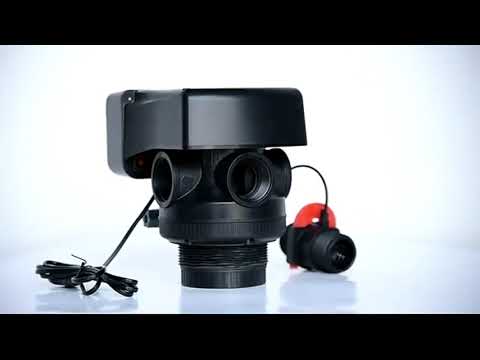
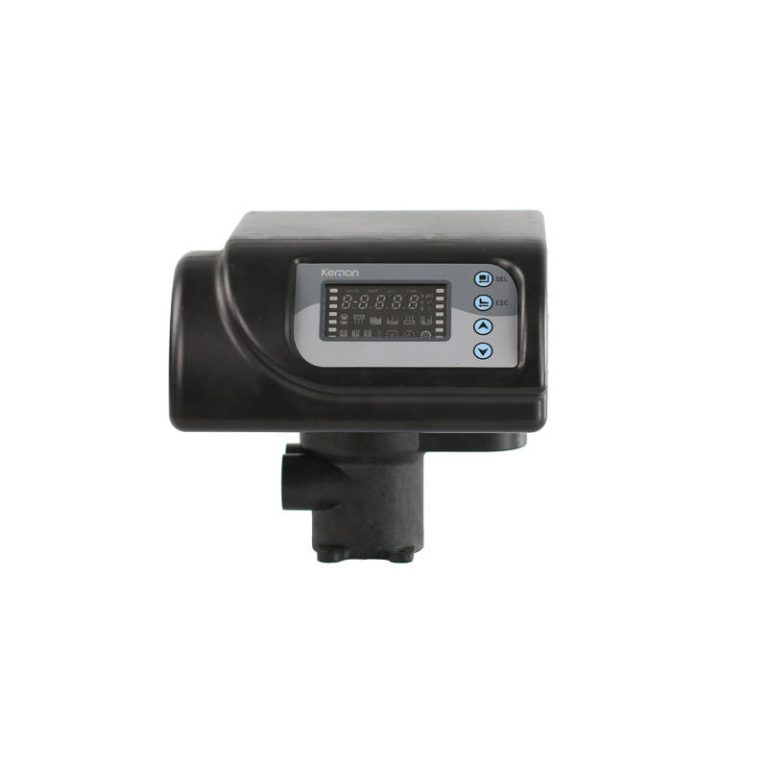
Case Study: water softening valve Selection
Two control valve options for industrial water softening application:
| Cost Category | Option A: Budget Valve | Option B: Premium Valve |
|---|---|---|
| Purchase Price | $4,200 | $7,800 |
| Installation Cost | $4,500 | $4,200 |
| 15-Year Energy Cost | $62,000 | $48,000 |
| 15-Year Maintenance | $48,000 | $22,000 |
| 15-Year Downtime Cost | $85,000 | $18,000 |
| 15-Year TCO | $203,700 | $100,000 |
Analysis Insight
While Option A carries $3,600 lower purchase price, Option B delivers $103,700 lower total cost of ownership through:
- $14,000 energy savings from superior control performance
- $26,000 maintenance savings from extended reliability
- $67,000 downtime reduction from improved valve availability
ROI Calculation
Additional $3,600 investment in Option B generates $103,700 savings = 2,881% ROI
Evaluating Valve Technology Options
Modern control valve technology offers capability tiers with distinct TCO profiles:
Basic Pneumatic Valves
- Acquisition cost: Lowest ($2,000-$8,000)
- Operating cost: Highest (poor control precision)
- Maintenance cost: Moderate (frequent adjustment required)
- Failure risk: Elevated (limited diagnostic capability)
- Best application: Non-critical applications with modest performance requirements
Smart Pneumatic Valves with Digital Positioners
- Acquisition cost: Moderate ($6,000-$25,000)
- Operating cost: Low (optimized control performance)
- Maintenance cost: Low (predictive diagnostics)
- Failure risk: Reduced (early warning capability)
- Best application: Critical process loops requiring reliable performance
Digital Control Valves with Full Diagnostics
- Acquisition cost: Highest ($18,000-$65,000)
- Operating cost: Lowest (optimal energy efficiency)
- Maintenance cost: Lowest (predictive maintenance capability)
- Failure risk: Minimal (comprehensive health monitoring)
- Best application: Critical applications where downtime cost exceeds technology premium
Procurement Best Practices
Strategic procurement teams implement systematic TCO evaluation:
Requirement Definition
- Document process conditions (flow, pressure, temperature, fluid properties)
- Define performance specifications (control precision, response time, reliability)
- Establish criticality rating for downtime cost assessment
- Specify communication protocol requirements for digital integration
Supplier Evaluation Criteria
- Technical capability: Valve sizing expertise, materials knowledge, application experience
- Quality systems: ISO 9001 certification, statistical process control, testing validation
- Support infrastructure: Field service coverage, spare parts availability, technical support responsiveness
- Total cost capability: Willingness to participate in TCO analysis, lifecycle support commitment
Risk Assessment
- Technology obsolescence risk: Evaluate platform longevity and upgrade path
- Supplier viability risk: Assess financial stability and market position
- Supply chain risk: Evaluate component sourcing and manufacturing location
- Technical support risk: Verify service capability and response commitment
Long-Term Partnership Value
Procurement strategies emphasizing long-term supplier partnerships deliver measurable advantages:
Volume Discount Programs
Committed purchase volumes over 3-5 year periods typically secure 15-25% price reductions while providing supplier predictability for capacity planning.
Consignment and Inventory Programs
Vendor-managed inventory programs reduce carrying costs while ensuring spare parts availability. The Institute for Supply Management (ISM) reports that consignment programs reduce inventory investment by 30-45%.
Collaborative Engineering
Long-term supplier relationships enable collaborative problem-solving that identifies cost reduction opportunities throughout the valve lifecycle. The American Society of Mechanical Engineers (ASME) emphasizes that early supplier involvement typically reduces total lifecycle costs by 10-15%.
Strategic Procurement Recommendations
Control valve procurement teams should:
- Establish TCO as primary selection criterion rather than purchase price
- Invest in accurate process data to enable proper valve sizing
- Evaluate suppliers on total value including technical capability and support
- Implement standardized specifications across similar applications
- Develop long-term partnerships with strategic suppliers
- Monitor actual lifecycle performance to validate TCO projections
Conclusion
Control valve procurement decisions carry far-reaching implications for operational efficiency and total cost of ownership. Procurement teams that embrace comprehensive TCO analysis consistently achieve 23% lower lifecycle costs compared to those selecting valves based on purchase price alone.
The $3,600 premium for premium valve technology in our analysis generated $103,700 in lifecycle savings—a demonstration that smart procurement focused on total value consistently outperforms price-based purchasing strategies. Executive leadership should empower procurement teams with TCO analysis capabilities and decision authority to select valves based on lifecycle economics rather than initial price.