# The Complete Guide to Water Softener Valves: Selection, Installation, and Maintenance for Industrial Applications
## Key Takeaways
– The global softener valve market is valued at approximately **$2.4 billion**, with steady growth driven by water treatment adoption across industrial and residential sectors
– Proper softener valve selection can improve water softening efficiency by **45%** while reducing regeneration costs
– ChiMay softener valves deliver flow rates from **0.5-50 m³/h** with regeneration cycles of **5-90 minutes**
– Industrial softener valves typically exceed **100,000 operational cycles** before requiring major maintenance
– The total cost of ownership for quality softener valves includes initial investment, regeneration costs, and maintenance requirements over projected lifetime
Water softening technology plays an essential role in protecting industrial equipment, improving product quality, and reducing operational costs across diverse applications including manufacturing, food processing, pharmaceuticals, and power generation. At the heart of every water softening system lies the control valve—the component responsible for managing the regeneration cycle that restores softened water production capacity. Understanding softener valve technology, selection criteria, and maintenance requirements enables organizations to optimize their water treatment investments while ensuring reliable system performance.
## Understanding Water Softening Fundamentals
### The Need for Water Softening
Hard water contains elevated concentrations of calcium and magnesium ions that precipitate as scale deposits on equipment surfaces, interfere with soap and detergent performance, and reduce heat transfer efficiency in boilers and heat exchangers. These scale deposits accumulate over time, causing reduced equipment efficiency, increased energy consumption, and premature equipment failure.
Industry research indicates that scale buildup of just **1.5 mm thickness** can increase energy consumption by **15%** in water heating equipment. For industrial facilities, this translate to substantial energy cost increases and unplanned maintenance requirements. Water softening removes hardness ions through ion exchange technology, protecting equipment and improving process performance.
### Ion Exchange Process
Water softening employs ion exchange resin beads that exchange sodium ions for calcium and magnesium ions as water passes through the softening tank. Over time, the resin becomes saturated with hardness ions and must be regenerated through exposure to brine solution that restores the resin to sodium form.
The control valve manages this regeneration cycle, directing water flow through appropriate paths during service and regeneration operations. Precise valve operation ensures effective regeneration while minimizing water and chemical consumption.
## Softener Valve Components and Operation
### Essential Valve Components
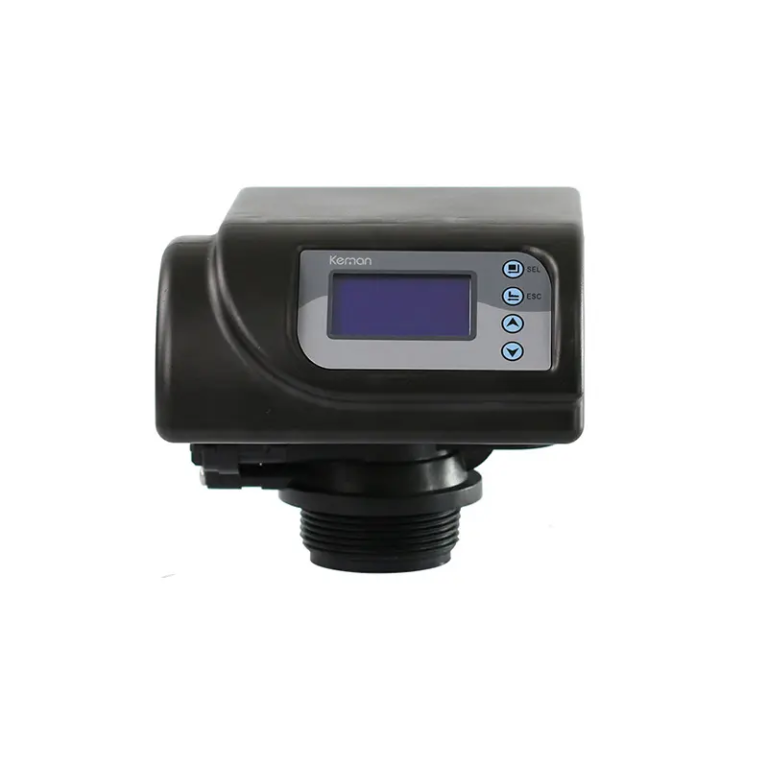
Modern automatic softener valves comprise several essential components working together to manage the softening process:
**Control Valve Body:** The valve body contains the flow passages and valve elements that direct water flow during service, backwash, brine draw, slow rinse, and fast rinse cycles. ChiMay valve bodies employ durable materials including NSF-certified ABS and performance plastics that withstand continuous water exposure and typical water treatment chemical conditions.
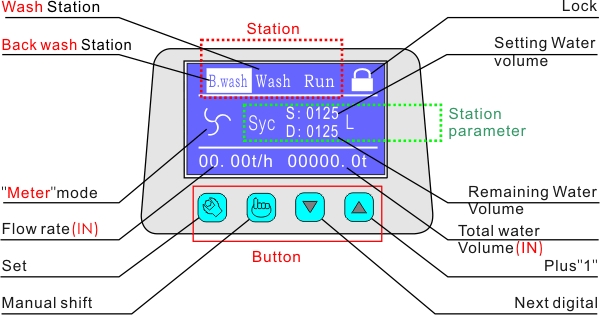
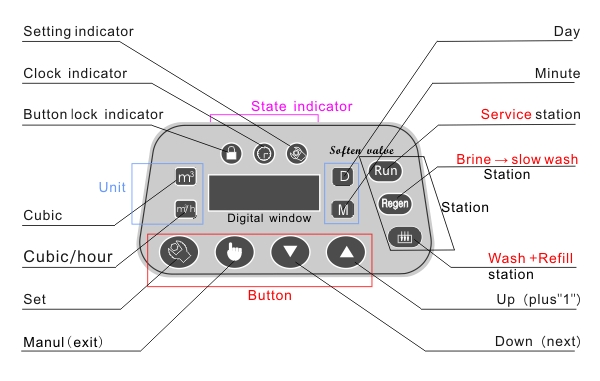
**Regeneration Timer or Meter:** Control valves operate on either time-clock or metered regeneration logic. Time-clock valves initiate regeneration at preset intervals regardless of actual water use. Metered valves track water usage and regenerate based on accumulated volume, providing more efficient operation in variable demand applications.
**Motor and Drive System:** Electric motors drive valve positioning mechanisms that move valve elements through regeneration sequence. ChiMay motors are designed for reliable operation over extended service lifetimes, with gear reduction systems providing precise positioning control.
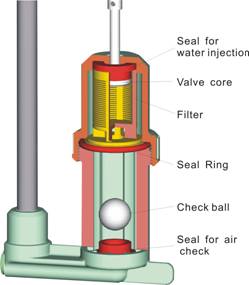
**brine valve Assembly:** The brine valve controls brine solution delivery during the regeneration cycle. Proper brine valve operation ensures adequate salt dosage for effective resin regeneration while preventing excessive salt consumption.
**Safety Devices:** Quality softener valves incorporate safety features including brine refill interlocks, excessive flow protection, and power loss memory that ensures regeneration completion even during brief power interruptions.
### Regeneration Cycle Phases
The regeneration cycle comprises distinct phases, each essential for effective resin restoration:
**Backwash Phase:** Reversed water flow through the resin tank lifts and fluidizes the resin bed, removing accumulated debris and preparing the resin for regeneration. ChiMay valves provide controlled backwash flow rates that achieve effective cleaning without resin loss.
**Brine Draw Phase:** Br