Table of Contents
Water Quality Sensor Maintenance Best Practices for Harsh Industrial Environments
Key Takeaways:
– Proper maintenance extends sensor operational life by 60-80% in aggressive industrial applications
– Scheduled cleaning intervals vary from weekly in severe service to monthly in mild conditions
– Calibration drift rates of <0.02 pH units/month indicate healthy sensor performance
– Shanghai ChiMay sensors feature self-cleaning options reducing manual maintenance requirements by 50%
– Preventive maintenance programs reduce unplanned downtime by 70-85% compared to reactive approaches
Understanding the Challenges of Industrial Sensor Deployment
Water quality sensors deployed in industrial environments face demanding conditions that significantly impact performance and longevity. Unlike laboratory instruments protected from environmental extremes, industrial sensors must operate reliably despite chemical exposure, temperature fluctuations, pressure variations, and mechanical stresses that would quickly degrade lesser equipment.
The global water quality analyzer market, valued at USD 3.72 billion in 2026 according to Industry Research 2026, reflects the substantial investment industrial facilities make in monitoring infrastructure. Protecting this investment through proper maintenance delivers direct financial returns through extended sensor life, reduced replacement costs, and improved measurement reliability.
This comprehensive guide addresses maintenance requirements for water quality sensors in harsh industrial environments, providing practical procedures and best practices applicable across diverse applications.
Common Degradation Mechanisms in Industrial Settings
Chemical Attack and Material Degradation
Industrial processes often involve aggressive chemicals that attack sensor materials:
pH electrodes face particular challenges from:
– High alkalinity: Hydroxide attack on glass membranes
– Low pH environments: Hydrogen ion exchange affecting reference junction
– Fluoride exposure: Attack on glass structure in semiconductor applications
– Organic solvents: Damage to polymer components and seal materials
Conductivity sensors experience:
– Corrosive electrolyte solutions: Attack on electrode surfaces
– Oxidizing chemicals: Platinum black degradation affecting measurement accuracy
– Scale-forming waters: Mineral deposits reducing electrode surface area
– Abrasion from particulates: Physical erosion of electrode surfaces
Biological Fouling
Water systems provide ideal conditions for biological growth:
- Algae colonization: Light exposure promotes photosynthetic organism growth
- Bacterial biofilms: Microbial communities establish on sensor surfaces
- Slime formation: Extracellular polymeric substances create insulating layers
- Mollusk settlement: Zebra mussels and similar organisms foul submerged surfaces
Biological fouling affects all sensor types, creating insulating layers that slow response times and compromise accuracy.
Physical Fouling and Particulate Accumulation
Industrial water streams contain suspended solids that accumulate on sensor surfaces:
- Mineral scaling: Calcium carbonate and other salts precipitate on warm surfaces
- Iron oxide deposits: Corrosion products coat sensors in steel piping systems
- Silt and sediment: Particulate accumulation in low-velocity areas
- Process debris: Oils, grease, and process materials adhere to sensor surfaces
Physical fouling typically affects response time before impacting accuracy, providing early warning of maintenance needs.
Maintenance Scheduling and Procedures
Daily Inspection Requirements
Operators should perform daily visual inspections including:
Sensor housing inspection:
– Check for physical damage, cracks, or deformation
– Verify cable integrity and connection security
– Look for signs of chemical attack or corrosion
– Confirm proper mounting and positioning
Measurement observation:
– Review current readings against expected ranges
– Compare with nearby sensors if available
– Note any unusual variability or drift
– Check alarm status and historical trends
Environmental conditions:
– Verify temperature within sensor specifications
– Check for evidence of flooding or moisture intrusion
– Confirm proper ventilation in instrument enclosures
– Review any process changes affecting measurement
Daily inspection requires only minutes but provides early warning of developing problems.
Weekly Maintenance Procedures
Weekly maintenance activities ensure continued reliable operation:
Cleaning procedure:
1. Isolate sensor from process if possible
2. Remove sensor from mounting assembly
3. Rinse with clean water to remove gross contamination
4. Prepare cleaning solution appropriate for contaminant type
5. Gently clean electrode surfaces with soft brush or cloth
6. Rinse thoroughly with deionized water
7. Reinstall sensor and verify operation
Cleaning solution selection:
– Scale deposits: Dilute acid solution (consult manufacturer recommendations)
– Organic fouling: Mild detergent solution or enzymatic cleaner
– Biofilm removal: Chlorinated solution or specialized biocide
– General cleaning: Clean water rinse typically sufficient
Calibration verification:
– Prepare calibration standards traceable to NIST references
– Verify sensor reading against known standard value
– Document any deviation requiring attention
– Schedule full calibration if verification indicates drift
Shanghai ChiMay provides detailed cleaning procedures specific to each sensor model, ensuring optimal maintenance without risking damage.
Monthly Maintenance Activities
Monthly maintenance addresses longer-term performance requirements:
Full calibration procedure:
1. Prepare two or three calibration standards spanning measurement range
2. Allow sensors and standards to reach thermal equilibrium
3. Zero-point calibration using lowest standard
3. Span calibration using mid-range or high standard
5. Verify with independent check standard
6. Document calibration results and perform any required adjustments
Reference electrode maintenance (pH sensors):
– Inspect reference junction for clogging or drying
– Soak clogged junctions in warm KCl solution
– Verify reference potential stability
– Consider replacement if junction performance degraded
Electrode inspection:
– Examine glass membrane for cracks, scratches, or cloudiness
– Check electrode body for chemical attack or deformation
– Inspect all seals and O-rings for deterioration
– Verify electrode filling solution level if applicable
Quarterly and Annual Maintenance
Quarterly and annual maintenance addresses component replacement and comprehensive evaluation:
Quarterly activities:
– Replace sensors showing drift exceeding acceptable limits
– Clean and calibrate flow cells and sample conditioning systems
– Verify transmitter performance and alarm functionality
– Review maintenance history for developing trends
Annual activities:
– Replace all sensors regardless of apparent condition (recommended)
– Perform comprehensive system calibration with NIST-traceable standards
– Replace all cables and connectors showing any degradation
– Update firmware in smart transmitters
– Conduct complete system validation
Sensor-Specific Maintenance Requirements
ph sensor Maintenance
pH sensors require particular attention due to their glass sensing elements:
Glass electrode care:
– Never allow membrane to dry completely
– Avoid touching or scratching glass surface
– Store in appropriate storage solution when not in service
– Handle with care during installation and removal
Reference junction maintenance:
– Reference junction should remain moist at all times
– Flowing reference designs require pressure monitoring
– Salt bridge electrodes need periodic electrolyte replacement
– Double junction references provide extended service in contaminated applications
Performance indicators:
– Slope between 90-100% of theoretical indicates healthy sensor
– Asymmetric potential within ±30mV shows proper reference function
– Response time under 30 seconds for step change demonstrates clean membrane
dissolved oxygen sensor Maintenance
dissolved oxygen sensors employ specialized sensing membranes requiring specific care:
Membrane inspection:
– Examine for tears, punctures, or deformation
– Check membrane tension and proper seating
– Verify membrane cleanliness without deposits
– Replace membrane per manufacturer schedule or when damaged
Electrolyte maintenance:
– Check electrolyte level and color
– Replace electrolyte when contaminated or depleted
– Ensure no bubbles in electrolyte chamber
– Verify proper membrane installation after electrolyte addition
Photodegradation prevention:
– Protect sensors from prolonged light exposure when possible
– UV stabilizers extend membrane life in outdoor applications
– Consider UV-shielded sensors for exposed installations
turbidity sensor Maintenance
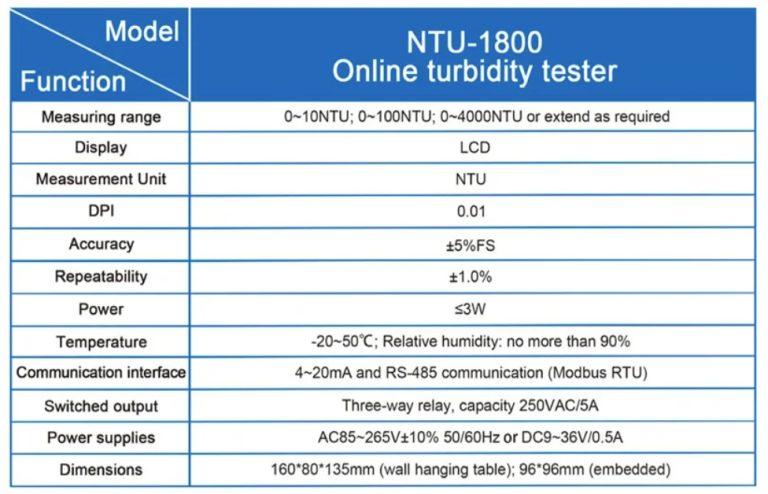
Turbidity sensors require careful attention to optical surfaces:
Optical surface cleaning:
– Use only manufacturer-approved cleaning methods
– Avoid abrasive materials that scratch optical surfaces
– Rinse with clean water, never wipe dry
– Verify cleaning effectiveness by comparing readings
Bubble management:
– Ensure adequate flow velocity to prevent bubble accumulation
– Install sensors at angles preventing bubble collection
– Consider degassing chambers for problematic applications
– Ultrasonic cleaning options available for severe bubble issues
Light source monitoring:
– Modern sensors track LED output for self-diagnosis
– Decreasing output indicates LED aging requiring replacement
– Some sensors feature user-replaceable LED modules
– Schedule LED replacement before measurement accuracy degrades
Maintenance Documentation and Quality Assurance
Record-Keeping Requirements
Comprehensive maintenance records support multiple objectives:
Regulatory compliance:
– Complete documentation satisfies inspection requirements
– Calibration records demonstrate measurement reliability
– Maintenance logs prove proper equipment care
Performance optimization:
– Historical data reveals maintenance frequency requirements
– Trend analysis identifies recurring problems
– Failure patterns suggest process or equipment improvements
Financial management:
– Maintenance costs tracked for budgeting purposes
– Sensor life data informs replacement planning
– Labor requirements documented for resource planning
Maintenance Log Contents
Effective maintenance documentation includes:
| Data Element | Purpose |
|---|---|
| Date and time | Establishes timeline of activities |
| Technician name | Identifies responsible individual |
| Sensor identification | Specific instrument being maintained |
| Activities performed | Details of maintenance performed |
| Calibration results | Quantitative performance verification |
| Parts replaced | Tracks consumable usage |
| Observations | Notes on sensor condition or problems |
| Signature/approval | Authorization for maintenance activities |
Performance Trending and Analysis
Maintenance records enable performance trending:
- Drift rate calculation: Determine maintenance frequency needs
- Failure analysis: Identify root causes of sensor problems
- Life cycle tracking: Predict replacement timing
- Cost analysis: Evaluate maintenance cost effectiveness
Advanced facilities integrate maintenance records with process data, correlating sensor performance with operational parameters.
Automated Maintenance Support Technologies
Self-Cleaning Systems
Modern sensors incorporate automated cleaning capabilities:
Ultrasonic cleaning:
– High-frequency vibrations prevent fouling accumulation
– Automatic operation requires no operator intervention
– Particularly effective for biological and particulate fouling
– Typical power consumption under 5 watts
Mechanical wipers:
– Automatic wiping at programmed intervals
– Effective for粘性 fouling materials
– Wiper blade replacement required periodically
– Can be activated by alarm conditions
Air sparging:
– Periodic air bubble release prevents biological growth
– Low operating cost approach
– Effective in stagnant or low-flow applications
– Compatible with most sensor designs
Shanghai ChiMay offers sensors with integrated self-cleaning options reducing manual maintenance requirements by 50% or more.
Smart Sensor Diagnostics
Intelligent sensors incorporate self-diagnostic capabilities:
Continuous health monitoring:
– Internal checks verify sensor electronics and functions
– Self-diagnostics detect problems before measurement impact
– Diagnostic alerts warn operators of developing issues
Predictive maintenance algorithms:
– Machine learning predicts maintenance timing
– Performance trending identifies degradation patterns
– Remaining useful life estimates guide replacement planning
Remote diagnostics:
– Cloud connectivity enables remote troubleshooting
– Factory technical support can access diagnostic data
– Faster problem resolution through remote access
Industry-Specific Maintenance Considerations
Power Generation Applications
Cooling water monitoring in power plants presents specific challenges:
- Thermal extremes: Sensors must withstand temperature cycling
- Biological growth: Warm cooling water promotes rapid fouling
- Chemical treatment: Corrosion inhibitors and biocides affect sensor materials
- High reliability requirements: Minimal downtime tolerance
Maintenance programs for power generation typically feature:
– Weekly sensor inspection and cleaning
– Monthly full calibration
– Quarterly sensor replacement rotation
– Continuous monitoring with alarm escalation
Semiconductor Manufacturing
Ultra-pure water monitoring demands exceptional cleanliness:
- Trace contamination sensitivity: Parts-per-trillion detection capability required
- High purity materials: Sensors using ultra-clean components
- Sterile conditions: Biological fouling unacceptable
- Documentation intensity: Extensive records for quality systems
Semiconductor applications require:
– Daily verification measurements
– Weekly detailed inspections
– Monthly full calibration with certified standards
– Immediate replacement upon any suspicion of contamination
Mining and Mineral Processing
Harsh slurries and abrasive materials characterize mining applications:
- Abrasive particles: Rapid mechanical wear on sensor surfaces
- Chemical extremes: Wide pH range and aggressive chemistries
- High solids content: Severe fouling conditions
- Remote locations: Maintenance access challenging
Mining applications typically require:
– Daily or more frequent sensor cleaning
– Weekly sensor replacement (planned maintenance)
– Robust sensor designs rated for slurry service
– Local spare parts inventory for rapid replacement
Conclusion
Effective maintenance of water quality sensors in harsh industrial environments requires systematic attention spanning daily inspections through annual replacements. Key success factors include:
Documentation discipline: Complete maintenance records enable performance optimization and regulatory compliance.
Appropriate scheduling: Maintenance frequency must match service severity; severe applications require more frequent attention.
Proper procedures: Following manufacturer recommendations ensures optimal sensor care without causing damage.
Right tools and materials: Appropriate cleaning solutions, calibration standards, and spare parts support effective maintenance.
Performance monitoring: Tracking sensor health indicators enables predictive rather than reactive maintenance.
Shanghai ChiMay sensors incorporate design features supporting extended maintenance intervals while maintaining measurement reliability. Combined with proper maintenance practices, these sensors deliver the long-term performance industrial applications demand.
Investment in proper sensor maintenance pays returns through extended sensor life, improved measurement reliability, reduced unplanned downtime, and optimized treatment process performance. Facilities implementing comprehensive maintenance programs consistently outperform those treating sensor care as an afterthought.