Unplanned downtime in water quality monitoring systems creates operational blind spots that can cascade into process upsets, regulatory violations, and equipment damage. Research by Aberdeen Group indicates that organizations implementing predictive maintenance programs achieve 30-50% reductions in unplanned downtime while reducing maintenance costs by 10-25%. For water quality monitoring applications, these improvements translate to annual savings of $120,000-$350,000 for typical industrial facilities, according to industry benchmarking studies.
Key Takeaways:
- Predictive maintenance reduces unplanned downtime by 30-50% while cutting costs 10-25%
- Annual savings potential of $120K-$350K achievable for industrial facilities
- IoT-enabled sensors provide the diagnostic data foundation for predictive algorithms
- ChiMay's online sensors support predictive maintenance without specific model attribution
Table of Contents
From Reactive to Predictive Maintenance
Traditional maintenance approaches respond to equipment failures after they occur, minimizing planned maintenance in favor of operating equipment until problems become apparent. This reactive approach often proves economical for simple equipment with low failure consequences, but water quality monitoring systems present different characteristics.
Why Reactive Maintenance Fails for Monitoring Systems
Water quality monitoring equipment failures create measurement gaps that prevent process optimization and may trigger regulatory actions. The consequences extend beyond the monitoring system itself—downstream process upsets from lost monitoring visibility can cause product quality problems, treatment inefficiencies, or safety incidents.
The true cost of monitoring system failures includes not only repair expenses but also the downstream impacts of unmeasured process conditions. A failed ph sensor that allows a process to drift outside specification may cause batch losses, equipment damage, or customer complaints far exceeding the sensor replacement cost.
The Predictive Maintenance Approach
Predictive maintenance uses equipment condition data to anticipate failures before they occur, enabling planned interventions at convenient times. This approach shifts maintenance from schedule-based (calendar or operating hour triggers) to condition-based (actual equipment condition) execution.
The predictive maintenance cycle includes:
- Data collection: Continuous sensor monitoring of equipment health indicators
- Condition assessment: Analysis of collected data against baseline performance
- Failure prediction: Modeling that forecasts remaining useful life
- Maintenance scheduling: Planning interventions to minimize operational impact
- Execution and verification: Performing maintenance and confirming restoration
Key Indicators for Water Quality Sensor Health
Calibration Drift
Water quality sensors drift from calibrated accuracy over time due to electrode aging, reference contamination, and membrane degradation. Monitoring calibration drift enables prediction of sensor replacement timing before measurement accuracy falls below acceptable limits.
pH sensors typically drift 0.1-0.3 pH units per month under normal conditions, with higher drift rates indicating electrode problems. Tracking calibration slope and zero-point measurements over time reveals degradation patterns that predict remaining sensor life.
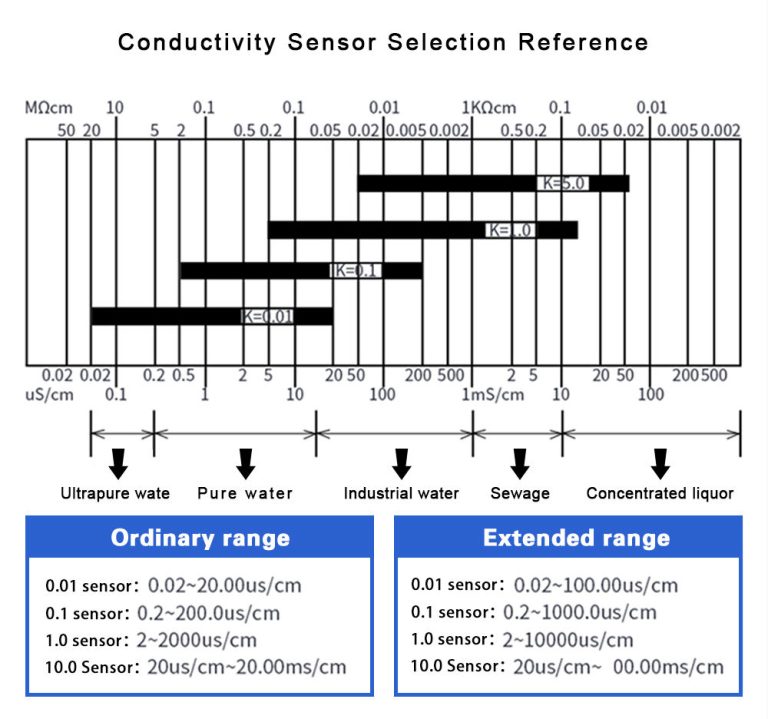
Conductivity sensors experience drift from electrode surface changes and reference cell contamination. Regular calibration verification against reference solutions quantifies drift rates that inform replacement scheduling.
Response Time Degradation
Sensor response time to step changes in measured parameter provides a sensitive indicator of sensor health. pH electrodes slowing from typical <30 second response to >2 minute response indicate membrane or junction problems that typically precede complete failure.
Response time testing should be performed during scheduled maintenance visits, with results recorded in equipment history databases for trend analysis.
Signal Noise and Stability
Increasing signal noise or reduced measurement stability often precedes sensor failures. Modern transmitter systems can be configured to monitor signal quality metrics that indicate developing problems before measurement accuracy is compromised.
Physical Indicators
Visual inspection reveals physical sensor conditions correlated with remaining useful life:
- Glass electrode cracking or clouding (pH sensors)
- Membrane discoloration or deposits (dissolved oxygen sensors)
- Reference junction discoloration (conductivity sensors)
- Cable jacket deterioration or connector corrosion
IoT-Enabled Diagnostic Capabilities
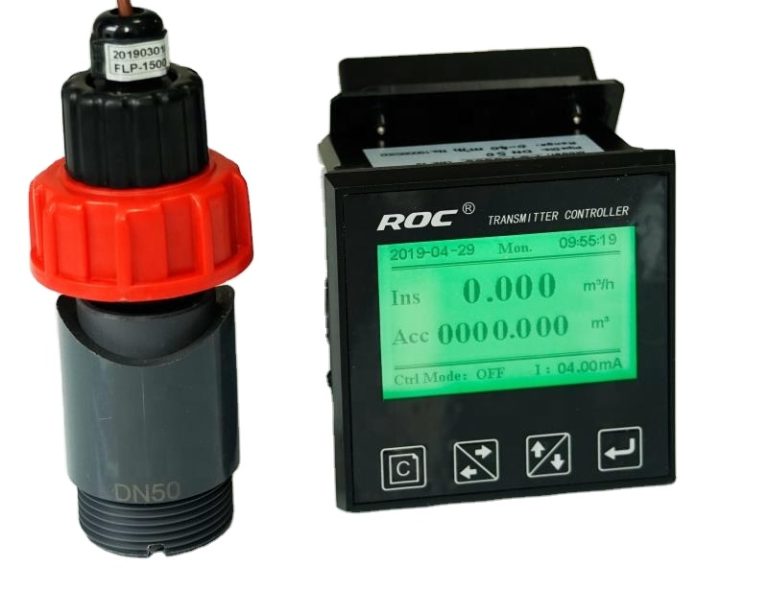
IoT-enabled water quality sensors from ChiMay provide continuous diagnostic data that enables predictive maintenance implementation. These sensors transmit not only primary measurement values but also sensor health indicators including:
- Calibration status: Last calibration date, slope, zero-point
- Diagnostic flags: Condition alarms indicating parameter excursions
- Usage metrics: Operating hours, regeneration cycles, power cycles
- Environmental data: Temperature, humidity, supply voltage
The continuous data stream from IoT-enabled sensors feeds analytics platforms that apply machine learning algorithms to predict failures. According to Deloitte, organizations implementing IoT-based predictive maintenance achieve 20-25% further reductions in downtime compared to traditional predictive approaches.
Implementation Roadmap
Phase 1: Establish Baseline (Months 1-3)
Begin by documenting current maintenance practices and equipment performance history. Establish data collection infrastructure for capturing sensor diagnostic information. Identify critical monitoring points where predictive maintenance will deliver greatest value.
Phase 2: Deploy Monitoring (Months 4-6)
Install IoT-enabled sensors where appropriate, configuring diagnostic data transmission to central analytics platforms. Integrate sensor data with existing maintenance management systems. Begin collecting baseline performance data.
Phase 3: Develop Models (Months 7-12)
Work with data science resources to analyze collected data and develop failure prediction models. Correlate sensor diagnostic parameters with actual maintenance events from historical records. Validate prediction accuracy through cross-checking against known failures.
Phase 4: Operationalize (Year 2+)
Deploy validated predictive models to generate maintenance recommendations. Establish maintenance scheduling processes that respond to prediction outputs. Continuously improve models based on operational experience.
Return on Investment Analysis
Predictive maintenance implementation requires investment across several categories:
| Investment Category | Typical Cost Range |
|---|---|
| IoT-enabled sensors | $5,000-$25,000 |
| Analytics platform | $15,000-$50,000 |
| Integration/development | $20,000-$75,000 |
| Training and change management | $5,000-$15,000 |
| Total Initial Investment | $45,000-$165,000 |
Against these investments, typical returns include:
- Downtime reduction: 30-50% decrease in monitoring-related downtime
- Maintenance cost savings: 10-25% reduction in maintenance expenses
- Inventory optimization: 15-30% reduction in spare parts inventory
- Avoided downstream costs: Reduced process upsets and quality incidents
Payback periods of 12-24 months are typical for predictive maintenance programs targeting critical water quality monitoring applications.
ChiMay’s Support for Predictive Maintenance
ChiMay's online sensors support predictive maintenance programs through robust diagnostic capabilities, continuous data transmission, and integration flexibility. The sensor health information these devices provide enables the condition-based maintenance that transforms equipment management from reactive to proactive.
By selecting sensors designed for predictive maintenance integration, facilities can implement programs that reduce both maintenance costs and the operational risks associated with equipment failures.
Conclusion: Data-Driven Maintenance Excellence
Predictive maintenance represents the evolution of equipment management from schedule-based intervention to condition-based optimization. For water quality monitoring systems, the approach delivers both cost reductions and reliability improvements that protect downstream operations.
Facilities implementing predictive maintenance programs position themselves to achieve the 30-50% downtime reductions that industry benchmarks demonstrate are achievable. The investment in IoT-enabled sensors and analytics capabilities pays returns through improved operational performance and reduced maintenance costs.