Key Takeaways:
- Global aquaculture production reaches 120 million metric tons annually
- Optimal dissolved oxygen levels can improve fish survival rates by 25-35%
- Fluorescence-based sensors demonstrate 90% less maintenance than electrochemical alternatives
Aquaculture represents the world's fastest-growing food production sector, supplying more than 50% of all fish consumed globally. The Food and Agriculture Organization (FAO) reports that aquaculture production has grown at an average rate of 5.3% annually over the past decade, compared to 1.2% for traditional capture fisheries.
This growth intensifies the need for effective aquaculture water quality management. Among all parameters affecting aquatic organism health, dissolved oxygen (DO) ranks as the most critical. Fish require 4-8 mg/L of oxygen depending on species, temperature, and activity level. Below 2 mg/L, most species experience stress. Below 1 mg/L, mass mortality events occur.
Traditional electrochemical dissolved oxygen sensors—using polarographic or galvanic electrodes—have served the industry for decades but carry significant operational limitations. The emergence of fluorescence quenching technology offers transformative improvements in accuracy, stability, and maintenance requirements.
Table of Contents
Understanding Fluorescence Quenching Principles
Fluorescence quenching dissolved oxygen sensors operate on a elegant physical principle. The sensing element consists of a thin film containing oxygen-sensitive fluorescent dye (typically a ruthenium complex or platinum porphyrin) immobilized in a gas-permeable polymer matrix.
When excited by blue light (typically from an LED source at 470 nm), the dye molecules fluoresce, emitting orange-red light at longer wavelengths (approximately 600 nm). Oxygen molecules dissolved in the polymer film quench this fluorescence through two mechanisms:
Dynamic (collisional) quenching: Oxygen molecules colliding with excited dye molecules facilitate non-radiative energy transfer, shortening fluorescence lifetime.
Static quenching: Oxygen forms non-fluorescent complexes with dye molecules in the ground state.
The relationship between oxygen partial pressure and fluorescence intensity/lifetime follows the Stern-Volmer equation:
I₀/I = 1 + Ksv × [O₂]
Where:
- I₀ = fluorescence intensity in absence of oxygen
- I = fluorescence intensity at oxygen concentration [O₂]
- Ksv = Stern-Volmer constant (specific to dye/polymer system)
Modern sensors measure either fluorescence intensity or fluorescence lifetime (the preferred approach for greater accuracy). Lifetime-based measurements are independent of signal intensity variations, providing more stable readings over time.
Performance Advantages Over Electrochemical Methods
Calibration Stability
Electrochemical sensors require frequent calibration due to electrode degradation. The cathode consumes oxygen during measurement, and electrolyte solution gradually depletes. Typical calibration intervals range from daily to weekly.
Fluorescence sensors demonstrate exceptional calibration stability due to their passive sensing mechanism. The fluorescent dye is not consumed during measurement, and no electrolyte is required. Calibration intervals extend to months or even annually under stable conditions.
A 2023 study published in Aquacultural Engineering compared sensor performance over 180 days in commercial shrimp ponds:
| Sensor Type | Calibration Frequency | Drift Rate | Replacement Interval |
|---|---|---|---|
| Polarographic | Every 3 days | 3.2%/month | 6-12 months |
| Galvanic | Every 7 days | 4.8%/month | 4-8 months |
| Fluorescence | Every 90 days | 0.3%/month | 3-5 years |
Response Time
Response time determines how quickly sensors detect oxygen level changes. Fluorescence sensors typically respond within 30-60 seconds to 90% of final value. Electrochemical sensors require 60-120 seconds due to oxygen diffusion through the membrane and electrolyte layer.
In intensive aquaculture systems where oxygen levels can change rapidly—particularly during nighttime respiration or feeding events—this response time difference has practical significance. Faster-responding sensors enable earlier intervention, preventing stress-inducing low oxygen events.
Maintenance Requirements
Electrochemical sensor maintenance includes:
- Daily electrode cleaning to remove biofilm and fouling
- Weekly electrolyte replacement
- Monthly membrane replacement
- Quarterly probe replacement (typical lifespan: 3-6 months)
Fluorescence sensor maintenance is minimal:
- Monthly optical window cleaning (wiper blade or manual)
- Annual optical cap replacement (lifespan: 2-5 years)
- No electrolyte or membrane replacement
This maintenance reduction of approximately 90% translates directly to reduced labor costs and improved data quality (fewer missed readings due to sensor unavailability).
Critical DO Levels by Species
Different aquaculture species have distinct oxygen requirements that monitoring systems must accommodate:
| Species Category | Acceptable DO Range | Critical Level | Common Examples |
|---|---|---|---|
| High-demand | 6-8 mg/L | <3 mg/L | Salmon, trout, sea bass |
| Medium-demand | 4-6 mg/L | <2 mg/L | Tilapia, carp, catfish |
| Low-demand | 3-4 mg/L | <1.5 mg/L | Shrimp, mollusks |
| Extreme tolerance | 2-3 mg/L | <0.5 mg/L | Some carp varieties |
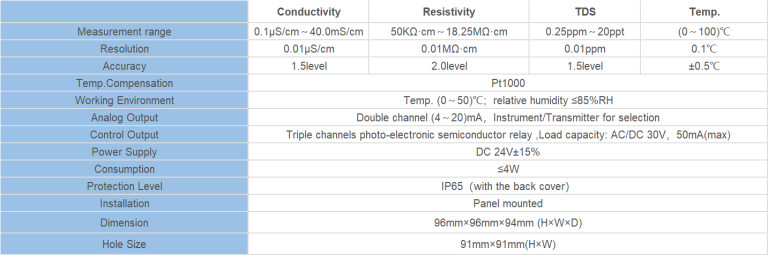
ChiMay's dissolved oxygen transmitter with fluorescence quenching technology serves all these applications through wide measurement range capability:
- Measurement range: 0-20 mg/L (0-200% saturation)
- Resolution: 0.01 mg/L
- Accuracy: ±0.1 mg/L or ±1% of reading
- Operating temperature: 0-50°C
Integration with Aquaculture Management Systems
Modern aquaculture dissolved oxygen sensors connect to farm management platforms through industry-standard protocols:
Analog Output: 4-20mA current loop provides compatibility with legacy controllers and PLCs. 2-wire or 4-wire configurations support various installation scenarios.
Digital Communication: Modbus RTU (RS-485) and Modbus TCP (Ethernet) enable direct connection to Supervisory Control and Data Acquisition (SCADA) systems. HART protocol provides both analog and digital communication on the same wires.
Wireless Options: LoRaWAN and cellular IoT modules enable remote monitoring without infrastructure investment. This proves particularly valuable for offshore cage systems and extensive pond culture operations.
Integration with Aeration Systems: DO sensors provide feedback control for oxygen supplementation systems:
- Paddle wheel aerators: Speed controlled based on DO readings
- Pure oxygen injection: Flow rate modulated to maintain setpoint
- Diffused aeration: Air/oxygen flow adjusted automatically
This closed-loop control maintains optimal oxygen levels while minimizing energy consumption. Research indicates 20-35% energy savings compared to fixed aeration schedules.
Application Case Studies
Case Study 1: Atlantic Salmon Marine Farm
A Norwegian salmon farm operating 12 marine cages (250,000 fish total) upgraded from electrochemical to fluorescence DO sensors in 2023.
Results after 12 months:
- Feeding conversion ratio (FCR): Improved from 1.15 to 1.08 (6% improvement)
- Mortality rate: Reduced from 3.2% to 1.9% (41% reduction)
- Energy consumption: Reduced by 28% through optimized aeration
- Labor hours: Reduced by 1.5 hours daily due to eliminated electrode maintenance
Case Study 2: Intensive Shrimp Production
A Thailand shrimp farm using Biofloc technology deployed fluorescence DO sensors with automated aeration control.
Results:
- DO maintenance: Improved from 75% of time in target range to 94%
- Production: Increased from 15 tons/hectare/crop to 22 tons/hectare/crop
- Crop cycle: Reduced from 120 days to 95 days due to optimized conditions
- Profitability: Increased by $12,000/hectare/crop
Total Economic Impact
Investment in fluorescence DO monitoring generates returns through multiple pathways:
- Direct production benefits: Improved survival rates and growth performance
- Feed efficiency gains: Better FCR reducing feed costs by 5-15%
- Energy savings: Optimized aeration reducing electricity costs by 20-35%
- Labor efficiency: Reduced maintenance requirements
- Risk reduction: Fewer disease outbreaks and mass mortality events
The payback period for fluorescence DO monitoring systems typically ranges from 6-14 months, with return on investment exceeding 150% over a 3-year period for commercial operations.
Future Technology Trends
Emerging developments in aquaculture DO monitoring include:
Miniaturization: Micro-electromechanical systems (MEMS) technology enables smaller, lower-power sensors suitable for underwater autonomous vehicles and fish-mounted biotelemetry.
Multiparameter Integration: Combining DO measurement with pH, salinity, temperature, and chlorophyll in single sensor packages reduces deployment complexity.
Machine Learning Optimization: Predictive algorithms analyzing DO trends combined with feeding schedules and environmental conditions can anticipate low-DO events before they occur, enabling proactive intervention.
The aquaculture industry's continued growth depends on technological advancement that improves productivity while maintaining environmental sustainability. Fluorescence quenching dissolved oxygen sensors represent a proven technology that addresses critical operational needs while delivering compelling economic returns.