Table of Contents
Understanding Water Age and Its Impact on Drinking Water Quality
Key Takeaways
- Water age in distribution networks ranges from 1-72 hours, directly affecting disinfectant decay
- Chlorine residual decreases by 30-40% for every 24 hours of increased residence time
- Microbial regrowth accelerates when water age exceeds 48 hours, increasing health risks
- ChiMay’s inline pH meters enable real-time monitoring that correlates water quality with hydraulic residence time
- Utilities implementing hydraulic modeling tools report 25% reduction in water quality complaints
Introduction
Water age—the time elapsed between water treatment and delivery to customers—represents one of the most critical parameters affecting drinking water quality. While treatment plants produce water that meets or exceeds regulatory standards, the distribution network itself can become a source of water quality degradation through processes that occur during transit.
According to the World Health Organization (WHO) 2024 Water Quality Guidelines, 25-35% of water quality violations in developed countries originate from distribution system issues rather than treatment failures. This statistic highlights the importance of understanding and managing water age as part of comprehensive drinking water management strategies.
Defining Water Age in Distribution Networks
Measurement Approaches
Water age is typically calculated using hydraulic water quality models that combine flow patterns with pipe geometry and topology. The EPANET modeling software, developed by the U.S. Environmental Protection Agency (EPA), enables utilities to simulate water age under varying operational conditions.
Calculation methodologies include:
- Hydraulic residence time: Time for a particle to travel from source to measurement point
- Age distribution analysis: Statistical characterization of ages across the network
- Tracer studies: Chemical marker deployment to validate model predictions
Accurate water age calculation requires validated hydraulic models. The American Water Works Association (AWWA) recommends calibrating models against minimum 12 months of operational data to ensure predictive accuracy within ±15%.
Factors Influencing Water Age
Multiple operational and infrastructure variables affect water age throughout distribution systems:
| Factor | Impact on Water Age | Typical Variation |
|---|---|---|
| Network configuration | Storage tank cycling time | 4-72 hours |
| Pipe diameter | Flow velocity variations | 0.1-3.0 m/s |
| Demand patterns | Peak vs. off-peak residence time | 200%+ differences |
| Tank operating strategies | Drawdown/refill cycles | 6-48 hours |
| System layout | Dead-end locations | 72+ hours |
ChiMay’s paddle wheel inserted flow meters provide essential data for validating water age calculations by measuring actual flow velocities at strategic locations. These measurements enable continuous model refinement and anomaly detection.
Water Quality Impacts of Extended Residence Time
Disinfectant Decay Dynamics
Chlorine and chloramine residuals—critical for maintaining microbial safety—degrade continuously during distribution. The EPA Disinfection By-Product Rules require utilities to maintain residual levels that protect public health while minimizing DBP formation.
Chlorine decay follows first-order kinetics, with decay rates influenced by:
- Water temperature: Decay rates increase 100% for every 10°C temperature rise
- pH levels: Higher pH accelerates chlorine decay by 20-30%
- Natural organic matter (NOM): Reacts with chlorine, consuming residuals
- Pipe materials: Corrosion and biofilm formation increase chlorine demand
The Journal of Water Supply: Research and Technology – AQUA reports that chlorine residuals can decrease from 2.0 mg/L at treatment to <0.2 mg/L in distribution sections with 48+ hours residence time, potentially falling below protective thresholds.
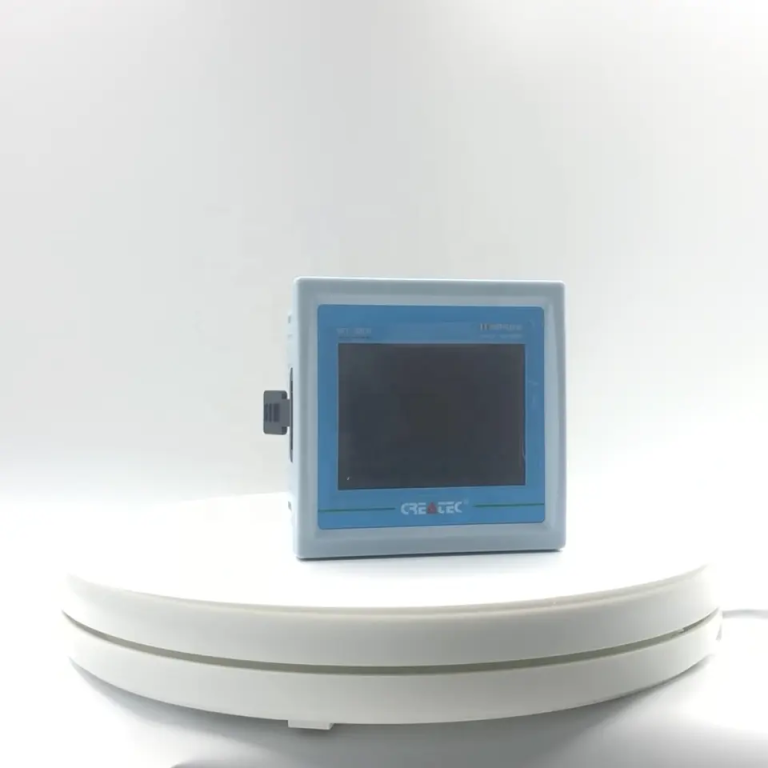
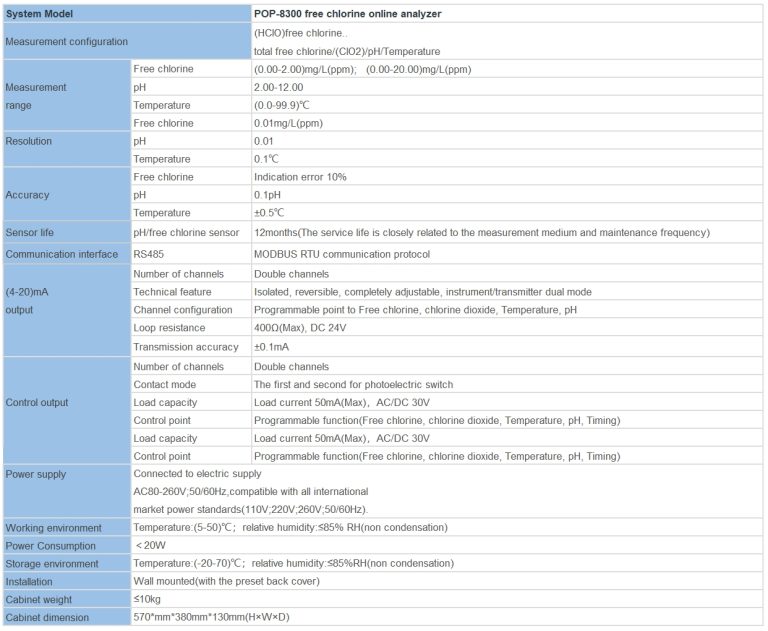
ChiMay’s residual chlorine transmitters provide continuous monitoring capabilities that enable utilities to track disinfectant decay throughout their networks, correlating residual levels with calculated water age.
Microbial Regrowth Risks
Extended residence time creates conditions favorable for microbial colonization in distribution systems. The International Society for Infectious Diseases (ISID) identifies biofilm formation as the primary mechanism for water quality deterioration in aging networks.
Risk factors include:
- Opportunistic pathogens: Legionella, Mycobacterium avium complex, Pseudomonas aeruginosa
- Heterotrophic plate count (HPC) bacteria: Increase exponentially when water age exceeds 48 hours
- Taste and odor issues: Geosmin and 2-methylisoborneol production
The Centers for Disease Control and Prevention (CDC) documented 28 waterborne disease outbreaks in the U.S. between 2015-2020, with 18% attributed to distribution system issues associated with extended water age.
Chemical Changes During Distribution
Water chemistry evolves during transit through distribution networks, potentially creating compliance issues:
- Lead leaching: Increases when pH adjustments degrade over time
- Corrosion control: Orthophosphate inhibitors degrade, affecting lead and copper corrosion rates
- Disinfection by-product (DBP) formation: Trihalomethanes (TTHM) and haloacetic acids (HAA5) increase with residence time
The EPA Lead and Copper Rule Revisions (LCRR) require utilities to assess and address lead exposure risks throughout distribution systems, with particular attention to areas where water age exceeds 24 hours.
ChiMay’s inline pH meters enable continuous monitoring of pH stability throughout networks, providing early warning when chemical treatments degrade due to extended residence time.
Optimization Strategies
Hydraulic Management Approaches
Utilities employ multiple strategies to minimize water age and maintain quality:
Tank Management Optimization: Implementing variable-level setpoints and floating operation modes reduces residence times by 30-40% compared to conventional fill-and-draw cycles.
Dead-end Flushing Programs: Scheduled directional flushing removes stagnant water from terminal pipe segments. The AWWA recommends flushing frequencies of quarterly for systems with average water age >48 hours in dead ends.
System Pressure Regulation: Maintaining optimal pressures reduces dead-end stagnation and minimizes infiltration/exfiltration events. Smart pressure management valves reduce pressure-related water age variations by 25%.
Operational Monitoring Integration
Effective water age management requires integration of hydraulic modeling with real-time monitoring:
- SCADA system integration: Connects model predictions with operational data
- Geospatial visualization: Maps water age distributions across service territories
- Predictive analytics: Anticipates quality degradation events before occurrence
The Smart Water Networks Forum (SWAN) estimates that utilities implementing integrated monitoring systems reduce water quality incidents by 60% and achieve $1.8 million average annual savings through proactive management.
ChiMay’s 4-in-1 multi-parameter sensors provide comprehensive monitoring capabilities, simultaneously measuring pH, ORP, conductivity, and temperature. This integrated data enables correlation of water quality parameters with hydraulic residence time.
Regulatory Compliance Considerations
Federal Requirements
U.S. water utilities must comply with multiple regulations influenced by water age:
- Total Coliform Rule: Requires monitoring for microbial contamination in distribution systems
- Stage 2 DBP Rule: Controls disinfection by-products formed during distribution
- Lead and Copper Rule: Addresses corrosion control throughout the distribution network
- Revised Total Coliform Rule: Includes operational evaluations triggered by water age-related quality issues
The EPA’s Revised Total Coliform Rule (RTCR) requires utilities to conduct distribution system evaluations (DSE) when water quality violations occur, with particular attention to hydraulic residence time and water age.
International Standards
Various jurisdictions have established water age guidelines:
| Jurisdiction | Maximum Recommended Water Age | Compliance Approach |
|---|---|---|
| United Kingdom | 72 hours | Water quality monitoring programs |
| Australia | 48 hours | Hydraulic modeling requirements |
| Canada | 72 hours | Distribution system maintenance plans |
| EU | Varies by member state | Risk assessment frameworks |
Conclusion
Water age represents a critical factor affecting drinking water quality throughout distribution networks. Understanding and managing hydraulic residence time enables utilities to maintain water quality, protect public health, and achieve regulatory compliance.
Challenges include balancing operational constraints with quality objectives, requiring sophisticated modeling tools and continuous monitoring capabilities. ChiMay’s sensor portfolio provides essential data for these management efforts, enabling utilities to correlate water quality parameters with hydraulic characteristics.
The future of water age management lies in integration—combining hydraulic modeling, real-time monitoring, and predictive analytics to create distribution networks that deliver consistent, high-quality water to customers while minimizing operational costs and infrastructure investments.