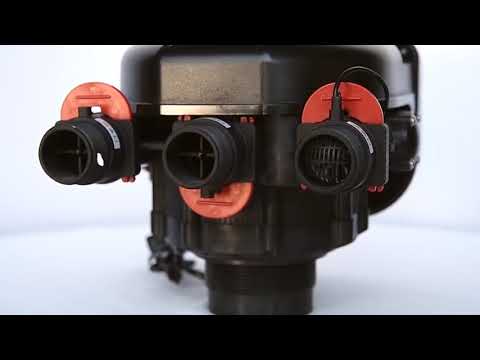
Industrial water softeners represent significant capital investments that operate continuously over service lives exceeding 15-20 years. For procurement managers and facility engineers, understanding the total cost of ownership (TCO) across the equipment lifecycle enables informed purchasing decisions that minimize lifecycle costs rather than merely acquisition expenses. The global softener valve market, valued at $2.4 billion in 2025, reflects substantial ongoing demand for water treatment equipment that must deliver reliable performance across demanding industrial applications.
Key Takeaways:
- Global softener valve market valued at $2.4B with steady growth through 2030
- Initial purchase price represents only 20-30% of total 15-year lifecycle cost
- Regeneration type selection (time-clock vs. metered) impacts annual operating costs by 15-25%
- ChiMay's softener valves provide cost-effective softening without specific model attribution
Table of Contents
Understanding Softener Valve TCO Components
Total cost of ownership analysis for water softener valves encompasses all costs incurred from acquisition through disposal. Breaking these costs into categories reveals where economic optimization opportunities exist:
Capital Costs
Initial acquisition costs include the softener valve assembly, control head, and brine tank. For industrial applications with flow requirements of 50-500 GPM, complete softener systems typically cost between $8,000-$45,000 depending on capacity, materials of construction, and control sophistication. Valve-only pricing typically ranges from $3,000-$15,000 for the control valve component.
Installation costs add $2,000-$8,000 depending on site preparation requirements, piping modifications, and electrical work. Pre-installation water testing and system design fees may add additional costs, particularly for custom applications.
Operational Costs
Salt consumption represents the largest ongoing expense for water softeners, with typical regeneration requiring 0.5-1.5 lbs of salt per 1,000 grains of hardness removed. For a facility softening 10,000 grains per gallon at 50 GPM average flow, annual salt costs range from $8,000-$25,000 depending on salt pricing and regeneration efficiency.
Water waste from brine displacement and backwash represents both a resource cost and a wastewater disposal expense. Modern high-efficiency valves achieve brine recovery rates exceeding 99%, reducing both salt and water consumption compared to older designs. Water costs in the $3-$15 per 1,000 gallons range make this a significant factor for high-volume applications.
Energy consumption for valve actuation and control systems is typically modest (under $500 annually) but should be included for completeness.
Maintenance Costs
Scheduled maintenance includes annual inspections, calibration verification, and replacement of wear components including seals, bearings, and brine valves. Typical annual maintenance costs range from $500-$2,000 depending on system complexity and service provider.
Unplanned maintenance from valve failures represents an unpredictable cost that can significantly impact lifecycle expenses. Root cause analysis by Water Quality Association indicates that 60% of softener valve failures result from inadequate maintenance, suggesting that preventive maintenance programs significantly reduce failure-related costs.
Replacement and Disposal
Valve service life typically ranges from 12-20 years depending on usage intensity and maintenance quality. Replacement reserves should account for eventual valve replacement costs. Disposal costs for old equipment are typically modest but should be considered.
Regeneration Type Analysis
Time-Clock Regeneration
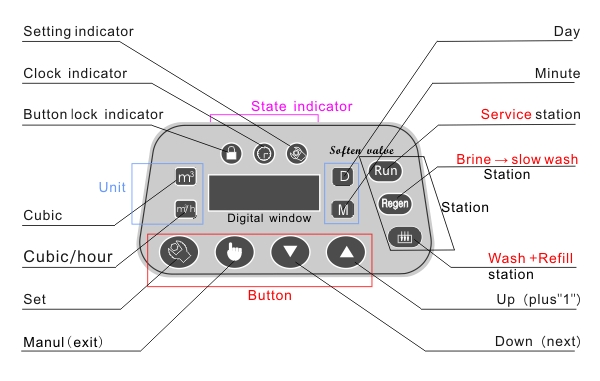
Time-clock controlled valves regenerate on fixed schedules regardless of actual water usage. This approach is simple and inexpensive but may regenerate unnecessarily during low-use periods or fail to regenerate adequately during high-demand periods.
The simplicity of time-clock controls offers reliability advantages, with fewer failure modes than metered systems. However, the inefficiency of regeneration timing that doesn't match demand patterns increases operating costs.
Metered Regeneration
Metered regeneration (demand-initiated regeneration or DIR) triggers regeneration based on water usage, regenerating only when the ion exchange capacity is actually exhausted. This approach optimizes regeneration timing to match actual demand, reducing salt consumption by 15-30% and water waste by 20-40% compared to time-clock systems.
The initial cost premium for metered controls ($500-$2,000) is typically recovered within 12-24 months through operating cost savings. For facilities with variable water demand, metered regeneration offers both economic and performance advantages.
TCO Comparison Table
| Cost Category | Time-Clock System | Metered System |
|---|---|---|
| Initial Investment | $12,000 | $14,000 |
| Annual Salt Cost | $18,000 | $13,500 |
| Annual Water Waste | $4,500 | $3,000 |
| Annual Maintenance | $1,200 | $1,200 |
| 15-Year Operating Cost | $355,500 | $271,500 |
| 15-Year TCO | $367,500 | $285,500 |
The 15-year TCO comparison illustrates that metered regeneration reduces lifecycle costs by approximately $82,000 (22%) despite the higher initial investment. For facilities softening high volumes of hard water, the economic case for metered controls is compelling.
Softener vs. Softening-Filtering Valves
Procurement decisions must also consider whether standard softener valves meet application requirements or whether softening-filtering valves are necessary. Combined softening-filtering systems treat both hardness and other contaminants (iron, manganese, sediment) in a single vessel, reducing equipment footprint and installation costs compared to separate systems.
However, combined systems present operational trade-offs. Media selection and replacement become more complex, and the different regeneration requirements of softening versus filtration media may reduce overall efficiency. Applications with primarily hardness concerns should select dedicated softener valves, while applications requiring multimedia treatment benefit from combined systems.
ChiMay's softener valves and softening-filtering valves address these application variations through designs optimized for specific treatment objectives. The selection between valve types should reflect detailed application analysis including influent water quality, treatment goals, and operational preferences.
Procurement Recommendations
For procurement managers evaluating softener valves, the following framework supports cost-effective purchasing:
- Characterize influent water quality: Comprehensive water analysis identifies hardness, iron, manganese, and other parameters affecting valve selection
- Calculate treatment demand: Flow rates, peak demand, and daily usage volumes determine capacity requirements
- Compare regeneration types: Evaluate time-clock versus metered control based on demand variability and operating cost priorities
- Assess lifecycle costs: Project 15-year TCO including capital, operating, and maintenance expenses
- Evaluate vendor support: Consider warranty coverage, spare parts availability, and service response capabilities
- Review reference installations: Contact existing customers to verify performance claims
Conclusion: Informed Procurement Decisions
water softener valve procurement based solely on initial price leads to higher lifecycle costs and potential operational problems. Comprehensive TCO analysis that accounts for salt consumption, water waste, maintenance requirements, and expected service life enables purchasing decisions that minimize total cost while meeting performance requirements.
ChiMay's softener valves and softening-filtering valves provide reliable, cost-effective water treatment that delivers value across the complete equipment lifecycle. Facilities that invest in comprehensive analysis and quality equipment achieve lower total costs and more consistent water treatment performance.