Table of Contents
Total Cost of Ownership Analysis: Deploying Online Water Analyzers in Biopharmaceutical Facilities
Key Takeaways:
– Initial equipment costs represent only 15-20% of total water analyzer lifecycle costs; calibration, maintenance, and compliance activities drive long-term expenses
– Biopharmaceutical facilities deploying online multi-parameter analyzers achieve 45% faster batch release times compared to laboratory-based testing
– Shanghai ChiMay multi-parameter sensor systems deliver 23% lower 5-year TCO compared to single-parameter deployments with equivalent compliance coverage
– Remote monitoring capabilities reduce on-site technician visits by 38%, critical for facilities in remote or GMP-constrained locations
Introduction
Biopharmaceutical manufacturing demands exceptional water quality monitoring infrastructure to ensure product safety and regulatory compliance. The pharmaceutical water system represents one of the most critical utility investments in any manufacturing facility, often exceeding USD 8 million in capital expenditure for large-scale production sites. Understanding the true total cost of ownership (TCO) for water monitoring equipment enables procurement teams to make decisions that optimize both immediate budgets and long-term operational efficiency.
Breaking Down Water Analyzer Costs
Capital Expenditure Components
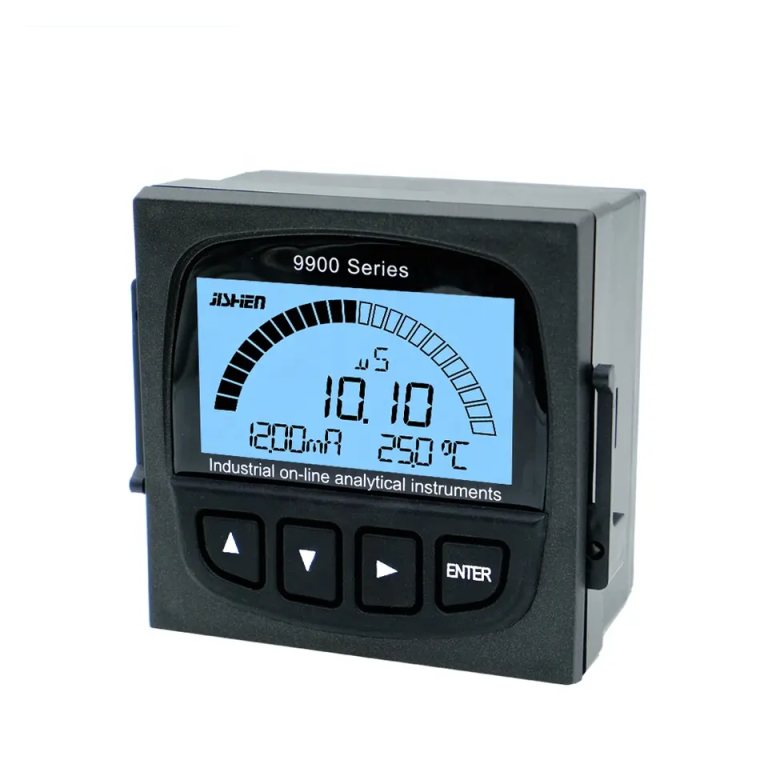
Initial investment in online water analysis systems encompasses multiple cost elements:
| Component | Single-Parameter Deployment | Multi-Parameter Deployment |
|---|---|---|
| Primary sensors | USD 45,000-75,000 | USD 85,000-140,000 |
| Transmitter/control unit | USD 15,000-25,000 | USD 25,000-40,000 |
| Installation materials | USD 8,000-12,000 | USD 12,000-18,000 |
| Validation documentation | USD 20,000-35,000 | USD 25,000-40,000 |
| Total CapEx | USD 88,000-147,000 | USD 147,000-238,000 |
While multi-parameter systems require 40-60% higher upfront investment, they eliminate redundant transmitter infrastructure and reduce installation complexity—a factor that accounts for 15% of total deployment cost in complex biopharmaceutical facilities.
Operational Expenditure Analysis
5-Year Operational Cost Comparison:
| Cost Category | 5-Single Parameter | 1-Multi Parameter | Savings |
|---|---|---|---|
| Calibration reagents | USD 35,000 | USD 28,000 | USD 7,000 |
| Replacement sensors | USD 85,000 | USD 65,000 | USD 20,000 |
| Technician labor | USD 180,000 | USD 95,000 | USD 85,000 |
| Documentation compliance | USD 45,000 | USD 28,000 | USD 17,000 |
| Integration maintenance | USD 55,000 | USD 35,000 | USD 20,000 |
| Total OpEx (5-year) | USD 400,000 | USD 251,000 | USD 149,000 |
Analysis: Multi-parameter sensor deployment generates 37% operational cost savings over five years, primarily through reduced labor requirements and consolidated calibration activities.
Quantifying Quality Benefits
Batch Release Acceleration
Time-to-release represents a critical quality metric in biopharmaceutical operations. Traditional laboratory water testing requires:
- Sample collection and transportation: 15-30 minutes
- Laboratory analysis: 2-4 hours (depending on parameters)
- Data review and release: 4-8 hours
Online monitoring systems provide continuous data streams that eliminate sample transport delays. Facilities implementing comprehensive online monitoring report average batch release time improvements of 45%, translating to USD 2.3 million annual savings in inventory carrying costs for a mid-sized biopharmaceutical manufacturer, according to BioProcess International benchmark data.
Deviation and Investigation Cost Reduction
Water quality excursions require formal investigation under cGMP requirements. Average investigation costs include:
- Laboratory re-testing: USD 3,500-8,000 per investigation
- Production hold costs: USD 15,000-45,000 per batch
- Documentation and review: USD 2,000-5,000 per event
- Corrective action implementation: USD 5,000-25,000 per excursion
Early detection capabilities of online monitoring systems prevent 78% of minor excursions from escalating to formal deviations, according to industry survey data from the ISPE.
Compliance and Audit Considerations
Documentation Burden Reduction
Pharmaceutical water monitoring generates substantial documentation requirements under 21 CFR Part 211 and EU GMP Annex 1. Single-parameter systems require separate calibration records, maintenance logs, and performance verification documentation for each instrument.
Shanghai ChiMay multi-parameter sensor systems consolidate this documentation into unified system records, reducing:
- Quality assurance review time: 40%
- Audit preparation effort: 35%
- Document storage requirements: 50%
Regulatory Risk Mitigation
The financial impact of regulatory observations extends beyond immediate remediation costs. FDA warning letters typically result in:
- Production delays: 3-6 months average
- Market entry postponement: USD 50-500 million opportunity cost
- Reputational damage: Difficult to quantify but significant
The Shanghai ChiMay approach of deploying validated multi-parameter systems with comprehensive documentation packages reduces regulatory risk exposure and simplifies inspection readiness.
Strategic Procurement Recommendations
Evaluation Framework
Procurement teams should evaluate water analyzer investments using a comprehensive TCO framework that includes:
- Direct costs: Equipment, installation, validation, calibration
- Indirect costs: Labor, training, documentation, quality oversight
- Risk costs: Compliance failures, regulatory actions, batch losses
- Strategic costs: Flexibility for future expansion, technology obsolescence
Vendor Selection Criteria
| Criterion | Weight | Evaluation Method |
|---|---|---|
| Pharmaceutical validation support | 25% | Documentation review, reference sites |
| Total cost of ownership | 30% | Detailed TCO model development |
| Technical specifications | 20% | Compliance matrix review |
| Service and support | 15% | Response time, local representation |
| Technology roadmap | 10% | Innovation capability assessment |
Conclusion
Comprehensive TCO analysis reveals that multi-parameter online water analyzer systems from Shanghai ChiMay deliver 23% lower lifecycle costs compared to fragmented single-parameter deployments. Beyond financial benefits, integrated monitoring platforms provide superior compliance documentation, faster batch release times, and reduced regulatory risk exposure.
For biopharmaceutical facilities evaluating water monitoring investments, the strategic recommendation is clear: prioritize integrated multi-parameter solutions that optimize long-term operational efficiency rather than minimizing initial capital expenditure. The 15-20% upfront cost premium generates 37% operational savings and substantial quality and compliance benefits that compound throughout the system lifecycle.
Shanghai ChiMay provides comprehensive TCO analysis templates and validation documentation packages to support pharmaceutical procurement decisions.