Table of Contents
Key Takeaways
- ChiMay's inline conductivity meter employs true four-electrode measurement technology, eliminating polarization errors that plague conventional two-electrode sensors
- The sensor covers an exceptional range from 0.05 µS/cm to 500 mS/cm, spanning applications from ultra-pure water to concentrated brines
- Temperature compensation algorithms automatically adjust readings using multiple reference curves for accurate results across diverse applications
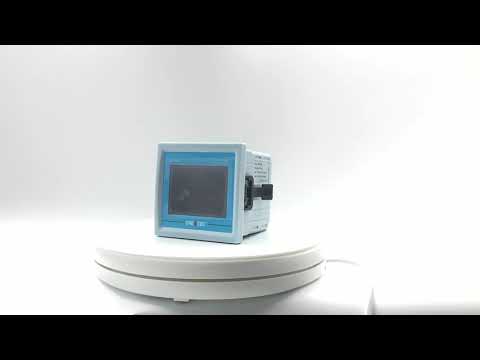
Conductivity measurement is fundamental to water quality monitoring, providing rapid assessment of total dissolved solids and ionic content. ChiMay's inline conductivity meter combines advanced four-electrode technology with intelligent signal processing to deliver unmatched accuracy and reliability in industrial applications.
Understanding Four-Electrode Technology
Conventional two-electrode conductivity sensors suffer from polarization effects, particularly at high conductivity values. When current flows through the measurement electrodes, ionic species accumulate at the electrode surface, creating an opposing voltage that introduces measurement error. This phenomenon becomes increasingly problematic as conductivity increases.
ChiMay's four-electrode conductivity meter resolves this limitation by separating the current-carrying electrodes from the voltage-sensing electrodes. Two outer electrodes inject the measurement current into the solution, while two inner electrodes measure the resulting voltage drop. Because the voltage sensing electrodes carry virtually no current, polarization effects are eliminated entirely.
According to research published in the Journal of Water Process Engineering, four-electrode conductivity sensors demonstrate accuracy improvements of up to 40% in high-conductivity applications compared to conventional two-electrode designs. The technology is particularly valuable for applications exceeding 10 mS/cm where polarization errors typically exceed 5%.
Intelligent Temperature Compensation
Water conductivity varies significantly with temperature, typically changing by approximately 2% per °C near room temperature. Accurate conductivity measurement therefore requires precise temperature compensation. ChiMay's inline conductivity meter incorporates a precision Pt1000 temperature sensor positioned immediately adjacent to the measurement zone.
The meter supports multiple temperature compensation algorithms, including:
- Linear compensation for approximate applications
- Natural water compensation (EN 27888) for environmental monitoring
- Ultra-pure water compensation for semiconductor applications
- Custom curves for specialized industrial processes
For semiconductor ultra-pure water applications, ChiMay offers a specialized compensation algorithm that accounts for the non-linear behavior of highly purified water, ensuring accuracy even at resistivity values exceeding 18 MΩ·cm.
Industrial Design Features
Flow-Through Cell Design
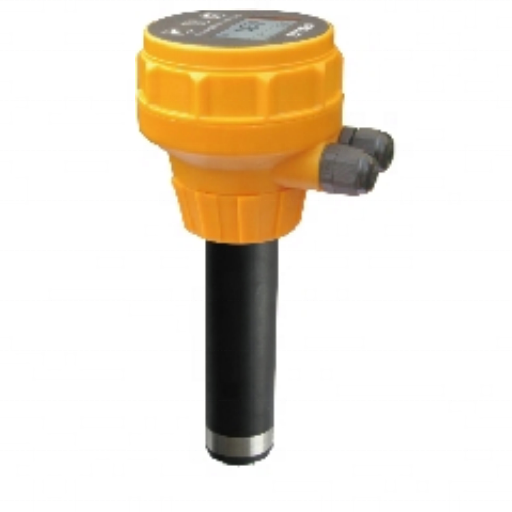
ChiMay's inline conductivity meter features a flow-through cell design that ensures representative sampling. The sensor housing includes integral flow channels that prevent air bubble accumulation and maintain consistent flow velocity across the electrode surface. This design provides stable readings even in systems with variable flow rates.
Materials of Construction
The sensor housing is constructed from PVDF (polyvinylidene fluoride), offering excellent chemical resistance to acids, alkalis, and organic solvents. The electrode surfaces utilize graphite for the current-carrying electrodes and stainless steel 316L for voltage sensing, providing optimal combination of conductivity and corrosion resistance.
Pressure and Temperature Ratings
The standard sensor is rated for pressures up to 10 bar and temperatures from 0°C to 80°C. High-temperature variants extend the operating range to 120°C, enabling installation in steam-sterilized systems and hot process streams.
Communication Options
Modern industrial facilities require flexible connectivity. ChiMay's inline conductivity meter supports:
- 4-20 mA analog output for traditional PLC integration
- Modbus RTU (RS-485) for digital communication
- Modbus TCP/IP for Ethernet-based systems
- HART protocol for integration with field instrument networks
The sensor's auto-configuration feature automatically detects the communication protocol and adjusts output parameters, simplifying installation and commissioning.
Application Examples
Power Plant Cooling Water
In power generation facilities, conductivity monitoring tracks cycles of concentration in cooling towers, enabling precise control of blowdown rates. ChiMay's conductivity meter helps facilities achieve cycles of concentration above 8 while preventing scale formation, reducing water consumption by 20-30%.
Desalination Process Monitoring
Reverse osmosis desalination plants use conductivity measurements to monitor permeate quality and membrane performance. The four-electrode technology provides accurate readings across the wide conductivity range from feedwater (50,000 µS/cm) to product water (<100 µS/cm), enabling early detection of membrane fouling or damage.
Chemical Process Control
Chemical manufacturing processes require precise conductivity monitoring for concentration control, reaction endpoint detection, and quality assurance. ChiMay's sensor provides the accuracy and stability necessary for automatic control applications, with response times under 5 seconds for process changes.
Calibration and Maintenance
ChiMay's inline conductivity meter requires minimal maintenance due to its non-polarizing four-electrode design. Calibration verification is straightforward using certified conductivity standard solutions traceable to national standards. The sensor's calibration reminder function can be configured to alert operators at predetermined intervals.
For applications with severe fouling potential, ChiMay offers sensors with automatic cleaning mechanisms that periodically cycle cleaning solution through the measurement cell, extending maintenance intervals significantly.
Technical Specifications
| Specification | Value |
|---|---|
| Measurement Range | 0.05 µS/cm – 500 mS/cm |
| Accuracy | ±0.5% of reading |
| Temperature Range | 0°C to 80°C (standard) |
| Pressure Rating | 10 bar (standard) |
| Output Options | 4-20 mA, Modbus RTU/TCP, HART |
| Cable Length | Up to 1000 meters (digital) |
Conclusion
ChiMay's inline conductivity meter represents the state of the art in conductivity measurement technology. The four-electrode design eliminates polarization errors, while intelligent temperature compensation ensures accuracy across diverse applications. Combined with industrial-grade construction and flexible communication options, the sensor provides reliable performance for the most demanding water quality monitoring applications.
For facilities seeking to improve conductivity measurement accuracy and reduce maintenance requirements, ChiMay's four-electrode technology offers a proven solution backed by years of industrial application experience.