Table of Contents
How Water Quality Monitoring Supports Circular Economy Goals
Key Takeaways
- Water quality monitoring is essential for ensuring safe, effective water recycling
- The IoT water monitoring market will grow to USD 7.1 billion by 2030 at 25% CAGR
- Real-time monitoring enables 30-50% improvement in treatment efficiency
- Precision sensors from manufacturers like Shanghai ChiMay provide the data foundation for circular water systems
Circular economy principles are transforming industrial water management from linear extract-use-discharge models to closed-loop systems where every drop is valued. Water quality monitoring serves as the enabling technology that makes this transformation possible, providing the data needed to ensure safety, optimize treatment, and maintain regulatory compliance. Without continuous monitoring, circular water systems cannot reliably deliver the water quality that industrial processes require.
The Role of Monitoring in Circular Water Systems
Circular water systems treat and recycle wastewater for reuse, creating closed loops that minimize freshwater consumption and wastewater discharge. This approach requires rigorous water quality management to ensure that recycled water meets application requirements and protects equipment from damage.
Monitoring serves multiple critical functions in circular water systems. Process control uses real-time data to adjust treatment parameters and maintain optimal performance. Quality assurance verifies that recycled water meets specifications before distribution. Predictive maintenance identifies equipment issues before they cause failures. Regulatory compliance documents adherence to discharge and reuse standards.
The complexity of circular water systems demands comprehensive monitoring across multiple parameters. pH affects treatment chemistry and determines suitability for various applications. Conductivity indicates dissolved solid concentration that may affect equipment or product quality. Dissolved oxygen affects biological treatment efficiency and recycled water stability. Turbidity indicates suspended solids that can damage equipment or indicate treatment problems.
Technical Requirements for Circular Water Monitoring
Effective monitoring in circular water applications requires sensors that meet demanding performance requirements. Key technical considerations include measurement accuracy, response time, reliability, and connectivity.
Measurement accuracy must be sufficient to detect water quality changes that affect process performance or safety. Most industrial applications require accuracy of ±5% or better for key parameters. Premium sensors from established manufacturers achieve accuracy of ±1-2%, providing the precision needed for tight process control.
Response time determines how quickly monitoring systems detect water quality changes. Slow-responding sensors may miss transient conditions that damage equipment or compromise quality. Modern sensor technologies provide response times of seconds to minutes for most parameters, enabling timely detection of developing problems.
Reliability is critical in industrial applications where sensor failure can compromise treatment performance. Quality sensors offer mean time between failures (MTBF) exceeding 50,000 hours, reducing maintenance requirements and ensuring continuous data availability. Features such as automatic cleaning and self-diagnostics further improve reliability.
Connectivity enables integration with control systems, data historians, and cloud platforms. Modern sensors communicate through Modbus RTU, Modbus TCP, 4-20 mA analog, and wireless protocols that support seamless system integration. Cloud connectivity through IoT platforms extends monitoring capability to remote access and advanced analytics.
Benefits of IoT-Enabled Monitoring
The integration of IoT technology with water quality monitoring delivers capabilities that were impossible with traditional approaches. Connected sensors transmit data to cloud platforms where machine learning algorithms analyze patterns and predict future conditions.
Predictive maintenance represents one of the most valuable applications of IoT monitoring. By analyzing historical sensor data, algorithms can identify patterns that precede equipment failures, enabling maintenance before problems occur. Industry data indicates that predictive maintenance can reduce maintenance costs by 20-30% while improving equipment reliability.
Advanced analytics provide insights that improve treatment efficiency and reduce operating costs. Algorithms can identify optimal operating parameters, detect inefficiencies, and recommend adjustments that improve performance. Facilities implementing advanced analytics typically achieve 10-20% improvement in treatment efficiency.
Remote monitoring capability enables continuous oversight without physical presence at each monitoring location. This is particularly valuable for facilities with distributed operations or limited staffing. Operators can monitor water quality across the facility from a central location, receiving alerts when parameters approach limits.
Implementation Best Practices
Successful monitoring implementation requires attention to sensor selection, installation, and maintenance. Common pitfalls can be avoided by following established best practices.
Sensor selection should match application requirements for measurement range, accuracy, and environmental conditions. Consider not only current requirements but also future needs that may require different measurement capabilities. Working with experienced suppliers helps ensure appropriate selection.
Installation location significantly affects monitoring value. Sensors should be positioned to provide representative measurements while remaining accessible for maintenance. Avoid locations with dead zones, air entrainment, or other conditions that produce unrepresentative readings.
Maintenance procedures ensure long-term sensor performance. Establish regular calibration schedules using certified standards. Implement cleaning procedures appropriate for the application. Document maintenance activities to track sensor performance over time.
Data management transforms raw measurements into actionable information. Configure alarm limits that alert operators to conditions requiring attention. Establish data retention policies that balance analytical needs with storage constraints. Use visualization tools that help operators quickly understand water quality status.
Shanghai ChiMay’s Monitoring Solutions
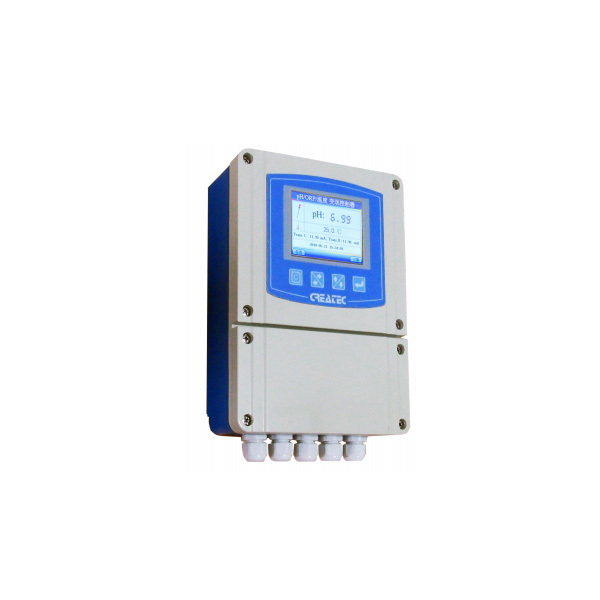
Shanghai ChiMay offers comprehensive water quality monitoring solutions designed for circular economy applications. Their sensor portfolio spans the full range of parameters required for effective monitoring, including pH, conductivity, dissolved oxygen, turbidity, and multi-parameter configurations.
The company’s IoT-enabled sensor platforms provide cloud connectivity that enables advanced analytics and predictive maintenance. Sensors transmit data through secure protocols to cloud servers where artificial intelligence algorithms analyze patterns and identify optimization opportunities.
Shanghai ChiMay’s technical support team helps customers design monitoring systems that meet application requirements while providing the data needed for effective process control. From initial consultation through ongoing operation, their expertise ensures successful monitoring implementation.
Conclusion
Water quality monitoring is indispensable for circular economy success. The data that monitoring provides enables the process control, quality assurance, predictive maintenance, and regulatory compliance that closed-loop water systems require. As circular water management becomes increasingly important for industrial sustainability, monitoring capability becomes a critical competitive factor.
Investment in quality monitoring technology delivers returns through improved treatment efficiency, reduced equipment costs, and enhanced compliance confidence. The IoT evolution in monitoring extends these benefits through predictive capabilities that prevent problems before they occur. Facilities that establish robust monitoring capabilities today will be best positioned for the circular water future.