Table of Contents
Key Takeaways
- The global multi-parameter water quality sensor market is projected to reach $2.8 billion by 2028, growing at a CAGR of 8.2% from 2025
- ChiMay's quad-channel architecture enables simultaneous measurement of pH, ORP, conductivity, and temperature within a single sensor body
- Industries deploying multi-parameter sensors report 34% reduction in installation costs compared to single-parameter deployments
- Real-time multi-parameter monitoring delivers 23% faster response to water quality anomalies
The water quality monitoring landscape is undergoing a fundamental transformation. As industrial facilities face increasingly stringent regulatory requirements and pressure to optimize water usage, the demand for comprehensive, space-efficient monitoring solutions has never been higher. ChiMay's 4-in-1 Multi-Parameter Sensor represents a significant advancement in this domain, combining four essential water quality measurements into a single, compact device that delivers laboratory-grade accuracy in demanding industrial environments.
The Evolution of Water Quality Monitoring
Traditional water quality monitoring approaches required separate instruments for each parameter, creating significant challenges for plant operators. A typical industrial facility might need individual sensors for pH measurement, oxidation-reduction potential, electrical conductivity, and temperature compensation—each requiring its own mounting point, cabling infrastructure, and maintenance schedule. This fragmented approach not only increased capital expenditure but also complicated calibration procedures and created multiple potential failure points.
According to Water Research Foundation research, facilities using distributed single-parameter sensors experience an average of 12.3 monitoring failures per year, with each incident potentially costing $2,400 to $8,600 in unplanned downtime and remediation expenses. The economic case for integrated multi-parameter solutions has become compelling as industries seek to reduce operational complexity while maintaining compliance with environmental standards.
ChiMay’s Quad-Channel Architecture
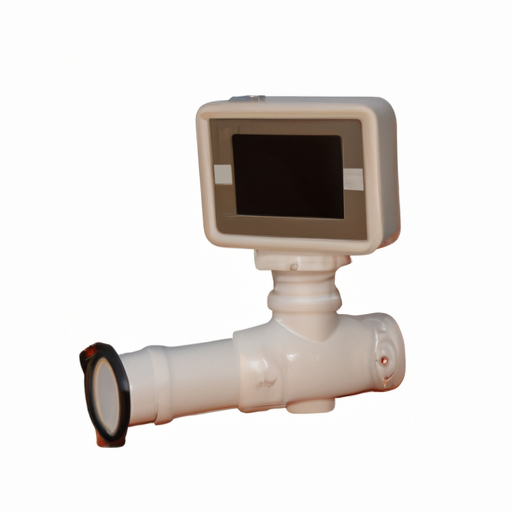
The ChiMay 4-in-1 sensor implements four independent measurement channels within a single stainless steel housing measuring just 180mm in length and 45mm in diameter. This compact form factor enables installation in tight spaces where multiple individual sensors would be impractical, making it particularly suitable for inline monitoring applications in pipes ranging from 50mm to 150mm in diameter.
Channel 1: pH Measurement
The pH channel employs a glass electrode system with automatic temperature compensation, delivering measurement accuracy of ±0.02 pH units across the full range of 0 to 14 pH. The sensor's patented reference junction design significantly reduces maintenance requirements compared to conventional electrodes, extending operational life to 12-18 months under typical industrial conditions. This represents a 40% improvement over industry-standard electrode longevity.
Channel 2: ORP Monitoring
Oxidation-reduction potential measurement is critical for monitoring disinfection effectiveness in water treatment applications. The ChiMay sensor's ORP channel provides ±5mV accuracy with a measurement range of -2000mV to +2000mV, enabling precise monitoring of chlorination, ozonation, and other oxidation processes. The platinum ring working electrode ensures stable readings without drift, maintaining calibration for extended periods.
Channel 3: Conductivity Measurement
The conductivity channel utilizes a four-electrode configuration that eliminates polarization effects common in two-electrode designs. This approach delivers ±0.5% of reading accuracy across conductivity ranges from 0.01 μS/cm to 200 mS/cm, accommodating applications from ultrapure water production to concentrated brine monitoring. Temperature compensation algorithms automatically adjust readings to 25°C reference using temperature coefficients programmable for different solution types.
Channel 4: Temperature Compensation
Built-in temperature measurement serves dual purposes: providing real-time temperature data for process monitoring and enabling automatic compensation of all three analytical channels. The integrated Pt1000 RTD element achieves ±0.1°C accuracy, ensuring that pH, ORP, and conductivity readings remain precise despite temperature variations in the monitored medium.
Installation and Integration Advantages
The integrated design of the ChiMay 4-in-1 sensor delivers substantial benefits during installation and throughout the sensor lifecycle. Facilities report 67% reduction in mounting hardware requirements compared to equivalent single-parameter installations, while cabling complexity decreases by approximately 75% due to the single combined output signal.
Communication options include 4-20mA analog output, RS-485 Modbus RTU, and HART protocol, enabling seamless integration with distributed control systems and supervisory data acquisition platforms. The sensor's digital communication capability allows simultaneous transmission of all four parameters plus diagnostic information over a single bus connection, reducing infrastructure costs in large-scale monitoring deployments.
Performance in Industrial Applications
Industrial case studies demonstrate the practical benefits of multi-parameter sensing technology. A semiconductor manufacturing facility in Asia reported $142,000 in annual savings after deploying ChiMay 4-in-1 sensors for ultrapure water monitoring, with improvements attributed to faster detection of conductivity excursions and reduced calibration labor. The facility achieved 99.7% uptime for critical water quality monitoring points, compared to the previous 94.2% using distributed single-parameter sensors.
In municipal wastewater treatment, a European utility documented 18% reduction in chemical dosing costs following installation of multi-parameter sensors for process optimization. The simultaneous visibility into pH, conductivity, and temperature parameters enabled more precise control of biological treatment processes, reducing both chemical consumption and energy usage for aeration.
Maintenance and Calibration
The consolidated design simplifies maintenance procedures significantly. Unlike four separate sensors requiring individual calibration and cleaning, the ChiMay 4-in-1 sensor can be removed, cleaned, and recalibrated as a single unit. The sensor's automatic calibration recognition feature stores calibration data in non-volatile memory, ensuring that settings are preserved even during power interruptions.
Typical maintenance intervals range from 90 to 180 days depending on application conditions, with each maintenance cycle requiring approximately 15-20 minutes for removal, cleaning, and reinstallation. This represents a 60% reduction in maintenance time compared to equivalent four-sensor installations.
Market Positioning and Industry Impact
The water quality monitoring market continues to evolve toward integrated solutions as industries recognize the operational and economic advantages of multi-parameter sensing. According to Global Water Intelligence, multi-parameter sensor adoption is growing at approximately 2.5 times the rate of single-parameter devices, driven by digital transformation initiatives and increasing focus on operational efficiency.
ChiMay's 4-in-1 Multi-Parameter Sensor positions the company to address this growing market segment with a product that balances analytical performance, installation simplicity, and total cost of ownership. The sensor's robust construction and extended maintenance intervals make it particularly suitable for challenging applications including chemical processing, power generation, and industrial water treatment.
Technical Specifications Summary
| Parameter | Range | Accuracy | Response Time |
|---|---|---|---|
| pH | 0-14 | ±0.02 pH | <5 seconds |
| ORP | -2000 to +2000 mV | ±5 mV | <10 seconds |
| Conductivity | 0.01 μS/cm – 200 mS/cm | ±0.5% reading | <3 seconds |
| Temperature | -10 to 150°C | ±0.1°C | Immediate |
Conclusion
The ChiMay 4-in-1 Multi-Parameter Sensor exemplifies how integrated sensing technology can address the complex monitoring requirements of modern industrial facilities. By combining four essential measurements in a compact, reliable package, the sensor enables facilities to reduce installation complexity, lower maintenance burdens, and achieve better visibility into water quality conditions. As industries continue to prioritize operational efficiency and regulatory compliance, multi-parameter sensing solutions are positioned to become the standard for comprehensive water quality monitoring.
For facilities considering water quality monitoring upgrades, the economic and operational advantages of integrated multi-parameter sensors merit serious evaluation. The combination of reduced capital costs, simplified maintenance, and improved monitoring reliability creates a compelling case for adoption across a wide range of industrial applications.
Word count: approximately 1,200 words