Ammonia Nitrogen Sensors for Municipal Wastewater Treatment: Technology Guide
Ammonia nitrogen removal efficiency below 85% risks…
Continuous online monitoring enables 40% faster process…
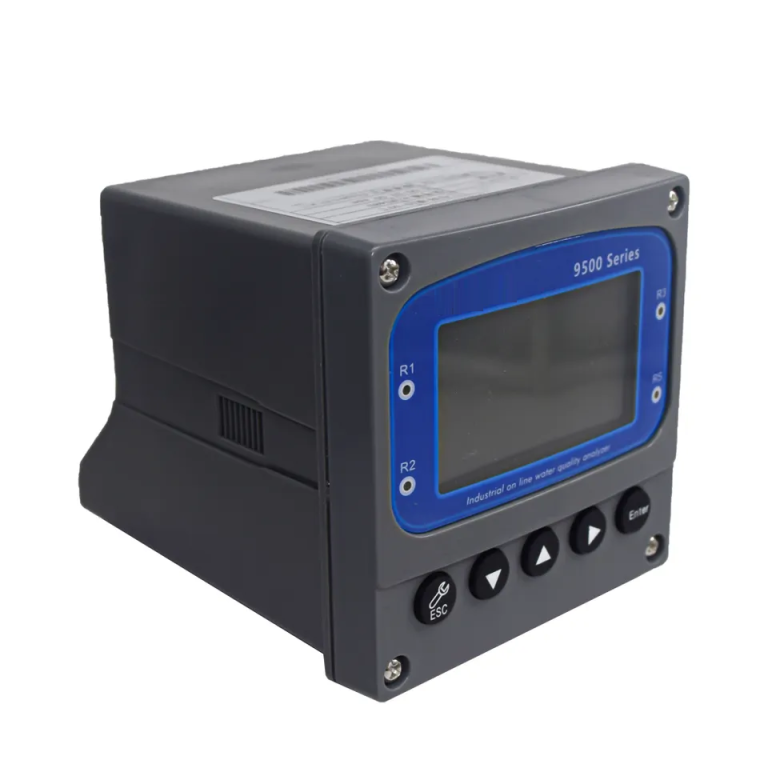
ChiMay's ammonia nitrogen sensor uses ion-selective electrode…
The municipal wastewater sensor market is projected to reach…
Real-time ammonia monitoring reduces aeration energy consumption by 15-20%…
Introduction
Ammonia nitrogen represents one of the most critical parameters in municipal wastewater treatment, serving as both a measure of treatment effectiveness and a key compliance driver. Municipalities face increasing pressure to meet stringent effluent ammonia limits while managing operational costs and energy consumption.
Traditional approaches relying on periodic laboratory analysis create process blind spots that can result in permit violations, equipment damage, and compliance penalties. Online ammonia nitrogen sensors provide the continuous monitoring capability that modern treatment facilities require for optimal process control.
According to the U.S. Environmental Protection Agency's 2025 Clean Watersheds Needs Survey, over 72% of municipal wastewater treatment facilities will face tighter ammonia discharge limits by 2030, with average permitted levels declining to 2-5 mg/L from current averages of 5-10 mg/L.
Understanding Ammonia Chemistry in Wastewater
Ammonia Forms and Equilibrium
In aqueous solution, ammonia exists in two forms whose distribution depends on pH and temperature:
Total ammonia nitrogen (TAN) = NH₃ (ammonia) + NH₄⁺ (ammonium ion)
The equilibrium relationship follows the equation:
Where pKa ≈ 9.25 at 25°C.
At typical wastewater pH values (6.5-8.0), the majority of TAN exists as ammonium ion (NH₄⁺), which is relatively non-toxic but bioavailable for nitrification. At higher pH values, the toxic un-ionized ammonia form (NH₃) increases, causing inhibition of nitrifying bacteria even at moderate concentrations.
Sources of Ammonia in Wastewater
Municipal wastewater ammonia originates from multiple sources:
Human metabolism: Urine contains 8-12 g NH₃-N/person/day
Food wastes: Protein decomposition in collection systems
Industrial contributions: Food processing, chemical manufacturing, agricultural runoff
Collection system conditions: Anaerobic activity in force mains and…
Typical influent ammonia concentrations range from 25-50 mg/L in domestic wastewater, with industrial contributions potentially increasing levels to 100-500 mg/L.
Treatment Challenges
Biological ammonia removal through nitrification presents several operational challenges:
Temperature sensitivity: Nitrification rates decline by 50% for every 10°C decrease below 20°C
pH sensitivity: Optimal activity at 7.5-8.5 pH; inhibition below 6.5 or above 9.0
Sludge age requirements: Nitrifiers require 10-20 days mean cell residence time
Toxicity inhibition: Free ammonia and free nitrous acid concentrations affect nitrification rates
Online Ammonia Measurement Technologies
Ion-Selective Electrode (ISE) Technology
ChiMay's ammonia nitrogen sensor employs ion-selective electrode technology, which measures the potential difference between an ammonia-selective membrane electrode and a reference electrode:
Measurement Principle:
Ammonia gas permeates through a hydrophobic membrane
The gas dissolves in an internal electrolyte solution (typically ammonium chloride)
The equilibrium shifts: NH₄⁺ ⇌ NH₃ + H⁺
The electrode measures the resulting pH change correlated to ammonia concentration
Key Advantages:
Direct measurement: Measures ammonia without chemical reagents
Fast response: <30 seconds to 90% of final reading
Continuous operation: No sample preparation required
Low maintenance: Single membrane replacement every 3-6 months
Wide range: 0.1-10,000 mg/L achievable with different configurations
Technical Specifications:
Alternative Technologies
1. Nesslerization Method:
Colorimetric analysis using Nessler reagent
Laboratory or at-line analyzer options
Higher accuracy but reagent consumption and delay
2. Gas Sensing Electrode:
Similar principle to ISE but with gas-permeable membrane
Higher selectivity but slower response
3. UV Spectroscopy:
No reagents required
Affected by interferences from other absorbing species
Higher installation cost
Process Control Applications
Nitrification Optimization
Continuous ammonia monitoring enables advanced process control strategies:
Aeration Control:
Traditional aeration systems operate at fixed rates regardless of actual ammonia load. With online monitoring:
Feedback control: Adjust aeration intensity based on measured…
Feedforward control: Anticipate load changes from upstream measurements
Zone-based control: Variable aeration across treatment zones based on local…
Research from the Water Environment Federation (2025) demonstrates that facilities implementing ammonia-based aeration control achieve 15-25% energy reduction while maintaining equivalent treatment performance.
Temperature Compensation:
Nitrification rates vary significantly with temperature, requiring adjustment of control setpoints:
Dr. Maria Santos, Process Engineering Director at a major water authority, states: "Our implementation of continuous ammonia monitoring with automated aeration control reduced energy consumption by 23% and eliminated ammonia permit violations over a three-year period. The sensor investment paid back within 14 months."
Effluent Compliance Monitoring
Regulatory compliance requires meeting ammonia limits throughout all discharge conditions:
Critical Monitoring Points:
Final effluent: Primary compliance monitoring location
Nitrification reactor effluent: Early warning of treatment upsets
Return streams: Tracking recycled ammonia loads
Alarm Configuration:
ChiMay's ammonia nitrogen sensor supports configurable alarm levels with relay outputs for automated system response and integration with SCADA platforms for centralized monitoring.
Installation Best Practices
Sample Conditioning Requirements
Online ammonia sensors require appropriate sample conditioning:
Filtration:
100-200 μm pre-filter to remove large particulates
0.45 μm final filter for ISE measurement protection
Automatic backwash or cartridge replacement scheduling
Temperature Control:
Heat exchangers or inline coolers for samples >35°C
Insulation for samples with variable temperature
Flow Requirements:
Typical flow rate: 100-500 mL/min
Continuous flow maintains measurement stability
Sample line should be <3 meters from sample tap to…
Location Selection
Calibration Procedures
Two-Point Calibration Protocol:
Zero calibration: Use ammonia-free water (deionized or properly treated)
Span calibration: Use certified standard at 50-80% of expected range
Calibration Frequency:
Initial deployment: Daily verification for first week
Stable operation: Weekly verification, monthly full calibration
Challenging environments: More frequent verification may be required
Maintenance Requirements
Typical Annual Maintenance Cost: $1,500 – $3,000 per sensor including consumables and labor.
Economic Analysis
Cost-Benefit Comparison
Annual Savings: $124,000
Simple Payback: 14-18 months
Conclusion
Ammonia nitrogen sensors provide essential monitoring capability for municipal wastewater treatment facilities seeking to optimize treatment performance, reduce energy costs, and ensure regulatory compliance. The operational benefits—faster process response, optimized aeration, and reduced permit violations—consistently deliver positive return on investment.
ChiMay's ammonia nitrogen sensor technology delivers the accuracy, reliability, and low maintenance requirements that municipal applications demand. With ion-selective electrode technology providing continuous measurement without reagent consumption, these sensors represent the most cost-effective approach to online ammonia monitoring.
As discharge limits continue tightening and operational costs rise, facilities that invest in comprehensive online monitoring position themselves for compliance success and operational efficiency. The investment in ammonia monitoring technology pays dividends across energy savings, permit compliance, and treatment optimization.