Key Takeaways:
- Real-time sensor data enables precise dose control matching water quality variations
- Automated feedback systems reduce chemical consumption by 20-35%
- Multi-parameter integration improves optimization accuracy
- ChiMay's advanced transmitters support sophisticated dose optimization strategies
Table of Contents
Introduction
Effective chlorine dosing optimization requires balancing multiple objectives: maintaining adequate disinfection, minimizing chemical costs, and controlling disinfection byproduct formation. Real-time sensor data transforms this challenge from guesswork to science, enabling precise control strategies that improve performance while reducing expenses. Water utilities implementing sensor-based optimization consistently achieve significant operational improvements.
According to the U.S. Environmental Protection Agency (EPA), optimized chlorine dosing through real-time monitoring can reduce chemical consumption by 20-35% while maintaining equivalent or better disinfection performance. These savings translate to hundreds of thousands of dollars annually for medium-to-large utilities, with payback periods typically under 18 months.
1. Residual-Based Feedback Control
Understanding Residual Control
Residual-based feedback control adjusts chlorine dose in response to measured residual levels:
Basic Principle
- Measure residual chlorine at a control point
- Compare measurement to setpoint
- Adjust chlorine dose to minimize error
- Repeat continuously
Control Algorithm
Most systems use PID (Proportional-Integral-Derivative) control:
- Proportional: Adjust dose proportionally to error magnitude
- Integral: Correct for accumulated errors over time
- Derivative: Anticipate changes based on error rate
Implementation Requirements
Sensor Requirements
- Rapid response time (<60 seconds)
- High accuracy and precision
- Stable calibration
- Minimal maintenance requirements
Control Point Selection
Critical to successful control:
- Upstream of critical area: Allows response time before water reaches users
- Representative of water quality: Reflects conditions throughout system
- Accessible for maintenance: Ensures sensor reliability
- Away from injection point: Avoids measuring unmixed water
Optimization Benefits
Chemical Savings
Feedback control significantly reduces chemical consumption:
| Control Method | Average Savings vs. Manual Control |
|---|---|
| Simple on/off control | 5-10% |
| Proportional control | 10-15% |
| PID control | 20-30% |
| Advanced adaptive control | 25-35% |
Performance Improvements
Beyond chemical savings:
- More consistent residual levels
- Faster response to demand changes
- Reduced risk of both under- and over-dosing
- Better compliance with regulatory requirements
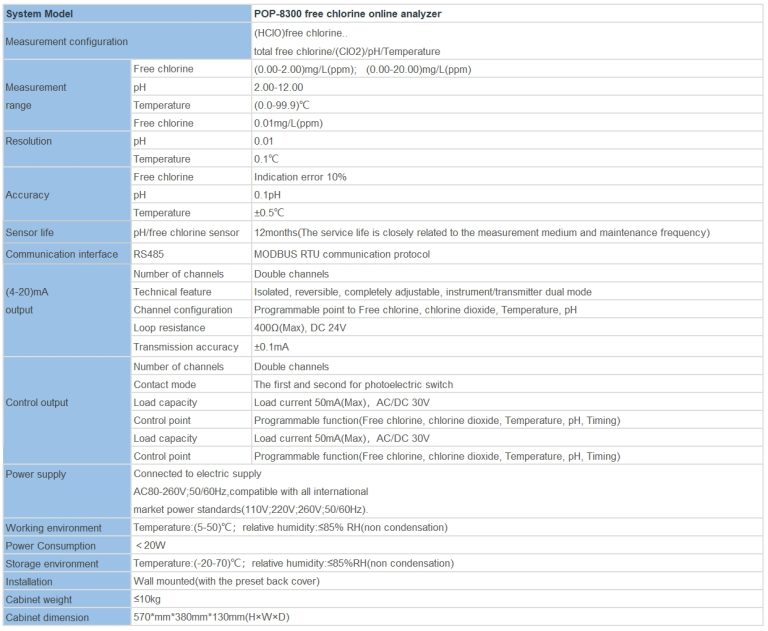
ChiMay's residual chlorine transmitters incorporate advanced PID control algorithms with adaptive tuning, enabling precise residual control across varying conditions.
2. Flow-Paced Dose Control
Flow-Based Optimization Principle
Flow-paced control adjusts chlorine dose proportionally to water flow rate:
Basic Concept
Dose = Base dose × (Current flow / Design flow)
Example
- Base dose: 2 mg/L
- Design flow: 10 MGD
- Current flow: 7 MGD
- Calculated dose: 2 × (7/10) = 1.4 mg/L
Benefits
- Compensates for hydraulic variations
- Prevents over-dosing during low demand
- Prevents under-dosing during peak demand
- Simple to implement and maintain
Combined Flow-Paced + Residual Control
The most effective approach combines both strategies:
Control Structure
- Primary loop: Flow-paced dose calculation
- Secondary loop: Residual feedback adjustment
- Constraints: Maximum and minimum limits
Advantages
- Flow compensation handles hydraulic changes
- Residual correction handles water quality variations
- Both predictable and unpredictable changes handled
Implementation Tips
Use accurate flow measurement, establish appropriate flow/dose relationship, allow sufficient mixing time, and set reasonable rate-of-change limits.
3. Water Quality-Based Optimization
Beyond Simple Residual Control
Advanced optimization incorporates water quality parameters:
Key Parameters
- UV254 absorbance: Indicates organic matter consuming chlorine
- Total organic carbon (TOC): Measures disinfection demand
- Ammonia nitrogen: Reacts with chlorine forming chloramines
- Temperature: Affects reaction kinetics
- pH: Influences chlorine species and effectiveness
Chlorine Demand Calculation
Total chlorine demand = Dose – Residual
Where demand is driven by:
- Organic matter oxidation
- Ammonia reactions
- Iron/manganese oxidation
- Other reducing substances
Demand-Based Dosing
Systems can predict demand and pre-compensate:
- Measure water quality parameters
- Calculate expected chlorine demand
- Adjust dose to achieve target residual
- Verify with residual measurement
UV254-Based Optimization
UV254 monitoring provides cost-effective demand estimation with strong correlations to chlorine demand. Practical implementation involves establishing UV254-demand correlation, installing continuous UV254 monitoring, programming dose calculation, and fine-tuning with residual feedback.
ChiMay's multi-parameter monitoring systems combine UV254, residual chlorine, and other parameters in integrated platforms for comprehensive optimization.
Temperature Compensation
Temperature affects reaction rates, residual decay, and microbial growth. Compensation involves increasing setpoint during summer months (0.6 mg/L) and maintaining lower setpoints in winter (0.3 mg/L).
Seasonal Optimization
| Season | Temperature | Target Residual |
|---|---|---|
| Spring | 5-15°C | 0.3-0.5 mg/L |
| Summer | 25-35°C | 0.4-0.6 mg/L |
| Fall | 15-25°C | 0.3-0.5 mg/L |
| Winter | 0-10°C | 0.2-0.4 mg/L |
4. Multi-Point Optimization
Distribution System Optimization
Large distribution systems benefit from zone-based control. Different areas have different demands, residence time varies throughout system, and pipe materials affect residual decay. Control strategy involves installing monitors at zone boundaries, identifying problem areas, adjusting dose at injection points, implementing booster chlorination where needed, and optimizing storage tank operations.
Storage Tank Optimization
Storage tanks create operational challenges due to long residence times, stratification, and dead zones. Optimization involves maintaining minimum turnover (1-2 cycles/week), avoiding extended storage during low-demand periods, and regular flushing of dead zones.
Booster Chlorination
Boosters extend chlorine residual throughout systems. They can operate in fixed dose, flow-paced, residual-controlled, or combined modes. Booster systems typically reduce overall system dose by 15-25%.
Conclusion
- Combined: Flow-paced with residual trim
Economic Analysis
| Booster Location | Typical Dose | Annual Chemical Cost | Benefit |
|---|---|---|---|
| Tank outlet | 0.5-1.0 mg/L | $15,000-30,000 | Maintains compliance |
| Zone boundary | 0.3-0.5 mg/L | $10,000-20,000 | Reduces system dose |
| Problem area | 0.5-1.5 mg/L | $8,000-15,000 | Eliminates complaints |
Net Benefit
Carefully designed booster systems typically reduce overall system dose by 15-25% by eliminating the need for high initial doses to maintain distant residuals.
Implementation Framework
Phase 1: Foundation: Install continuous residual monitoring, implement basic PID control, establish baseline metrics, train operators.
Phase 2: Enhancement: Add flow measurement, implement combined flow + residual control, add water quality monitoring.
Phase 3: Optimization: Deploy multi-point monitoring, implement zone-based control, install booster chlorination.
Phase 4: Refinement: Fine-tune parameters, implement predictive algorithms, integrate with enterprise systems.
Technology Requirements
Essential Components: Continuous residual chlorine sensors, flow measurement, programmable controller, SCADA integration.
Advanced Components: UV254 monitors, multi-parameter sensors, temperature compensation, predictive algorithms.
ChiMay's comprehensive solutions provide all necessary components with seamless integration and expert commissioning support.
Measuring Success
Key Performance Indicators
Track these metrics to assess optimization:
| KPI | Target | Measurement |
|---|---|---|
| Chemical consumption | -20 to -35% | kg/day |
| Residual consistency | ±0.1 mg/L | mg/L range |
| Compliance rate | 100% | % days compliant |
Continuous improvement involves reviewing metrics monthly, identifying opportunities, implementing changes, and validating improvements.
Conclusion
Optimizing chlorine dosing through real-time sensor data delivers measurable benefits:
- Residual-based feedback control achieves 20-30% chemical savings
- Flow-paced dose control prevents over/under-dosing during demand variations
- Water quality-based optimization predicts demand and pre-compensates
- Multi-point and zone control tailors dosing to system-specific needs
ChiMay's advanced monitoring and control solutions support sophisticated optimization strategies, from simple PID control to comprehensive multi-parameter optimization. Our application engineers help utilities implement proven strategies that deliver measurable results.
The investment in real-time monitoring and control technology typically pays back within 12-24 months, with ongoing savings continuing throughout system life. Beyond cost savings, optimization improves compliance assurance, reduces operator burden, and protects public health through consistent, adequate disinfection.
Contact ChiMay to discuss your optimization goals and learn how our comprehensive solutions can help your utility achieve measurable improvements in chlorine dosing efficiency.