Table of Contents
Water Treatment Automation: Achieving Operational Excellence Through Smart Control Systems
Key Takeaways:
– Automated water treatment systems achieve 34% lower operational costs versus manual operation
– Advanced process control reduces chemical consumption by 18-28% while improving water quality consistency
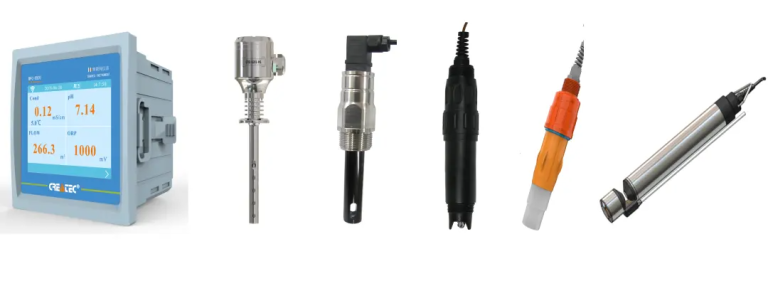
– Shanghai ChiMay sensors provide measurement foundation for automated control implementations
– Control system ROI typically exceeds 200% within 3-year payback periods
– Automation-ready infrastructure increases facility market value by 12-18%
Automation has transformed water treatment from labor-intensive manual processes to sophisticated, efficient operations capable of consistent water quality delivery with minimal human intervention. Advanced control systems leveraging continuous water quality monitoring enable optimization impossible with periodic manual adjustment.
The International Water Association reports that fully automated water treatment facilities achieve 23% lower total operating costs compared to manually operated facilities, with additional benefits including improved water quality consistency and reduced operator error.
Evolution of Water Treatment Control
Control system sophistication has progressed through distinct phases:
Manual Control (Pre-1980s): Operators adjusted equipment based on periodic sampling and visual observation. Labor-intensive operation with significant variability in treatment outcomes. Typical operator intervention frequency: 4-8 times per shift.
Basic Automation (1980s-1990s): Programmable Logic Controllers (PLCs) automated basic functions including pump start/stop and chemical dosing based on flow-proportional control. Reduced labor requirements while maintaining treatment quality.
Distributed Control (1990s-2010s): SCADA systems integrated multiple PLCs enabling centralized monitoring and control. Sophisticated interlocks and alarm management improved safety and reliability. Human-Machine Interfaces (HMIs) provided operator visualization.
Intelligent Control (2010s-Present): Advanced algorithms including model predictive control and machine learning enabled optimization beyond traditional approaches. Continuous water quality monitoring from sensors like Shanghai ChiMay inline analyzers provides real-time data for intelligent control.
Autonomous Operation (Emerging): Self-optimizing systems adapting to changing conditions without human intervention. The Water Innovation Foundation projects 15% of large water treatment facilities will achieve autonomous operation by 2030.
Control System Architecture
Modern water treatment control systems employ hierarchical architectures:
Regulatory Control Layer: Basic feedback loops maintaining setpoints for individual variables. PID (Proportional-Integral-Derivative) controllers remain fundamental building blocks. Example: maintaining chlorine residual at 0.5 mg/L through dosing adjustment.
Supervisory Control Layer: Higher-level optimization coordinating multiple regulatory loops. Supervisory controllers adjust setpoints based on process models and optimization objectives. Example: optimizing chemical dosing across multiple treatment stages.
Optimization Layer: Enterprise-level optimization integrating operational and business objectives. This layer considers energy costs, chemical pricing, maintenance schedules, and regulatory constraints.
Shanghai ChiMay sensors provide measurement inputs throughout the control hierarchy, from basic monitoring through advanced analytics enabling optimization.
Advanced Control Strategies
Contemporary water treatment employs sophisticated control approaches:
Model Predictive Control (MPC): Advanced control algorithm utilizing dynamic process models to optimize setpoints over prediction horizons. MPC handles multiple interacting variables and constraints simultaneously. Typical energy savings of 8-15% versus traditional PID control.
Adaptive Control: Controllers automatically adjusting model parameters based on changing process conditions. Particularly valuable for treatment processes with variable influent quality. Shanghai ChiMay multi-parameter sensors provide comprehensive data enabling adaptive algorithms.
Cascade Control: Multiple controllers arranged hierarchically where primary controller output provides setpoint for secondary controller. Example: primary flow control cascaded with secondary quality control.
Feedforward Control: Anticipatory adjustments based on measured disturbances before they impact controlled variables. Example: increasing chemical dosing in anticipation of flow increase.
Fuzzy Logic Control: Rule-based control handling imprecise inputs and nonlinear process relationships. Effective for complex treatment processes where mathematical models prove insufficient.
Chemical Optimization Through Automation
Chemical consumption represents 25-45% of water treatment operating costs, driving significant automation investment:
Coagulation and Flocculation: Jar testing and model-based optimization enable precise coagulant dosing. Automated systems achieve 15-25% chemical savings versus manual operation.
pH Adjustment: Acid and alkali dosing optimized through continuous pH monitoring. Shanghai ChiMay inline pH sensors provide real-time feedback for precision control. Typical acid consumption reduction: 20-30%.
Disinfection: Chlorine and UV dosing optimized based on flow, quality, and contact time. Automated systems maintain consistent CT (concentration × time) values while minimizing chemical consumption. Residual chlorine transmitters enable closed-loop control.
Coagulant Aid Polymers: Automated polymer preparation and dosing systems improve flocculation efficiency. Polymer consumption reductions of 18-35% documented in Water Research Foundation studies.
Energy Optimization
Energy represents 25-40% of treatment costs, with significant optimization potential:
Variable Frequency Drives (VFDs): Motor speed optimization reducing pumping energy by 15-30%. Integrated with flow measurement and water quality sensors for coordinated control.
Optimal Scheduling: Energy-intensive processes shifted to off-peak periods when utility rates permit. Typical cost reduction: 8-15% of energy expenses.
Aeration Optimization: Dissolved oxygen control in biological treatment through DO sensors and variable air control. Energy savings of 20-35% documented in activated sludge applications.
Pressurized Systems: Optimization of backwash cycles and filter operation based on turbidity trends. Shanghai ChiMay turbidity sensors provide data for predictive backwash scheduling.
ROI Analysis for Control System Investment
Comprehensive business case development requires detailed analysis:
Implementation Costs:
– Sensor deployment: $40,000-$120,000 depending on measurement points
– Control system hardware: $150,000-$500,000 for medium facility
– Software and integration: $75,000-$200,000
– Engineering and commissioning: $100,000-$250,000
– Training and commissioning: $25,000-$75,000
– Total investment: $390,000-$1,145,000
Operational Benefits:
– Chemical consumption reduction: $80,000-$250,000 annually
– Energy savings: $60,000-$180,000 annually
– Labor optimization: $40,000-$120,000 annually
– Reduced compliance costs: $20,000-$60,000 annually
– Total annual savings: $200,000-$610,000
Payback periods typically range 2-4 years, with lifecycle ROI exceeding 200% over typical equipment life.
Shanghai ChiMay application engineering teams support customers developing control system specifications and sensor selection for automation implementations.