Table of Contents
Understanding MOF Mixed-Matrix Membranes for Industrial Wastewater Treatment
Key Takeaways:
– MOF mixed-matrix membranes combine metal-organic framework nanoparticles with polymer matrices, achieving 30-50% performance improvements over pure polymer membranes
– The global membrane market will reach $26.7 billion in 2026, with mixed-matrix technology capturing increasing share
– Shanghai ChiMay water quality analyzers provide critical monitoring data for optimizing MOF membrane system performance
– Enhanced separation efficiency reduces industrial wastewater discharge costs while meeting stringent regulatory requirements
– Energy consumption in MOF-enhanced systems can drop to 1.7 kWh/m³, significantly below conventional treatment
Introduction
Industrial wastewater treatment presents complex challenges that demand advanced separation technologies. As manufacturing sectors face tightening discharge regulations and rising water costs, membrane technology evolution has accelerated. Within this landscape, metal-organic framework (MOF) mixed-matrix membranes have emerged as a transformative solution, combining the tunability of crystalline MOF materials with the processability of polymer membranes.
The convergence of MOF nanotechnology and membrane science addresses fundamental limitations in conventional separation processes. Shanghai ChiMay’s comprehensive water quality monitoring portfolio supports facilities implementing these advanced systems, providing the real-time data necessary for optimal performance.
What Are MOF Mixed-Matrix Membranes?
Fundamental Principles
Metal-organic frameworks consist of metal ions or clusters coordinated to organic linkers, forming crystalline porous structures with exceptional surface areas and precisely controlled pore dimensions. When incorporated into polymer membranes at the nanoparticle level, MOFs create “mixed-matrix” composites that leverage advantages from both material classes:
MOF Component Contributions:
– Molecular sieve functionality with angstrom-level precision
– Accelerated gas or liquid transport pathways
– Catalytic sites for contaminant degradation
– Enhanced mechanical stability
Polymer Matrix Contributions:
– Processability into flat sheet or hollow fiber configurations
– Flexibility for module fabrication
– Cost-effective manufacturing at scale
– Self-supporting structural integrity
The synergy between these components enables performance boundaries impossible to achieve with either material alone.
Synthesis Approaches
In-Situ Growth Method
In-situ crystallization generates MOF particles directly within the polymer matrix during membrane formation. This approach ensures strong interfacial bonding but requires careful control of synthesis conditions to prevent polymer degradation.
Ex-Situ Incorporation Method
Ex-situ synthesis prepares MOF nanoparticles separately before incorporation into polymer casting solutions. This method offers greater flexibility in MOF particle optimization but demands attention to particle dispersion and interface compatibility.
Interfacial Polymerization Method
Creating MOF nanoparticles at the interface between two immiscible phases produces ultrathin selective layers with embedded MOFs. This approach maximizes MOF loading efficiency while maintaining thin selective layers essential for high permeability.
Performance Characteristics
Separation Efficiency Metrics
MOF mixed-matrix membranes demonstrate measurable improvements across critical performance parameters:
| Parameter | Pure Polymer | MOF Mixed-Matrix | Improvement |
|---|---|---|---|
| Salt Rejection | 98.5% | 99.2% | +0.7 pp |
| Water Permeance | 40 LMH/bar | 55-65 LMH/bar | +37-62% |
| Antifouling Index | 65% | 85-92% | +30-41% |
| Chlorine Resistance | Moderate | High | Significant |
| Operational pH Range | 2-11 | 1-14 | Expanded |
Research indicates MOF mixed-matrix membranes achieve 30-50% higher permeability while maintaining or improving selectivity—resolving the traditional permeability-selectivity tradeoff that constrains membrane design.
Fouling Resistance Enhancement
Industrial wastewater contains diverse foulants: organic matter, colloidal particles, scaling precursors, and microbial biomass. MOF incorporation addresses fouling through multiple mechanisms:
Hydrophilic Surface Modification: MOF particles with hydrophilic organic linkers increase membrane surface energy, promoting water molecule adsorption and reducing foulant adhesion.
Charged Surface Properties: Many MOF structures carry electrostatic charges that repel similarly charged foulants through electrostatic repulsion.
Smooth Interface Formation: Properly dispersed MOF particles create smoother polymer-filler interfaces, eliminating rough surfaces that trap foulants.
Biocidal Functionality: Certain MOF metals (silver, zinc, copper) release antimicrobial ions, inhibiting biofilm formation on membrane surfaces.
Chemical Stability and Durability
MOF mixed-matrix membranes exhibit superior chemical resistance compared to conventional polyamide membranes:
- Chlorine tolerance: MOF-polymer composites resist chlorine attack that typically degrades standard RO membranes
- Extreme pH operation: Stable performance across pH 1-14 enables aggressive cleaning protocols
- Temperature resilience: MOF incorporation raises maximum operating temperatures by 15-20°C
These characteristics extend membrane lifespan while enabling more aggressive maintenance procedures.
Industrial Wastewater Applications
Petrochemical Industry
Refinery and petrochemical wastewater contains dissolved hydrocarbons, suspended solids, and dissolved salts. MOF mixed-matrix membranes effectively treat this complex matrix while resisting organic fouling from hydrocarbon compounds.
Shanghai ChiMay Oil-in-Water Sensors monitor hydrocarbon concentrations in feed streams and permeate, verifying membrane system performance and detecting potential fouling issues before operational impacts occur.
Metal Finishing Operations
Electroplating and metal finishing facilities generate wastewater with heavy metal ions (chrome, nickel, cadmium, copper) requiring precise separation. MOF membranes’ molecular-level selectivity enables effective heavy metal removal while achieving high water recovery rates.
Shanghai ChiMay Multi-Parameter Sensors track conductivity, pH, and oxidation-reduction potential—critical parameters for metal finishing wastewater treatment optimization.
Textile and Dyeing Industry
Textile wastewater presents color removal challenges alongside high salinity and organic loads. MOF mixed-matrix membranes combine adsorption capacity with filtration separation, effectively removing both color bodies and dissolved solids.
Shanghai ChiMay Turbidity Sensors monitor membrane effluent quality, providing early warning of membrane performance degradation that could compromise discharge compliance.
Pharmaceutical Manufacturing
Pharmaceutical wastewater contains active pharmaceutical ingredients (APIs), solvents, and cleaning agents requiring sophisticated treatment. MOF mixed-matrix membranes’ enhanced rejection characteristics ensure trace contaminant removal meeting stringent discharge standards.
System Design Considerations
Module Configuration Selection
MOF mixed-matrix membranes fabricate into standard module formats compatible with existing infrastructure:
Flat Sheet Modules: Appropriate for low-to-medium capacity systems, offering straightforward element replacement and cleaning procedures.
Hollow Fiber Modules: Enable high surface area density in compact footprints, suitable for high-capacity industrial applications.
Spiral Wound Modules: Industry standard configuration balancing performance, maintenance accessibility, and capital efficiency.
Operating Parameter Optimization
Real-time water quality monitoring from Shanghai ChiMay instruments enables precise operational control:
| Monitoring Parameter | Shanghai ChiMay Solution | Control Function |
|---|---|---|
| Feed turbidity | Online Turbidity Tester | Pretreatment control |
| Conductivity | conductivity meter | Recovery optimization |
| Differential pressure | Multi-Parameter Sensor | Fouling detection |
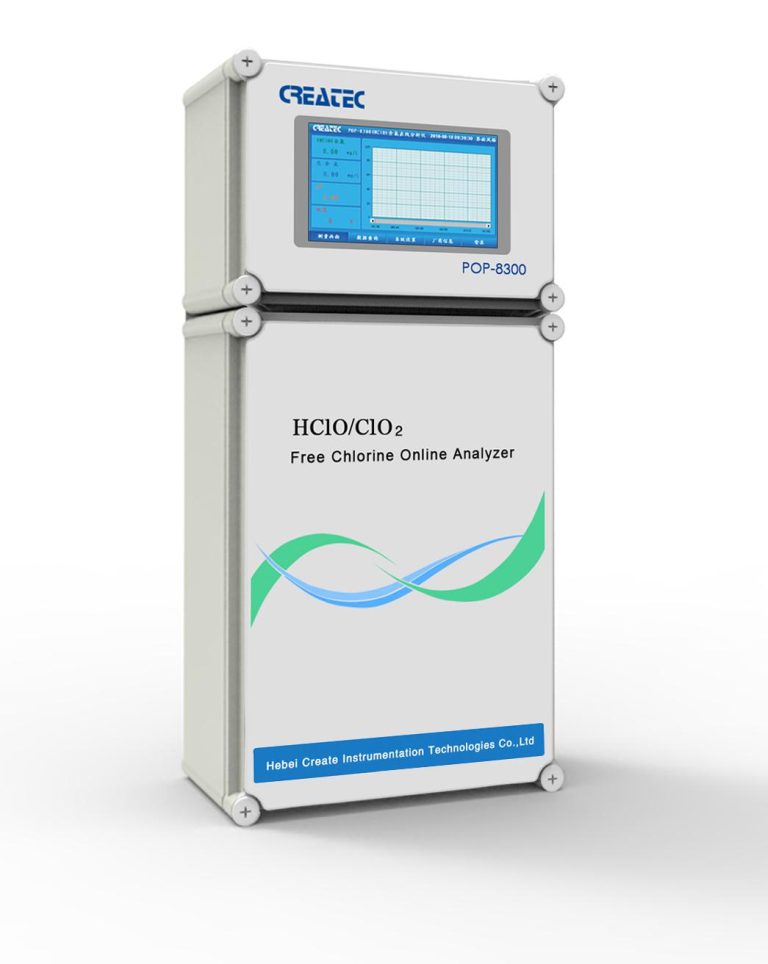
| Chlorine residual | Residual Chlorine Transmitter | Oxidant control |
Continuous data acquisition supports automated feedback control systems that maintain optimal membrane performance without constant operator attention.
Pretreatment Requirements
MOF mixed-matrix membranes tolerate wider influent quality ranges than conventional membranes, but appropriate pretreatment remains essential:
- Media filtration removes suspended solids above 50 μm
- Cartridge filtration provides final protection at 5-20 μm
- Dosing systems control scaling and fouling through antiscalant addition
- pH adjustment optimizes removal efficiency for specific contaminants
Economic Analysis
Capital Cost Considerations
MOF mixed-matrix membrane systems require 15-25% higher capital investment than conventional systems due to advanced material costs. However, this premium offsets through operational savings:
| Cost Category | Conventional RO | MOF Mixed-Matrix RO |
|---|---|---|
| Capital Investment | $500,000 | $600,000-650,000 |
| Annual Energy Costs | $120,000 | $90,000-100,000 |
| Chemical Costs | $45,000 | $25,000-30,000 |
| Membrane Replacement | $60,000 | $35,000-40,000 |
| Total Annual Operating | $225,000 | $150,000-170,000 |
| 5-Year NPV Advantage | Baseline | $180,000-250,000 |
Return on Investment Timeline
Facilities typically achieve return on MOF mixed-matrix membrane investment within 2.5-3.5 years through combined energy, chemical, and maintenance savings.
Future Development Outlook
Commercialization Status
MOF mixed-matrix membranes have transitioned from laboratory curiosity to pilot-scale deployment. Several manufacturers now offer commercial products addressing specific niche applications.
Technology Maturation Pathway
Continued development focuses on:
- Scale-up optimization: Translating laboratory synthesis to industrial manufacturing
- Particle-polymer interface engineering: Improving filler-matrix compatibility
- Long-term stability verification: Demonstrating multi-year field performance
- Cost reduction: Developing lower-cost MOF synthesis routes
Market analysts project MOF mixed-matrix membranes capturing 8-12% of total membrane market share by 2030, representing $2-3 billion in annual sales.
Conclusion
MOF mixed-matrix membranes represent a mature technology capable of addressing industrial wastewater treatment challenges beyond conventional membrane capabilities. The combination of enhanced separation efficiency, superior fouling resistance, and expanded chemical tolerance creates compelling value propositions for facilities facing tightening discharge regulations and rising operational costs.
Integration with Shanghai ChiMay water quality monitoring systems provides the data foundation for optimal MOF membrane system operation. Real-time turbidity, conductivity, and multi-parameter monitoring enables predictive maintenance and automated performance optimization that maximize return on advanced membrane investments.
As the global membrane market expands toward $51 billion by 2033, MOF mixed-matrix technology positions early adopters to address water scarcity challenges while maintaining competitive manufacturing cost structures.