Table of Contents
Key Takeaways
- Nephelometric turbidity measurement accuracy degrades by 15-40% without proper sensor maintenance in wastewater applications
- The EPA requires turbidity monitoring below 1 NTU for filtered drinking water, demanding sensor accuracy exceeding ±0.05 NTU
- Wastewater treatment facilities achieving >95% turbidity removal report 23% lower chemical costs than facilities with inconsistent monitoring
- Online turbidity monitoring reduces filter backwash frequency by 31% while maintaining compliance
Turbidity measurement provides essential process control and compliance monitoring throughout wastewater treatment operations. From raw sewage screening to final effluent discharge, turbidity sensors inform critical decisions about chemical dosing, filtration optimization, and regulatory compliance. Yet turbidity measurement in wastewater presents unique challenges that can significantly impact accuracy if not properly understood and managed.
Understanding Turbidity Measurement Fundamentals
What Turbidity Represents
Turbidity quantifies water's optical properties—the scattering and absorption of light by suspended particles. Unlike direct particle counting, turbidity measurement provides an indirect indication of suspended solids concentration that correlates with visual clarity and treatment effectiveness.
The relationship between turbidity and suspended solids concentration varies significantly with particle characteristics:
- Fine particles (clay, colloids) scatter light efficiently, producing high turbidity relative to mass concentration
- Coarse particles (sludge flocs) scatter light less efficiently per unit mass
- Organic particles have different refractive indices than mineral particles
This variability means turbidity must be calibrated against application-specific reference standards rather than absolute particle measurements.
Nephelometric Measurement Principle
Modern turbidity sensors employ nephelometric principles, measuring scattered light at a 90-degree angle to the incident light beam. This geometry optimizes sensitivity to fine particles while minimizing interference from forward-scattering coarse particles.
The Formazin nephelometric unit (FNU) or nephelometric turbidity unit (NTU) represents the standard calibration reference, based on the light-scattering properties of Formazin polymer suspensions.
EPA drinking water standards require turbidity monitoring at 0.1 NTU sensitivity for filtered water systems. Wastewater discharge permits typically specify limits between 2-50 NTU depending on receiving water sensitivity and treatment technology.
Factor 1: Sensor Optical Path Contamination
The Challenge in Wastewater
Wastewater contains diverse contaminants that coat sensor optical surfaces:
Biological Fouling: Bacteria, fungi, and algae colonize sensor windows, creating light-absorbing and scattering layers. A biofilm of only 50 μm thickness can reduce measured turbidity by 5-15%.
Inorganic Scaling: Calcium carbonate, iron hydroxide, and silicate scales precipitate on sensor surfaces, particularly in high-hardness or high-iron wastewaters.
Grease and Oil: Oily wastewaters create hydrophobic coatings that scatter light unpredictably and prevent proper cleaning.
Fiber and Debris: Long fibers (from personal care products, textile wastewater) can wrap around sensors, completely blocking light paths.
Impact on Measurement
Contamination effects vary by turbidity level:
The percentage error is larger at low turbidity because the contamination layer represents a larger proportion of the total signal.
Mitigation Strategies
Self-Cleaning Sensors: Ultrasonic cleaners, air bubbles, or mechanical wipers prevent contamination accumulation. Initial cost is higher, but maintenance burden decreases significantly.
Automatic Retractability: Sensors mounted on retractable assemblies can be extracted for manual cleaning without process interruption.
Proper Installation Location: Avoid low-flow zones, air entrainment points, and areas with visible debris accumulation. Install sensors in turbulent flow zones where natural cleaning action occurs.
Cleaning Schedule: Establish regular cleaning intervals based on fouling rate at each installation. Document cleaning activities to identify fouling trends.
Factor 2: Stray Light and Reference Detector Drift
Understanding Stray Light
The "stray light" problem in turbidity measurement occurs when detector electronics receive light that has not interacted with the sample. This stray light adds to the measured signal, causing low turbidity readings to be artificially elevated.
In clean water applications, stray light effects are negligible. In wastewater, sample turbidity itself generates light scatter that can be misinterpreted as stray light, causing non-linear response at high turbidity levels.
Calibration at low range (using low-turbidity standards) assumes linear response that may not exist at high turbidity. A sensor calibrated at 0-10 NTU may read 20-30% low when measuring 500 NTU samples.
Reference Detector Compensation
Advanced turbidity sensors incorporate reference detectors that measure incident light intensity independently of sample scatter. This allows:
- Compensation for LED output drift over time
- Correction for window fouling effects
- Detection of optical component degradation
The reference detector ratio method calculates turbidity as:
Turbidity = (Sample Signal / Reference Signal) × Calibration Constant
When reference detector output drifts, turbidity calculations become inaccurate. Research published in Talanta found that reference detector drift accounts for 23% of long-term turbidity measurement errors in field-deployed sensors.
Calibration Verification
Regular calibration verification usingFormazin primary standards ensures measurement integrity:
Primary Standards: NIST-traceable Formazin suspensions with certified turbidity values
Secondary Standards: Stable polymer-based standards for field verification
Calibration Frequency: Monthly for critical compliance monitoring; quarterly for process control applications
ChiMay Turbidity Solutions
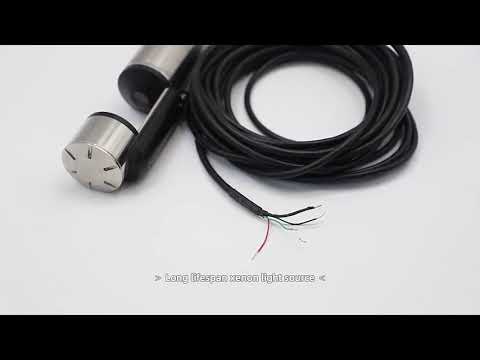
ChiMay's online turbidity testers incorporate advanced optical designs addressing both stray light and reference drift:
- Dual-detector architecture with automatic reference compensation
- Extended range linearity from 0.01 to 10,000 NTU
- Automatic cleaning options including ultrasonic and wiper systems
- Digital communication for integration with SCADA and DCS systems
Factor 3: Particle Size Distribution and Sensor Geometry
Impact of Particle Characteristics
Wastewater particle size distribution varies dramatically across treatment stages:
Raw Sewage: Particle sizes from 0.1 μm (colloidal) to 10 mm (gross debris), highly variable composition
Primary Effluent: Larger particles settled out; remaining particles typically 5-500 μm
Activated Sludge: Flocculated particles typically 20-200 μm, with EPS matrix
Tertiary Filtration: Remaining particles typically <20 μm, often colloidal
Different turbidity sensor designs exhibit varying sensitivity to different particle sizes:
Sensor Geometry Considerations
Path Length: The distance light travels through the sample affects sensitivity. Short path lengths suit high-turbidity applications; longer paths suit low-turbidity applications.
Viewing Angles: Different manufacturers position detectors at varying angles from the light source, affecting response to different particle sizes.
Sample Cell Design: Flow-through versus immersion configurations affect bubble entrainment and particle settling within the measurement zone.
Application-Specific Selection
Matching sensor characteristics to application requirements optimizes accuracy:
Drinking Water Filtration: Requires sensitivity to 0.1 NTU with excellent stability. Choose sensors with low-range optimization and automatic cleaning.
Membrane Filtration: Similar low-range requirements with emphasis on response time for rapid backwash control. Fast-response sensors essential.
Secondary Clarifier Control: Moderate turbidity range (20-200 NTU) with emphasis on reliability. Self-cleaning sensors preferred.
Effluent Compliance Monitoring: Variable turbidity with regulatory reporting requirements. Accurate, documented sensors required.
Optimization Strategies for Wastewater Applications
Installation Best Practices
- Location Selection: Install in flowing sections with velocities of 0.5-2.0 m/s to prevent settling. Avoid dead legs and low-flow zones.
- Orientation: Typically install sensors with optical path horizontal or pointing downward to minimize bubble accumulation.
- Sample Conditioning: Consider flow cells that provide controlled sample presentation with bubble removal capability.
- Shielding: Protect sensors from ambient light interference, particularly in outdoor installations or facilities with artificial lighting.
Maintenance Protocols
Daily: Visual inspection for obvious fouling, alarm verification
Weekly: Cleaning cycle verification, response time check
Monthly: Calibration verification, sensor cleaning, documentation review
Quarterly: Full calibration, hardware inspection, spare parts inventory
Annually: Complete sensor replacement or factory recalibration, documentation update
Data Quality Assurance
Dual-Sensor Monitoring: Deploy redundant sensors for critical applications; disagreement indicates maintenance needs
Correlation Analysis: Compare turbidity readings with suspended solids measurements to verify continued correlation
Trend Monitoring: Gradual turbidity increases at constant process conditions indicate fouling accumulation
Spike Detection: Turbidity spikes not correlated with process events indicate sensor problems
Case Study: Municipal Wastewater Treatment Plant
A municipal treatment facility processing 45 million gallons daily experienced chronic turbidity control problems in their tertiary filtration stage. Filter backwash frequency was erratic, sometimes occurring every 4 hours, sometimes not for 36 hours.
Problem Diagnosis:
- Turbidity sensors fouled within 48-72 hours between cleanings
- Calibration drift of +25% between quarterly calibrations
- Sensors installed in low-velocity zones prone to settling
Solution Implementation:
- Relocated sensors to higher-velocity sample lines
- Installed sensors with automatic ultrasonic cleaning
- Implemented weekly calibration verification protocol
- Added correlation between turbidity and filtered water suspended solids
Results:
- Filter backwash frequency stabilized at 8-hour intervals
- Chemical costs for coagulation reduced by 18%
- Filter run times extended from 40 hours average to 72 hours
- Annual maintenance costs reduced by $34,000
Conclusion
Conclusion
Turbidity measurement accuracy in wastewater treatment depends critically on three factors: sensor optical path contamination, stray light and reference drift, and particle size distribution effects. Understanding these factors—and implementing appropriate mitigation strategies—enables reliable turbidity monitoring that supports effective process control and regulatory compliance.