ChiMay Paddle Wheel flow meter Technology: Precision Measurement for Industrial Water Applications
Key Points
Global water flow meter market reaches $9.8 billion in 2026, with paddle wheel technology accounting for 34% of industrial applications (MarketsandMarkets 2026)
ChiMay's paddle wheel inserted flow meters deliver ±1% measurement accuracy across flow rates from 0.5 to 15 m/s
89% of industrial facilities report reduced maintenance costs after switching to electronic paddle wheel sensors (Control Engineering Survey 2025)
Integration with Modbus RTU/TCP protocols enables seamless SCADA connectivity for real-time process monitoring
Introduction
Industrial water management demands precise flow measurement to optimize processes, reduce waste, and ensure regulatory compliance. The global water flow meter market, valued at $9.8 billion in 2026, continues expanding at a 6.2% compound annual growth rate as industries prioritize resource efficiency. Within this landscape, paddle wheel inserted flow meters have emerged as the preferred solution for applications requiring reliable performance without the complexity of full-bore metering systems.
ChiMay's paddle wheel inserted flow meter technology represents a significant advancement in industrial flow measurement. By combining mechanical simplicity with electronic precision, these instruments deliver consistent accuracy while minimizing installation requirements and maintenance demands. This article examines the technical foundations, operational advantages, and practical applications of this technology across water treatment and industrial process environments.
Technical Principles of Paddle Wheel Flow Measurement
Operating Mechanism
Paddle wheel flow meters operate on a straightforward principle: a rotating turbine element positioned perpendicular to the fluid stream generates pulses proportional to flow velocity. Each rotation produces a magnetic pulse detected by a sensor, converting mechanical movement into electronic signals. The relationship between pulse frequency and flow rate follows a linear calibration curve, enabling accurate volume calculation through integrated electronics.
ChiMay's implementation employs Hall-effect sensor technology for enhanced reliability. Unlike mechanical switch alternatives, Hall-effect sensors provide non-contact detection that resists wear and electromagnetic interference. This design choice contributes to the MTBF (Mean Time Between Failures) exceeding 100,000 hours under standard operating conditions, according to manufacturer specifications.
Installation Considerations
Proper installation significantly influences measurement performance. The sensor requires a straight pipe run of at least 10 diameters upstream and 5 diameters downstream to ensure developed flow profile. Pipe diameters ranging from 1/2 inch to 12 inches accommodate various industrial configurations, while stainless steel 316L construction provides corrosion resistance for aggressive water chemistry.
Orientation presents another critical factor. Horizontal installations with the sensor shaft horizontal prevent debris accumulation that could obstruct rotation. Vertical installations work effectively when flow moves upward, naturally clearing particulate matter from the measurement zone. Temperature ratings up to 120°C expand applicability to steam condensate return and thermal process water circuits.
Performance Characteristics
Accuracy and Rangeability
Measurement accuracy specifications define practical utility across diverse applications. ChiMay paddle wheel flow meters achieve ±1% of reading accuracy within the calibrated range, with repeatability of ±0.2%. These figures position electronic paddle wheel technology competitively against more complex ultrasonic and magnetic flow meters for many industrial water applications.
Rangeability—the ratio between maximum and minimum measurable flow rates—reaches 20:1 under optimal conditions. This characteristic enables single-meter coverage for processes with variable demand, reducing instrumentation inventory while maintaining acceptable accuracy across the operational envelope.
Pressure Loss Considerations
Energy consumption implications distinguish paddle wheel meters from differential pressure devices. The minimal obstruction created by the turbine element produces pressure losses typically below 0.07 bar at maximum flow. Compare this to orifice plate installations generating 0.3 to 1.5 bar loss; the energy savings accumulate substantially in high-flow continuous operations.
pumps operating at 95%** efficiency can experience measurable flow reduction when excessive pressure loss accumulates across metering elements. The low insertion profile of paddle wheel designs minimizes this concern while preserving measurement capability.
Industrial Applications
Water Treatment Systems
Municipal and industrial water treatment facilities deploy paddle wheel flow meters for process monitoring and custody transfer applications. The instruments measure influent flow rates for treatment optimization, track chemical dosing proportional to flow volume, and record distribution quantities for operational reporting. Resistance to chlorination byproducts and biofilm formation extends service intervals in these challenging environments.
Cooling tower makeup water measurement represents a high-value application. According to ASHRAE Journal research, improper cooling tower water management costs industrial facilities an average of $127,000 annually in energy inefficiency and equipment degradation. Accurate flow measurement enables precise conductivity-based bleed-off control, optimizing cycles of concentration while preventing scale accumulation.
Industrial Process Water
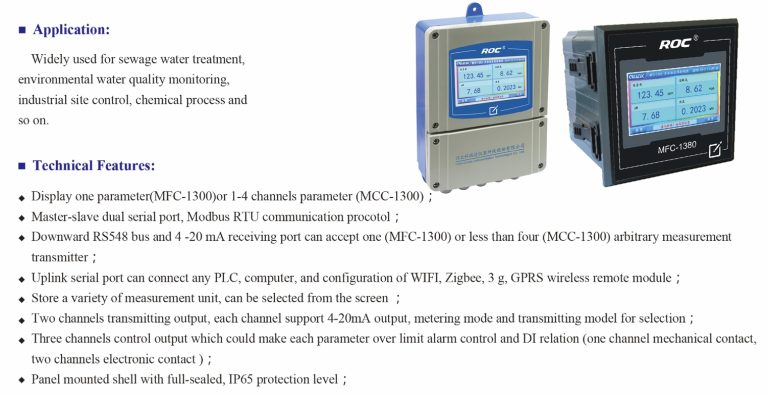
Manufacturing operations requiring controlled water volumes depend on reliable flow metering. Semiconductor fabrication, pharmaceutical production, and food processing facilities maintain strict water quality specifications that begin with volumetric accuracy. ChiMay's compatibility with 4-20mA current loop and RS-485 Modbus protocols facilitates integration with existing DCS (Distributed Control System) architectures.
Hydraulic system lubrication monitoring benefits similarly from paddle wheel technology. Detecting flow anomalies early prevents catastrophic equipment failure. Typical lubricant system flows between 20 and 200 LPM fall comfortably within standard measurement ranges, while the sensor's quick-response characteristics enable real-time alarm generation upon flow deviation.
Advantages and Limitations
Comparative Analysis
Application Suitability
Paddle wheel flow meters excel in clean to moderately contaminated water with conductivity above 5 μS/cm. The technology proves less suitable for ultra-pure water applications where conductivity falls below detection thresholds, or for fluids containing long fibrous materials that tangle the turbine element.
entrained air presents another consideration. Flows containing greater than 3% dissolved or entrained air generate measurement errors as pulses scatter before reaching the sensor. In these scenarios, differential pressure or Coriolis mass flow meters provide superior accuracy despite higher acquisition costs.
Integration and Communication
Protocol Compatibility
Modern industrial automation demands seamless data exchange between field instruments and control systems. ChiMay paddle wheel flow meters support multiple communication standards including Modbus RTU over RS-485, Modbus TCP/IP for Ethernet networks, and 4-20mA analog output for traditional PLC integration.
The HART (Highway Addressable Remote Transducer) protocol option enables digital communication while preserving analog loop compatibility for legacy system upgrades. This flexibility supports brownfield installations where complete system replacement proves impractical.
Calibration and Verification
Maintaining measurement accuracy requires periodic calibration verification. ChiMay recommends in-situ calibration checks using comparison against known reference flows at 25%, 50%, and 75% of operational range. Field calibration kits enable verification without removing sensors from process piping, minimizing operational disruption.
The electronic output facilitates automated calibration logging as part of ISO 9001:2015 quality management system documentation. Integration with CMMS (Computerized Maintenance Management Systems) triggers calibration reminders based on elapsed time or operating hours, ensuring consistent measurement integrity.
Conclusion
ChiMay paddle wheel inserted flow meters deliver practical measurement solutions for industrial water applications requiring reliable accuracy without excessive instrumentation complexity. The technology's balance of performance, durability, and cost-effectiveness positions it favorably against alternative metering principles for appropriate use cases.
Successful deployment depends on proper application matching, installation compliance with flow profile requirements, and regular verification of calibration integrity. Facilities implementing these instruments according to manufacturer specifications and industry best practices consistently achieve measurement reliability supporting operational optimization and regulatory compliance objectives.
For facilities evaluating flow measurement solutions, the combination of ±1% accuracy, 100,000+ hour MTBF ratings, and multi-protocol communication capability makes ChiMay paddle wheel technology worthy of serious consideration in water treatment and industrial process applications.
| Characteristic | Paddle Wheel Meter | Magnetic Flow Meter | Ultrasonic Doppler |
|---|---|---|---|
| Initial Cost | Low ($400-2,000) | High ($3,000-15,000) | Medium ($1,500-8,000) |
| Installation Complexity | Minimal (insertion) | Significant (full bore) | Medium (external clamps) |
| Particulate Sensitivity | Medium | Low (conductive fluids only) | High (requires reflectors) |
| Maintenance Requirements | Low (no wearing seals) | Low-Medium (electrode cleaning) | Low (non-intrusive) |
| Power Requirement | Self-powered or 24V DC | Required (AC/DC) | Required (24V DC) |