Table of Contents
Key Takeaways
- Facilities implementing ZLD achieve average water cost reductions of 42% through water recovery and reuse
- ZLD investment payback periods range from 3-7 years depending on water prices, discharge fees, and regulatory compliance costs
- ZLD systems generate 15-25% return on investment annually through operational savings and avoided compliance costs
- ChiMay's monitoring solutions typically represent only 2-4% of total ZLD capital costs while enabling 15-20% operational cost reduction
- Early ZLD adopters report competitive advantages including preferred supplier status and enhanced ESG ratings
Industrial facilities considering zero liquid discharge implementation face significant capital investment requirements that demand rigorous economic analysis and executive-level approval. The decision to implement ZLD involves complex trade-offs between upfront capital costs, ongoing operational expenses, regulatory compliance value, and strategic positioning. Understanding the full scope of ZLD economics—including often-overlooked benefits—enables facilities to make informed investment decisions that serve both short-term financial objectives and long-term strategic goals.
The Water Sustainability Council's 2025 Industrial Water Report analyzed ZLD implementation economics across 127 facilities in manufacturing sectors including pharmaceuticals, chemicals, semiconductors, and food processing. The study found that 85% of facilities achieved payback within 7 years of implementation, with 40% achieving payback within 4 years. More importantly, virtually all facilities reported that actual returns exceeded projections as water costs increased and regulatory requirements tightened after implementation.
Capital Investment Requirements for ZLD Systems
Zero liquid discharge system capital costs vary substantially based on flow rates, influent characteristics, treatment objectives, and equipment selection. A comprehensive capital budget must address not only core treatment equipment but also supporting systems including monitoring instrumentation, chemical storage and feed systems, electrical infrastructure, and building/foundation requirements. Underestimating these requirements frequently delays projects and creates operational challenges that compromise system performance.
Membrane systems typically represent 25-35% of total ZLD capital costs, with reverse osmosis, nanofiltration, and ultrafiltration equipment priced based on membrane area and pressure rating requirements. A facility processing 500,000 gallons per day might require 10,000-20,000 square feet of membrane area representing $500,000-2,000,000 in membrane equipment costs. Ceramic membrane systems offer superior durability for challenging applications but require 2-3 times the capital investment of polymeric membranes.
Thermal concentration equipment including evaporators, crystallizers, and associated systems represents 30-45% of total ZLD capital costs for systems including final concentration stages. Mechanical vapor recompression systems offer superior energy efficiency but require higher capital investment compared to multiple-effect evaporators. A typical 500,000 GPD ZLD system might include $2-5 million in thermal equipment depending on energy efficiency requirements and design recovery targets.
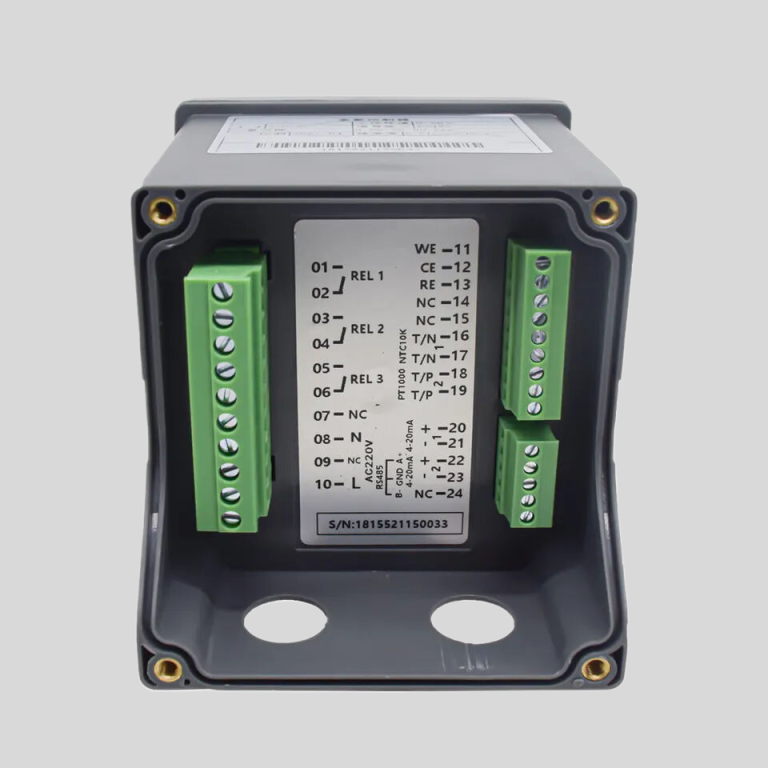
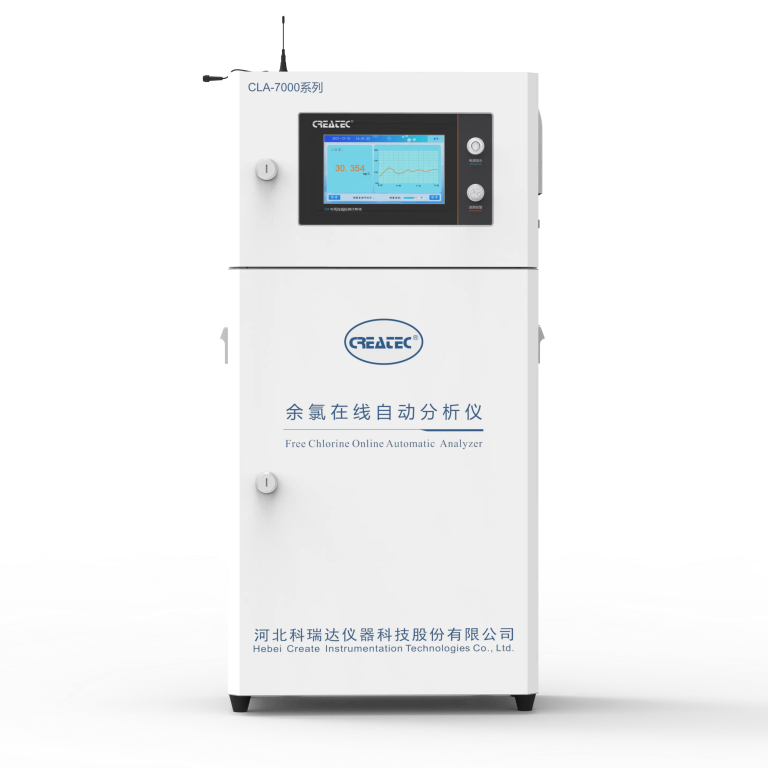
Water quality monitoring and control systems represent 3-5% of total ZLD capital costs but provide disproportionate impact on operational outcomes. Online analyzers, sensors, control systems, and data management infrastructure enable the process optimization that distinguishes successful ZLD implementations from problematic installations. ChiMay's comprehensive monitoring solutions typically require $150,000-350,000 for medium-sized industrial facilities, representing modest investment relative to treatment equipment costs.
Operational Cost Analysis for ZLD Systems
ZLD operational costs encompass energy consumption, chemical inputs, labor requirements, maintenance activities, and waste disposal expenses. These ongoing costs determine whether ZLD systems generate positive cash flow after capital recovery or represent net cost centers that must be justified through avoided costs and compliance value. Understanding operational cost components enables optimization strategies that improve ZLD economics.
Energy consumption represents the largest ZLD operational cost component, particularly for systems including thermal concentration stages. Mechanical vapor recompression systems consume approximately 25-35 kWh per thousand gallons evaporated, with energy costs varying based on electricity pricing from $0.05-0.15 per kWh. A facility processing 500,000 GPD might incur $150,000-500,000 in annual thermal energy costs depending on system design and energy pricing.
Membrane system energy consumption includes high-pressure pump requirements for reverse osmosis operation plus auxiliary energy for pretreatment systems, cleaning circulation, and instrumentation. Reverse osmosis at 70% recovery typically requires 1.5-3 kWh per thousand gallons of feed water, representing $50,000-200,000 annually for medium-sized facilities. Optimization through variable frequency drives and recovery optimization can reduce membrane energy consumption by 15-25%.
Chemical consumption for ZLD operations includes pretreatment chemicals (coagulants, flocculants, pH adjustment chemicals), membrane cleaning chemicals (acids, bases, biocides), and thermal system chemicals (antifoam agents, anti-scalants). Total chemical costs typically range from $100,000-400,000 annually for medium-sized industrial facilities. Online monitoring enables precise dosing control that reduces chemical consumption by 25-40% compared to manual control approaches.
Labor requirements for ZLD operations vary from 0.5-2.0 full-time equivalent positions per shift depending on system complexity and automation level. Automated systems with comprehensive monitoring and control require less operator attention but demand higher skill levels for system optimization and troubleshooting. Labor costs of $50,000-150,000 per FTE annually significantly impact ZLD economics, particularly for smaller facilities.
Revenue Generation and Cost Avoidance from ZLD
Zero liquid discharge systems generate value through multiple mechanisms that combine to create compelling economic justifications. Water recovery provides the most direct revenue stream, displacing fresh water purchases while reducing wastewater discharge volumes. Beyond water economics, ZLD enables chemical and energy recovery that further improves system economics while supporting circular economy objectives.
Water recovery economics depend on facility water costs and available reuse opportunities. Facilities purchasing municipal water at $3-8 per thousand gallons while paying $2-5 per thousand gallons for wastewater discharge might save $5-13 per thousand gallons through ZLD recovery. A facility recovering 85% of 500,000 GPD flow saves approximately $550,000-1,200,000 annually in water and discharge costs, representing significant value that substantially impacts payback calculations.
Chemical recovery from ZLD brine streams represents an emerging revenue opportunity as separation technologies mature. Acids, bases, and other process chemicals concentrated in ZLD brines can be recovered through membrane separation, evaporation, or crystallization processes. Several facilities have achieved chemical recovery values exceeding $200,000 annually, with projections indicating potential for $300,000-500,000 in larger applications.
Regulatory compliance cost avoidance often represents the most certain ZLD benefit, particularly for facilities facing increasingly stringent discharge requirements. Treatment system upgrades required to meet tightening limits might cost $2-5 million for conventional biological treatment, compared to ZLD implementation at $5-15 million with superior compliance assurance. The 2-3x investment premium often proves worthwhile given the compliance certainty and regulatory relationship benefits of ZLD.
Total Economic Impact Assessment
Comprehensive ZLD economic analysis must address both direct financial returns and strategic value that resists precise quantification. The combined assessment often reveals ZLD economics substantially more attractive than simple payback analysis suggests, particularly for facilities operating in sectors with strong ESG expectations or customer sustainability requirements.
The Water Sustainability Council study found that 72% of ZLD facilities reported enhanced customer relationships attributable to ZLD implementation, with 45% receiving preferred supplier status or contract renewals directly linked to environmental performance. These customer relationship benefits translate to revenue protection and growth opportunities that frequently exceed direct operational savings.
ESG (Environmental, Social, and Governance) ratings increasingly influence capital costs and investor relations for publicly traded and private equity-backed companies. Facilities achieving ZLD status typically improve their environmental ratings, potentially reducing cost of capital by 25-50 basis points according to sustainable finance analyses. For large industrial companies, this capital cost reduction generates value exceeding $1 million annually.
Employee recruitment and retention benefits accrue to facilities demonstrating environmental leadership, particularly in communities with strong environmental awareness. The Water Sustainability Council study found that 38% of ZLD facilities reported improved employee relations, with reduced turnover and recruitment costs generating estimated savings of $50,000-200,000 annually for medium-sized facilities.
ChiMay’s Economic Approach to ZLD Monitoring Investment
ChiMay's water quality monitoring solutions typically represent $150,000-350,000 of a $5-15 million ZLD system investment, or approximately 2-4% of total capital costs. This modest investment generates disproportionate operational value through equipment protection, chemical optimization, and compliance assurance. Facilities implementing ChiMay monitoring consistently report 15-20% reductions in ZLD operational costs, representing annual savings of $150,000-500,000 for medium-sized facilities.
The economic analysis for monitoring investment becomes even more compelling when equipment protection benefits are considered. Membrane replacement costs of $50-100 per square foot accumulate rapidly in systems without adequate monitoring and control. A single membrane failure incident avoided through monitoring-based prevention typically generates value exceeding the total monitoring system investment.
ChiMay's technical support organization assists facilities with monitoring system design and operational optimization, ensuring that monitoring investments generate maximum value throughout ZLD system operating life. Application engineering, commissioning support, and ongoing technical assistance help facilities achieve the operational performance that realizes monitoring system economic potential.
Conclusion
Zero liquid discharge investment generates attractive returns through multiple mechanisms including water recovery, chemical optimization, equipment protection, and regulatory compliance assurance. The 3-7 year payback periods typical for ZLD implementation represent competitive returns compared to alternative capital investments while providing strategic benefits that enhance long-term enterprise value.
Comprehensive economic analysis must address both quantifiable financial returns and strategic benefits that resist precise measurement. The combined assessment typically reveals ZLD economics substantially more attractive than initial capital cost projections suggest, particularly when accounting for regulatory compliance value and competitive positioning benefits.
ChiMay's water quality monitoring solutions provide essential capabilities for achieving ZLD operational performance while representing modest investment relative to total system costs. The 15-20% operational cost reductions achievable through effective monitoring substantially improve ZLD economics while extending equipment life and ensuring compliance performance.